
Quick answers
Is it safe to drive or walk through floodwater?
No. Floodwater can hide a strong current, potholes, debris, live wires and sewage. Knowing the road or driving a big vehicle does not make a flooded crossing safe.
When should I evacuate during a flood warning?
If an evacuation is ordered, leave by the advised route while it is still open. Do not wait to see whether a low-lying road stays passable. Keep watching local warnings and India's SACHET alert platform.
What should I do if someone is stuck in floodwater?
Call 112 and give the exact location. Do not go into the water and become another casualty. Help only from a safe spot, as far as you are able and as the responders tell you.
When is it safe to go back home after a flood?
Only when the authorities say so. The building, wiring, sewage and drinking water may still be unsafe, so follow local instructions on checking the house, cleaning up and using water.
What should I keep ready for a flood?
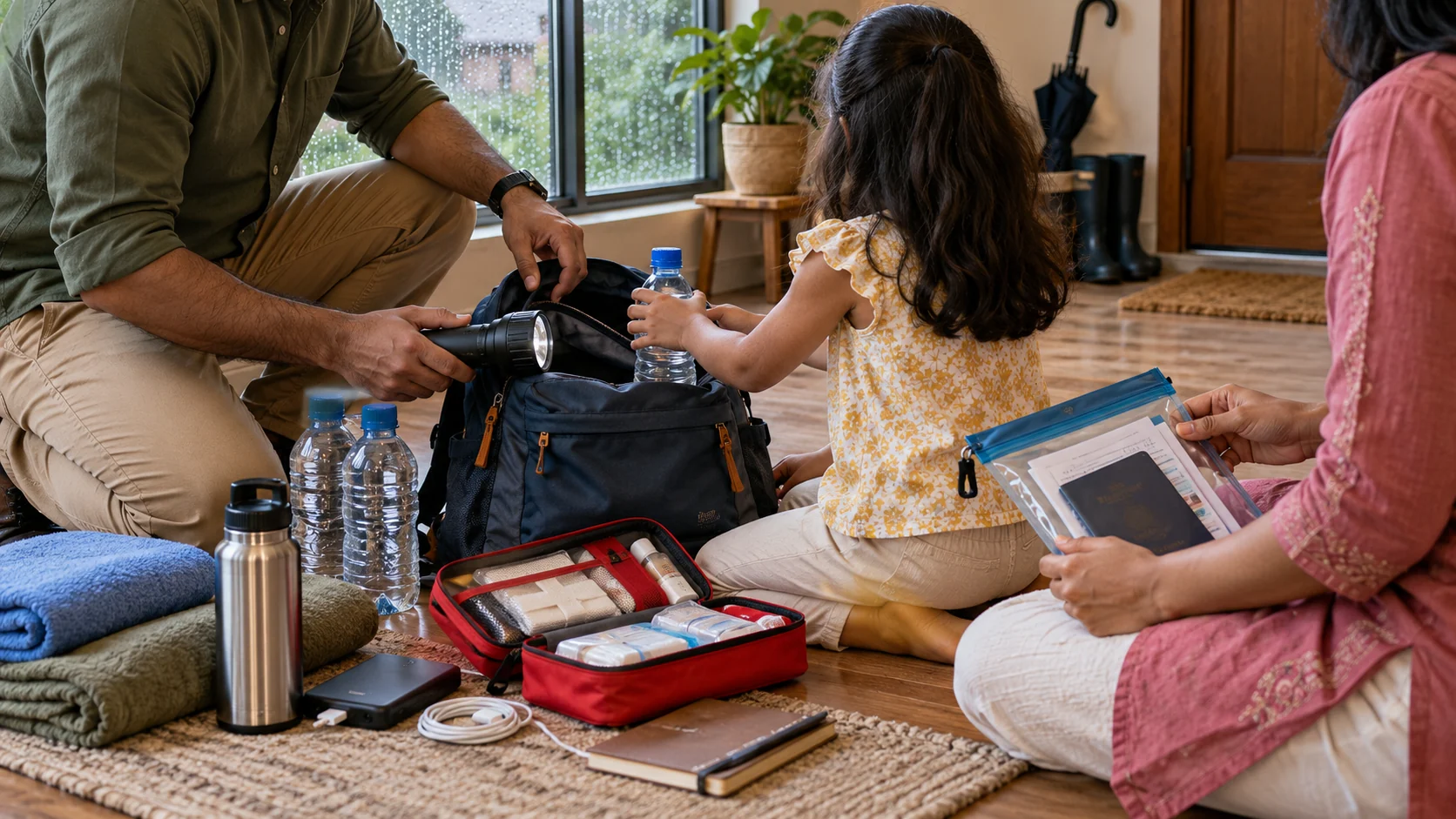
The NCDC advisory suggests at least three days of drinking water at 5 litres a day for each person, three days of food that keeps, regular medicines, a charged phone, a torch with spare batteries, a battery radio, a first-aid box, chlorine tablets, thick rope, waterproof footwear and documents such as the ration card, voter ID, Aadhaar card and health records in a waterproof bag.
Should I switch off the electricity during a flood?
NCDC says to turn off utilities at the main power switch and close the main gas valve to avoid fire, electric shock or an explosion, and not to touch electrical equipment if you are wet or standing in water. Do it only from a dry spot and only if you have time. If water is already near the switch, leave.
Is floodwater safe to wade through if it is only ankle-deep?
No. The Delhi Fire Service says not to walk into flowing water that is ankle-deep or higher. NCDC says fast-moving shallow water can be deadly and even shallow standing water is dangerous for small children.
How do I make water safe to drink after a flood?
NCDC says to use water that has been brought to a rolling boil for one minute and then cooled, or water disinfected with chlorine tablets or bleach as the pack or local health department instructs. Water with fuel or chemicals in it will not be made safe by boiling. Follow the label and local advice.
What should I do with food that touched floodwater?
Throw it away. NCDC says food that has touched floodwater is not safe to eat, and sums it up as: when in doubt, throw it out.
When should I see a doctor after a flood?
For fever or diarrhoea, for a bite or sting from an animal or snake, for a large wound, a deep puncture or a wound with dirt in it, and for any wound that turns red, swollen or starts to ooze. NCDC says such wounds may need a tetanus booster.
Which helpline should I call if I am stranded in a flood?
Call 112 first and give the exact location. NCDC lists 011-1078 as the national helpline and the NIDM hazard sheet lists 1077 as the disaster management helpline. District numbers differ, so save yours before the monsoon.
In short
- Know your alert and your route. Watch SACHET and local warnings, and know the way to higher ground before the rain starts.
- Do not wade or drive into floodwater. The Delhi Fire Service says not to walk into flowing water that is ankle-deep or higher.
- Main switch off, if you are dry and there is time. Do not touch electrical equipment while wet or standing in water.
- Do not drink floodwater. Boil or chlorinate drinking water and throw away food that touched floodwater.
- Fever or diarrhoea after a flood needs a doctor, says the National Centre for Disease Control.
Decide before the road is cut off
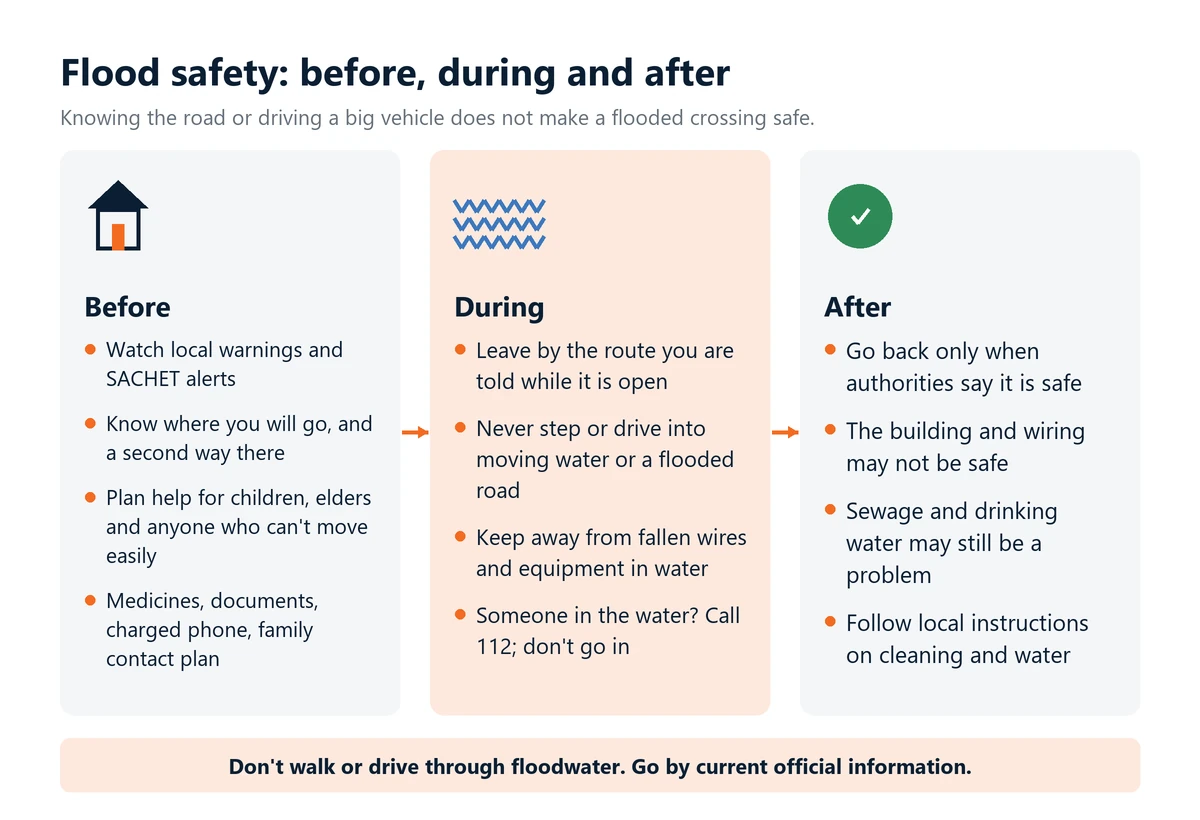
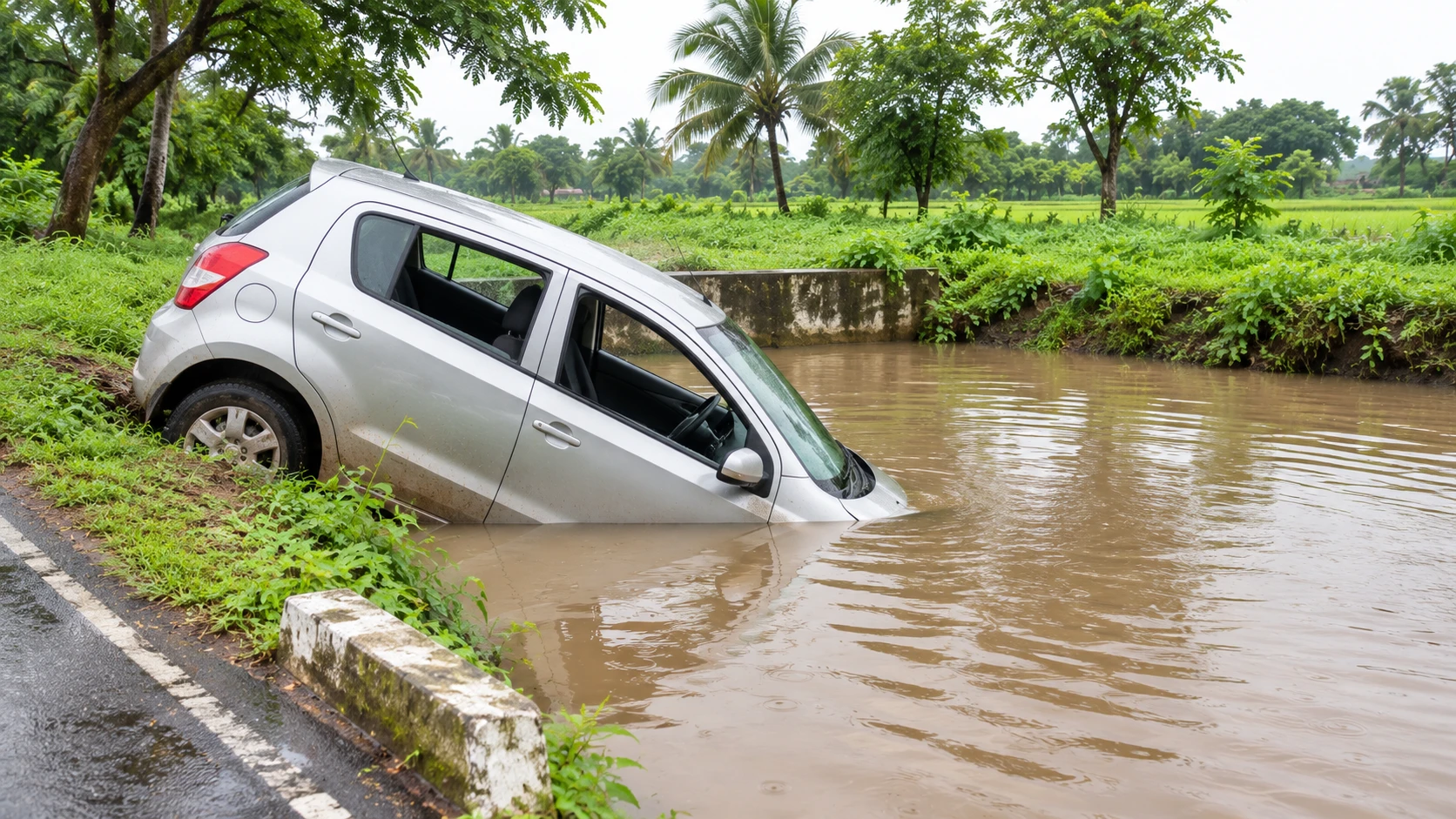
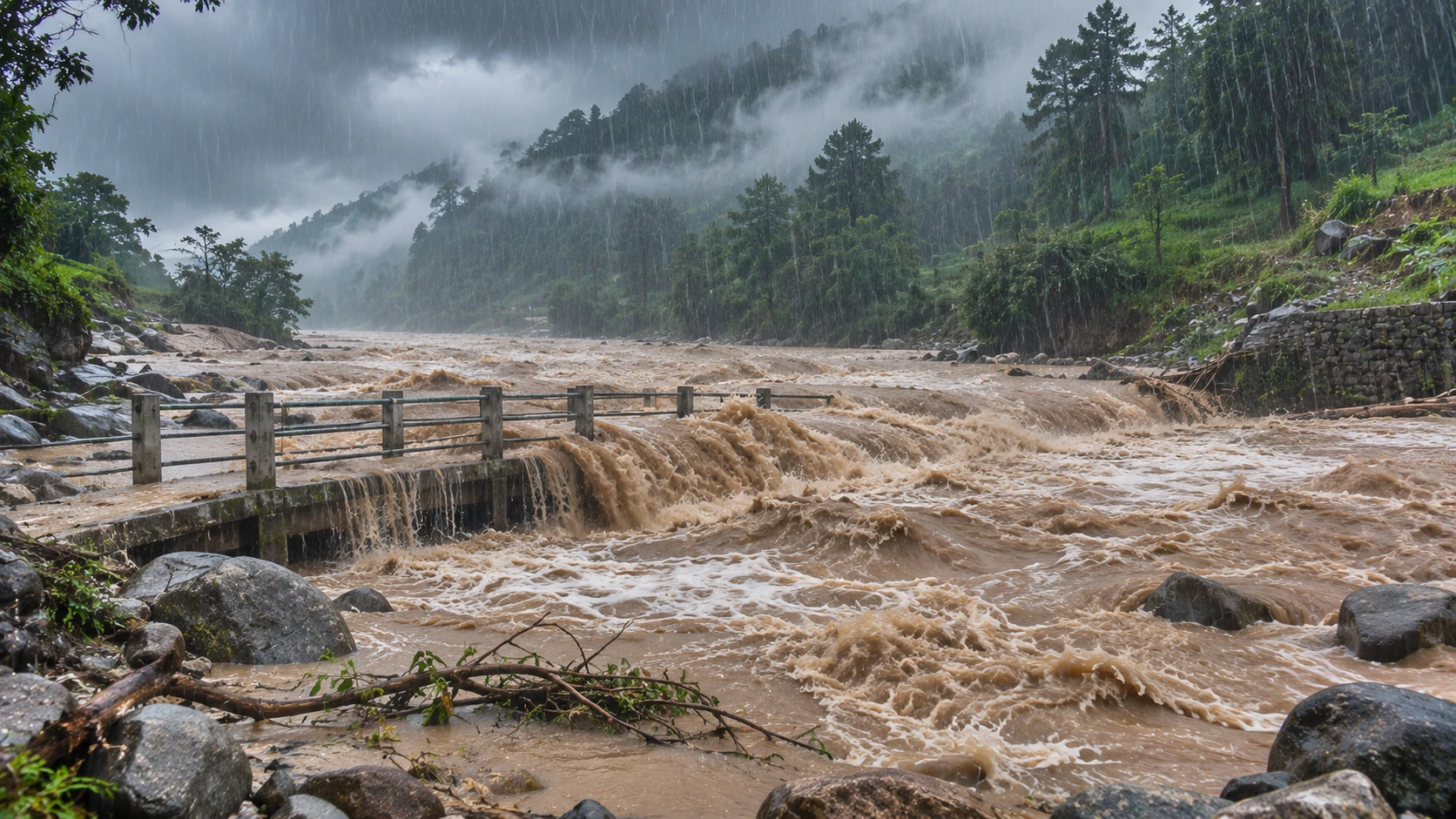
Floodwater can hide a fast current, potholes, debris, live wires and sewage. Knowing the road well, or driving a big vehicle, does not make a flooded crossing safe. If a car has already gone into the water, see how to get out of a sinking or flooded car. Keep watching warnings from your local authority and India’s SACHET alert platform. If an evacuation is ordered, leave by the route you are told to use while it is still open. Do not wait to see whether the low-lying road stays passable. Near a hill river or stream the water can rise within minutes, so read our guide to cloudburst and flash flood warning signs.
Prepare a higher-ground route
Know where you will go, a second way of getting there, and how you will help children, elderly family members and anyone who cannot move easily. Keep medicines, important documents, a charged phone and a family contact plan ready. A map, or an old social-media post, may not show today’s water level or whether a bridge is still open. Go by current official information, and do not drive or walk through floodwater.
During a flood
Move away from rising water and follow local instructions to evacuate or stay sheltered. Do not step into moving water or onto a flooded road, on foot or in a vehicle. Keep away from fallen wires and any electrical equipment standing in water. If someone is in the water, call 112 and give the exact location. Do not go in after them and become another casualty. Help from a safe spot, only as far as you are able and as the rescue team tells you.
Floods come at different times in different states. Our safety calendar lists what usually peaks in each month.
After the water goes down
Go back only when the authorities say it is safe. The building may not be stable, the wiring may be unsafe, and sewage and drinking-water quality may still be a problem. Follow local instructions on checking the house, cleaning up and using water. This guide does not teach water rescue, and it does not say that any depth of moving water is safe to cross or wade through.
What to keep ready
The National Centre for Disease Control (NCDC) public health advisory on floods, which is the Health Ministry’s own, gives a plain list. Keep at least three days of drinking water, at 5 litres a day for each person, and three days of food that keeps and needs little or no cooking. Keep your regular medicines, a charged phone (it suggests SMS for emergency contact), a torch and spare batteries, a battery radio, a first-aid box, chlorine tablets, thick rope and waterproof footwear. Put documents such as the ration card, voter ID, Aadhaar card and health records in a waterproof bag. If you keep cattle, the advisory says to untie them so that they can get away. The advisory also points to the Central Water Commission’s flood forecasting site for river levels. Our home emergency kit checklist has the longer version.
When the water is rising and you still have time
- Switch off the main power switch and close the main gas valve to avoid fire, electric shock or an explosion (NCDC). Do this only from a dry spot. NCDC also says not to touch electrical equipment if you are wet or standing in water.
- Raise furniture, bedding and valuables onto beds and tables, and move to an upper floor if the water is likely to enter (NIDM).
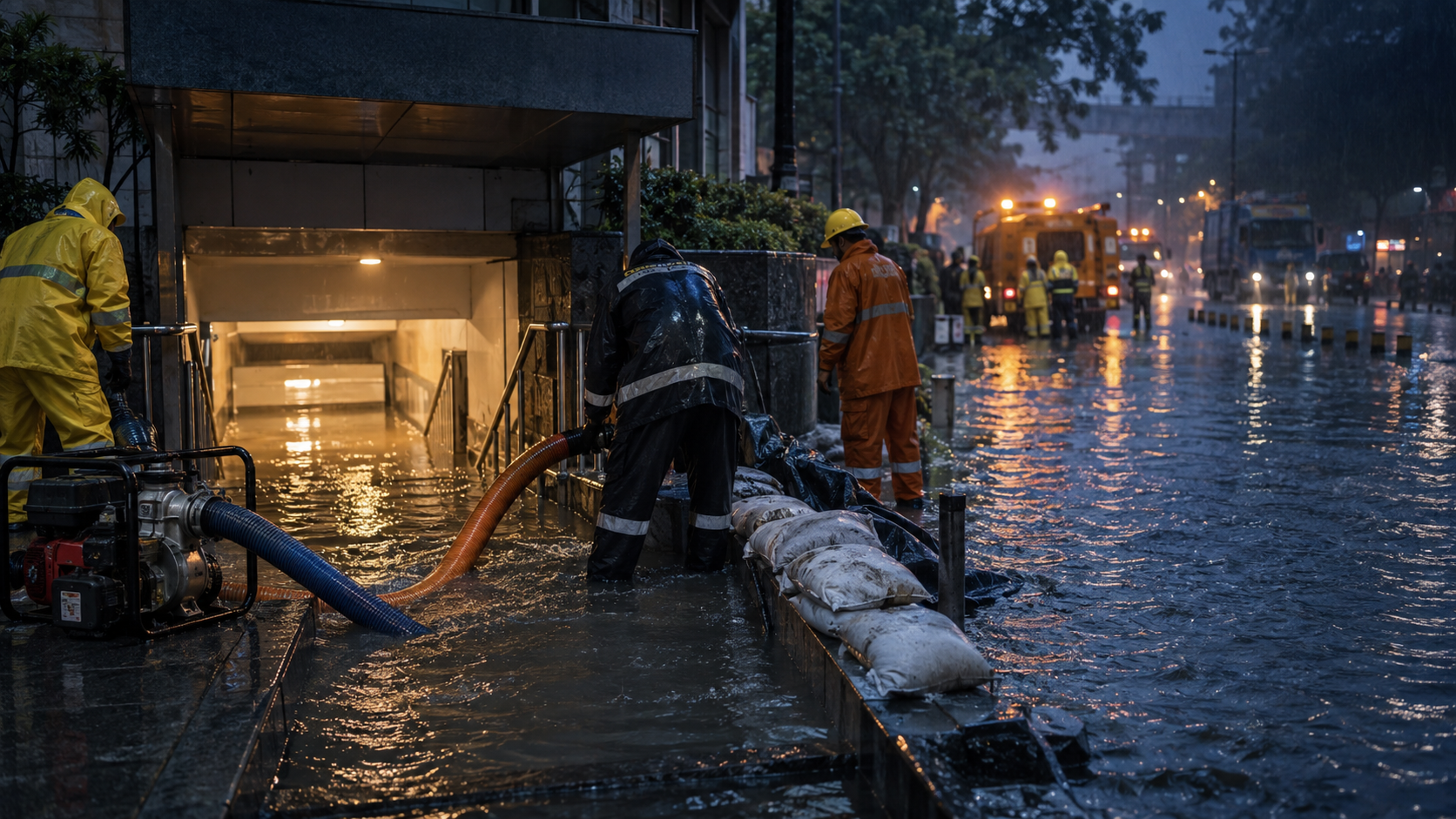
- Block drain holes and toilet bowls with sandbags so that sewage does not back up into the house (NCDC).
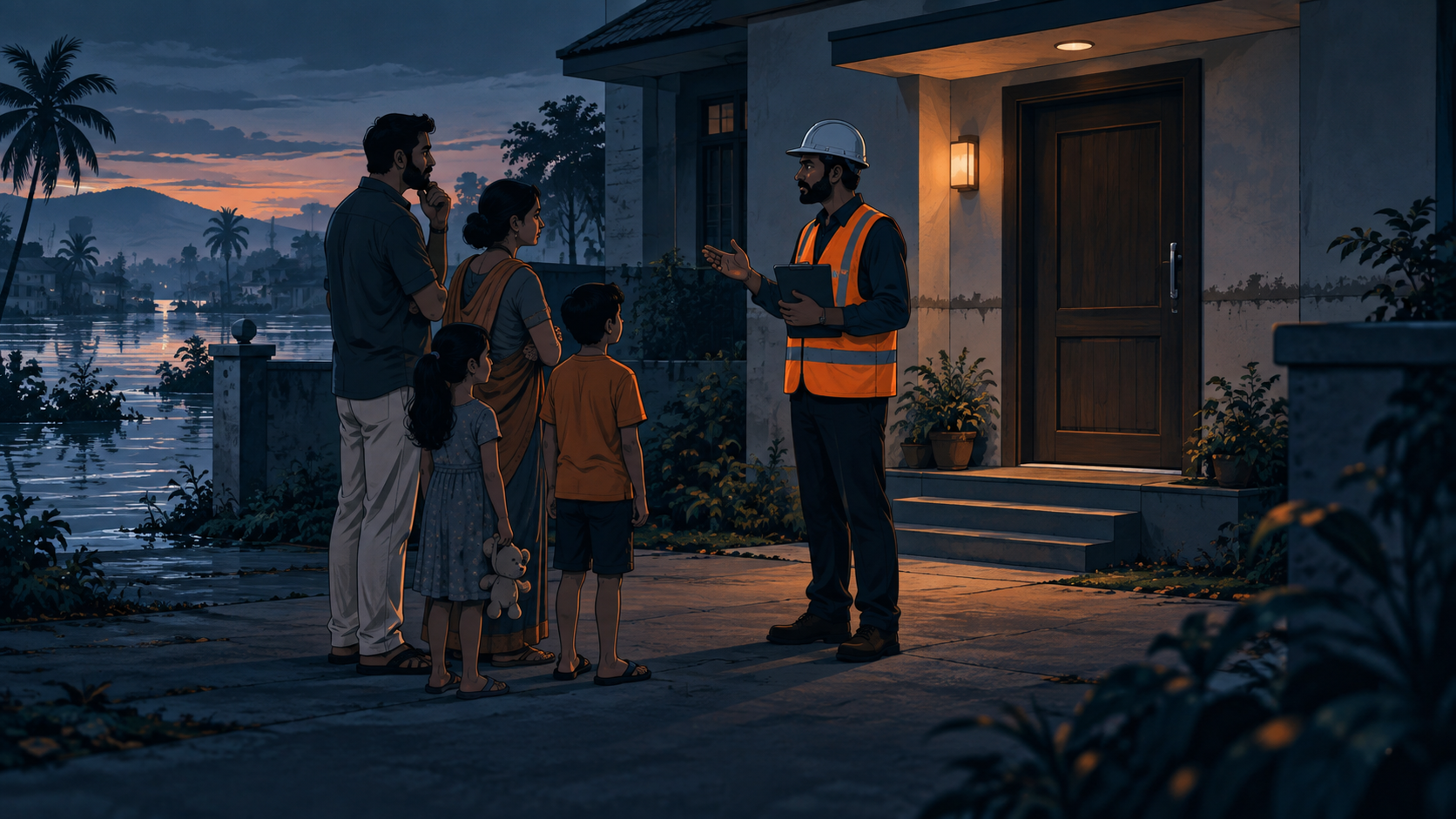
- Take the kit and documents and go to higher ground or the shelter if an evacuation order comes, and avoid low-lying ground, flood plains and places where water collects (NCDC). The Delhi Fire Service says to leave right away when told, and to reach a safe spot before the water cuts your route.
Children, animals and the water itself
NCDC says drowning is a real risk during floods whatever your swimming skill, that fast-moving shallow water can be deadly and that even shallow standing water can be dangerous for small children. Keep children away from floodwater, storm drains and viaducts (Delhi Fire Service) and do not let them play in it or with toys that have been in it (NCDC). The advisory lists snakes and rodents among the hazards that floodwater displaces, and the NIDM hazard sheet warns that snakebites are common after floods. Treat any bite as a reason to seek medical help at once; NCDC says so for animal and snake bites.
If you really cannot avoid entering the water, NCDC advises waterproof or rubber boots, rubber gloves and goggles, staying away if power lines are down, and using a long stick to check the depth and keep clear of sewage lines and drains. Treat that as a last resort. Its first line on the subject is that the best way to protect yourself is to stay away from floodwater.
After the water goes down
- Go home only when the local authorities say it is safe, and check the building and wiring before you switch anything on. Our guide to returning after a flood goes through the checks.
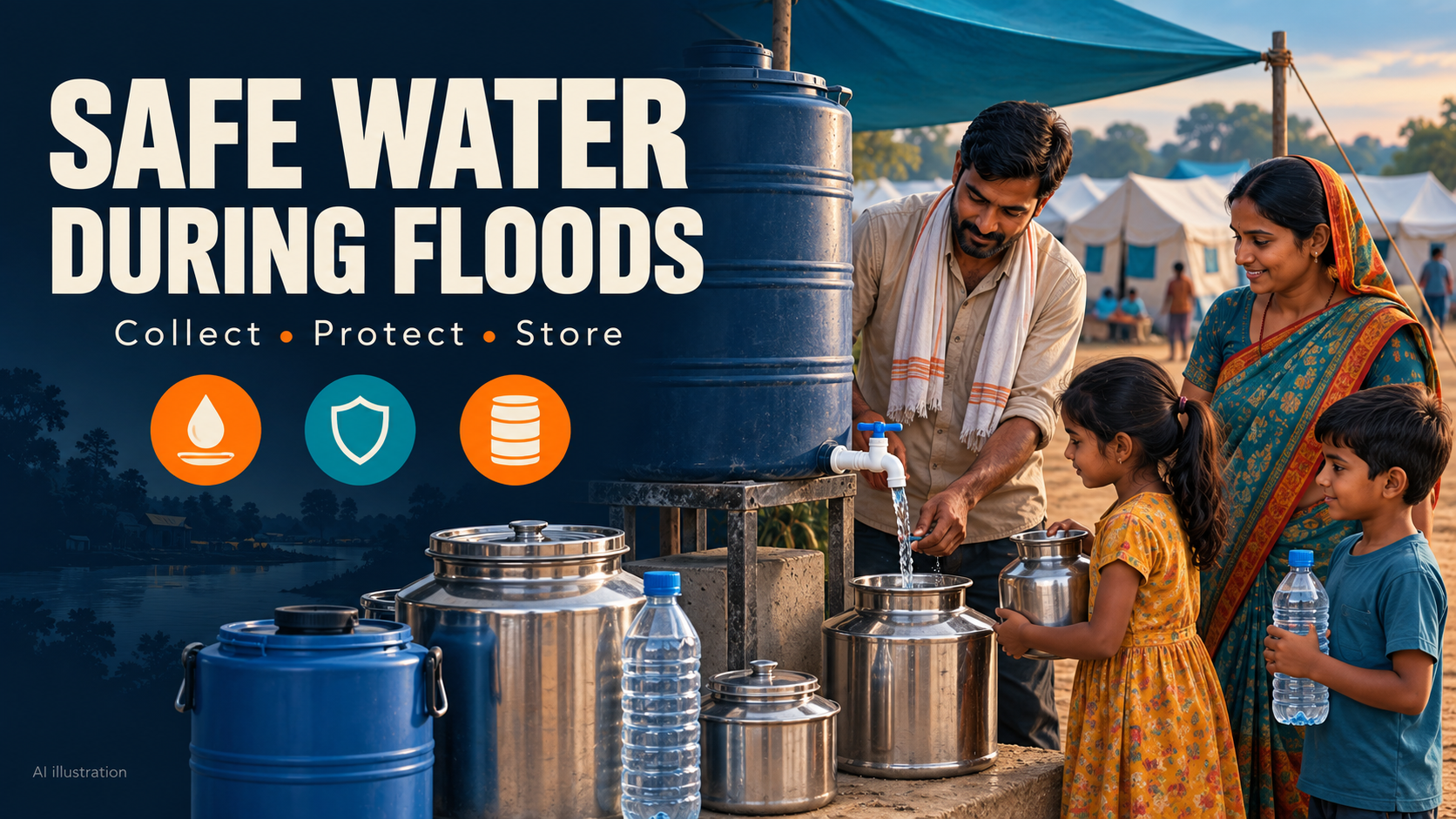
- Do not drink floodwater or use it to wash dishes, brush teeth or prepare food. NCDC says to use water that has been brought to a rolling boil for one minute and cooled, or disinfected with chlorine tablets or bleach according to the pack or the local health department’s instructions. We do not give bleach doses here: follow the label. Our guide to safe water during floods covers collecting and storing it.
- Throw away food that touched floodwater. NCDC puts it in four words: when in doubt, throw it out.
- Wash your hands with soap and water after any contact with floodwater, and wash small wounds with soap and clean water. Press directly on any bleeding. See a doctor for a large or deep wound or a puncture, which NCDC says may need a tetanus booster, for any bite, and for signs of infection such as redness, swelling or fever.
- Fever or diarrhoea after the flood needs medical care. The advisory lists cholera, typhoid, leptospirosis and hepatitis A and E among the illnesses linked to floodwater, and dengue and malaria among those that rise as mosquitoes breed in standing water.
- Check and dry electrical equipment before using it again, and use a battery flashlight, not a lantern, a flame torch or matches, inside the building (Delhi Fire Service). Report broken utility lines to the proper authority.
- Clear standing water from tyres, pots, coconut shells and open containers, and use a mosquito net or repellent if there is stagnant water near your home (NCDC).
Who to call
Call 112 for anyone in danger and give the exact location, as above. If you are stranded, NCDC lists 011-1078 as the national helpline and the NIDM sheet lists 1077 as the disaster management helpline. District numbers differ, so save yours before the season. For the decision at a flooded road, read never drive or walk through floodwater. If a car has gone in, read how to get out of a sinking or flooded car. For the myths people repeat about cars and shallow water, see flood safety myths.
What we could not confirm
- The NCDC advisory is dated 2022, and the Delhi Fire Service page and the NIDM sheet read as adapted in part from American guidance (the Delhi page uses the word arroyos, and the NIDM sheet is undated and says it was customised from an American home guide). We use them as general advice for India, not as a local flood plan.
- We did not find an Indian official figure for a safe depth of water for walking or driving. We say do not wade or drive in.
- Chlorine doses and well disinfection are in the NCDC advisory, but we have not repeated them, because they depend on the product. Follow the pack or the local health department.
- The National Disaster Response Force flood sheet cited by other pages could not be opened by us, so it is not used here.
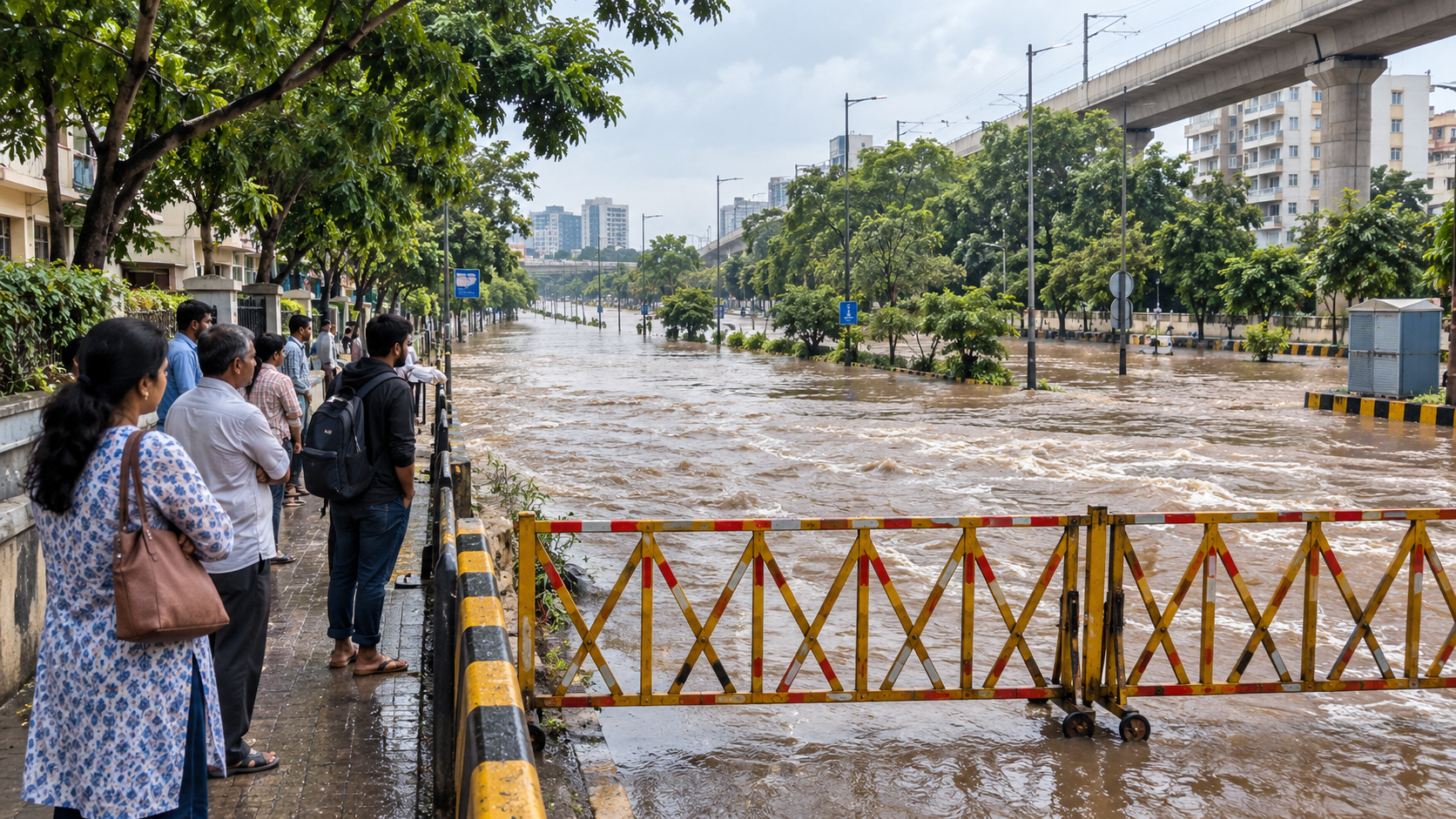
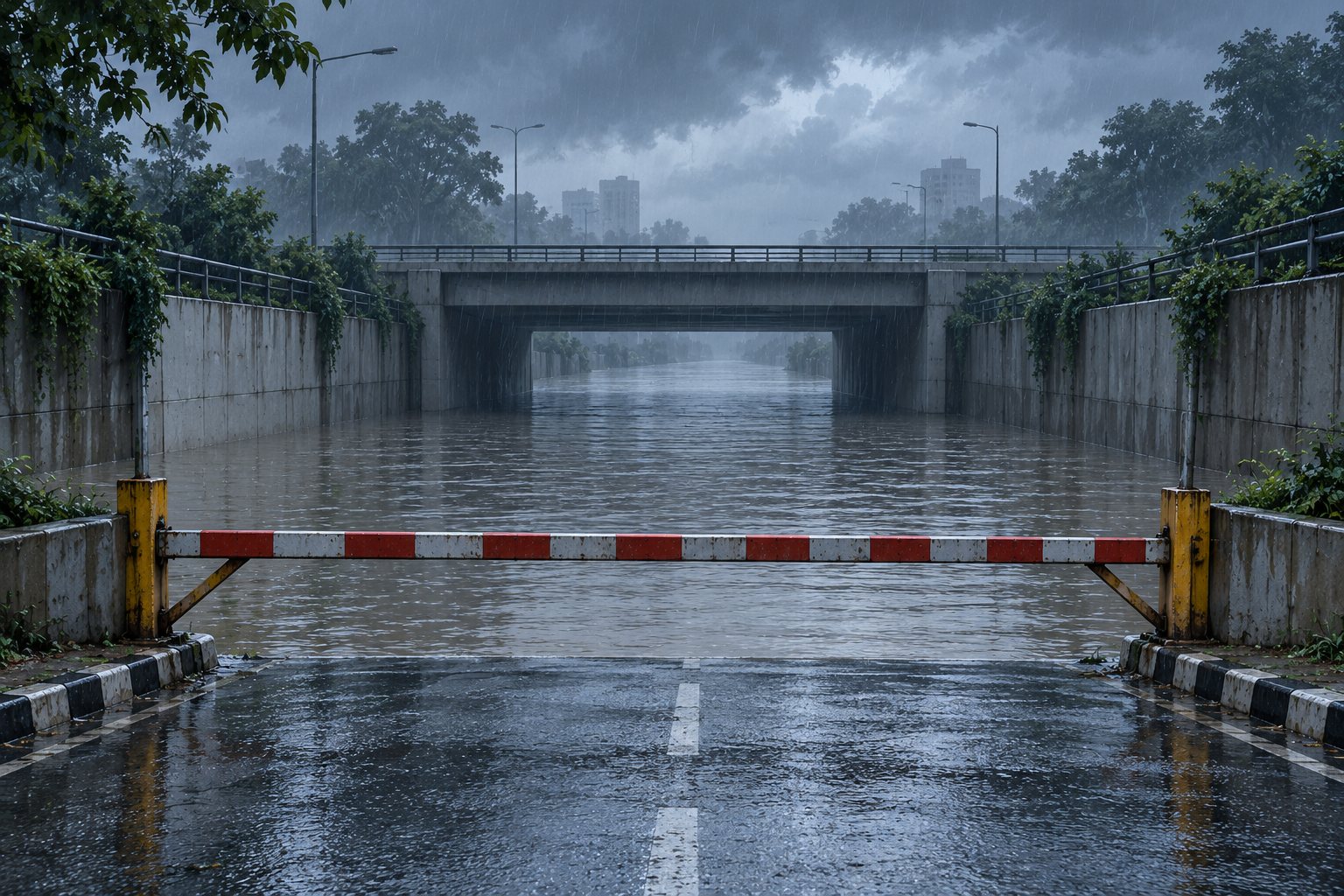
Cover note: AI-generated editorial illustration of a fictional flooded street; it is not a real incident photograph.
About the sources: SACHET carries Indian disaster alerts. US National Weather Service guidance backs the advice to stay off flooded crossings, but its US statistics are not Indian figures. MHA ERSS confirms 112.
What needs attention
- Depth, current, debris, live wires and dirty water cannot be judged reliably by eye. Being inside a vehicle does not protect you from floodwater.
- The NCDC (Health Ministry) flood advisory of 2022 tells households to switch off the main power switch and close the gas valve, block drains and toilet bowls with sandbags, and stay out of floodwater; it lists cholera, typhoid, leptospirosis, hepatitis A and E, dengue and malaria among the illnesses linked to floods.
- The Delhi Fire Service says not to walk into flowing water that is ankle-deep or higher and not to drive on flooded roads because the depth is not obvious.
Controls that reduce risk
- Know where official alerts come from, your route to higher ground, what medicines and documents to carry, and who in the family will need help to move.
- Keep three days of drinking water, food and medicines, and documents in a waterproof bag.
- Know your district disaster helpline and save 112.
- After the water goes down, boil or chlorinate drinking water and throw away food that touched floodwater.
Common unsafe practices
- Driving through floodwater.
- Going into the water to rescue someone without training.
- Relying on an old route map or post.
- Drinking or cooking with floodwater.
- Eating food that touched floodwater.
- Switching on wet electrical equipment.
- Ignoring fever or diarrhoea after a flood.
Leave a comment