
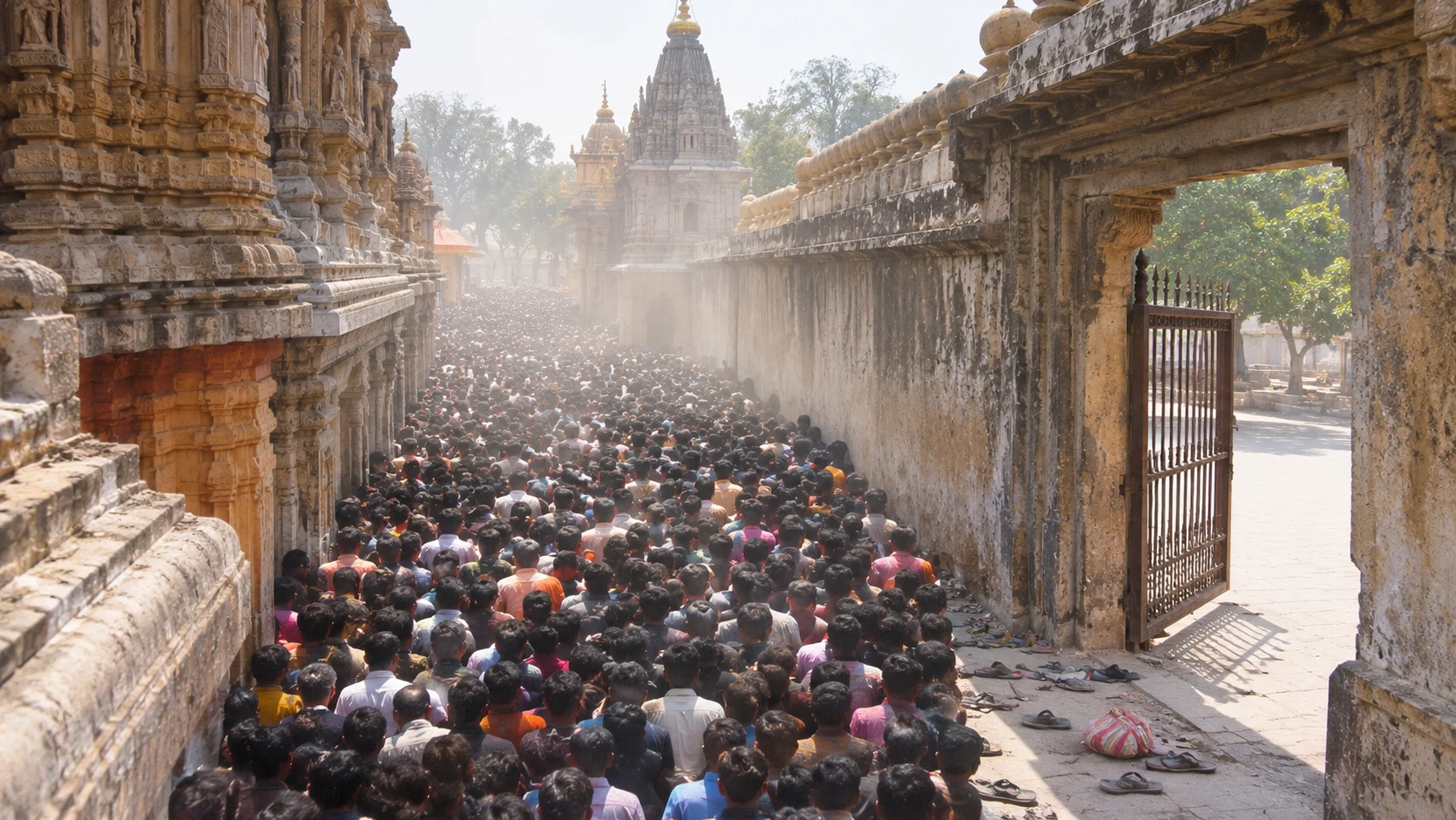
Quick answers
How do I survive if I get caught in a stampede?
Stay on your feet with knees slightly bent, move with the flow and diagonally toward the edges, keep your arms in front of your chest to protect breathing, and stay away from walls, gates and poles.
What should I do if I fall in a stampede?
Curl sideways with knees to chest and arms around your head, roll toward open space, and do not try to stand up instantly.
What are the warning signs of a dangerous crowd?
Watch for blocked or no visible exits, tight shoulder-to-shoulder contact, being unable to move your arms freely, heat, lack of air and rising noise. If you sense this, move out early.
How can I prepare before attending a large event?
Note the entry and exit points on arrival, keep your phone charged and share your location, wear breathable clothes and good shoes, carry water and a whistle, and fix a family meeting point.
How many people died in stampedes in India in 2024?
The National Crime Records Bureau recorded 25 stampede cases and 147 deaths in 2024, and 32 deaths in 2023. The Hathras satsang crush on 2 July 2024 alone killed 121 people.
What usually sets off a crowd crush in India?
In the cases we list, the triggers given were a rumour of live electric current, a narrow gate or staircase, a crowd far above the permitted number, rain, vehicles entering a crowded spot and weak crowd control. These come from officials and inquiries as reported, not from one study.
What does the National Disaster Management Authority tell visitors to do in a crowd?
Its 2014 crowd guide says that where there is an obstruction in front, do not push through or push back, but hold and alert the people behind to hold until it is removed. It also tells visitors to travel light and learn the entry and exit points.
On 2 July 2024, a crowd leaving a satsang in Hathras, Uttar Pradesh, surged and fell. 121 people died, most of them women. A judicial commission later held the organisers mainly responsible and also blamed lapses by the local administration and police (IANS, 21 February 2025).
The National Crime Records Bureau recorded 25 stampede cases and 147 deaths in India in 2024, and 128 of those killed were women (NCRB, Accidental Deaths & Suicides in India 2024, Table 1.7). The Hathras crush, which happened that year, killed 121 people on its own.
In a crowd crush, most people do not die from being trampled. They die because the crowd is packed so tightly that they cannot expand their chest to breathe. What keeps you alive is noticing the danger early, staying on your feet and keeping space to breathe.
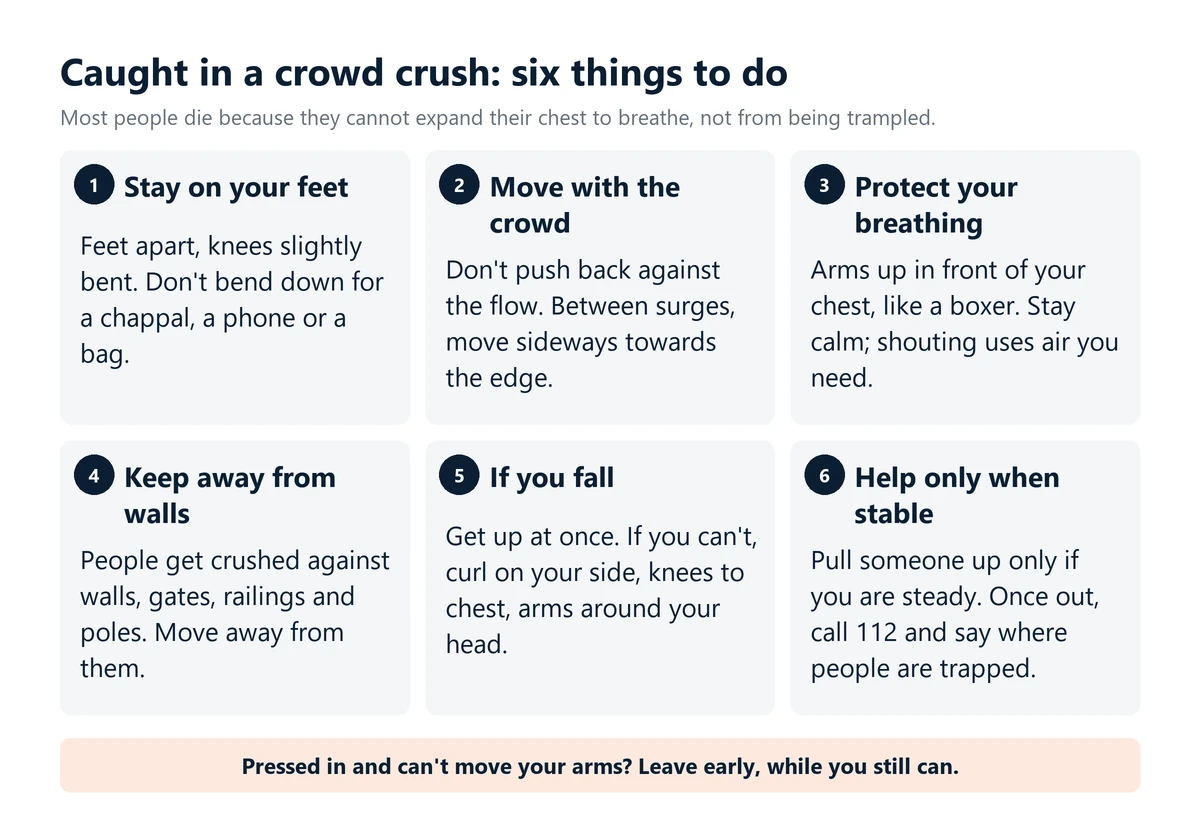
Why crushes happen
- Two streams of people meet at a narrow gate, a bridge or a staircase.
- Rain, a rumour or a VIP convoy makes people rush in one direction.
- Exits are locked, blocked or too few for the crowd.
- There is no public address system, poor lighting, or no one to give directions.
- Someone falls, and the people behind keep being pushed forward over them.
Spot the danger early
- You cannot see an exit, or the gates are shut.
- You are pressed shoulder to shoulder and front to back with strangers.
- You cannot move your arms freely.
- It is getting hot and hard to breathe, and the noise is rising.
- Police or volunteers are shouting and losing control.
If you feel this, leave early, while you still can. Do not wait for the darshan, the speech or the fireworks.
If you are caught in a crush
1. Stay on your feet
- Keep your feet apart and your knees slightly bent for balance.
- Do not bend down to pick up a chappal, a phone or a bag.
2. Move with the crowd, not against it
- Do not push back against the flow.
- Between surges, move sideways and at an angle towards the edge of the crowd.
3. Protect your breathing
- Hold your arms up in front of your chest, like a boxer, to keep a little space to breathe.
- Stay calm and save your breath. Shouting uses air you need.
4. Keep away from walls, barriers and pillars
- People get crushed against walls, gates, railings and poles. Try to move away from them.
5. If you fall
- Try to get up at once. Get your feet under you and push up.
- If you cannot get up, curl on your side with your knees to your chest and your arms around your head. Lying on your side protects your chest better than lying face down or on your back.
6. Help others only when you are stable
- Pull someone up only if you are steady on your feet yourself.
- Once you are out, call 112 and tell police or volunteers where people are trapped.
Inside a building or venue
- When you arrive, note the entry and the exits, including side gates. At a club or party on New Year’s Eve, our guide to New Year’s Eve in India applies the same habit to fire and a crush.
- Avoid corners, pillars and the foot of staircases.
- If people start pushing, head for a side exit, not the main gate everyone else is running to.
- If there is smoke, stay low, cover your nose and mouth and move away from it.
- Do not jump from a height unless there is no other way.
Before you go to a big event
| Do this | Why |
|---|---|
| Look at how crowded it is before you go in | If it is already packed, come back later |
| Charge your phone and share your location with family | So you can find each other if separated |
| Wear comfortable clothes and closed shoes | Chappals come off and trip people |
| Carry water and a whistle | Heat and getting separated are common |
| Fix a family meeting point and put a phone number in children’s pockets | Lost children are found faster |
Myths and facts
| Myth | Fact |
|---|---|
| “Running will get me out faster.” | Running adds to the push and makes you more likely to trip. |
| “Shouting for help will save me.” | In a crush nobody can hear or move. Save your breath and keep your balance. |
| “Stampedes only happen in big cities.” | Deadly crushes in India have happened at village satsangs, melas, temples, railway stations and stadiums. |
| “A wall gives me something to lean on.” | Walls, gates and railings are where people get crushed. |
Crowd crushes in India: the record since July 2024
A crush is not something that happens only somewhere else. The table lists eleven crushes in India since July 2024, with what a government, a court or an inquiry said where we could find it. Two are our own case studies from this year. Deaths are the figures officials gave at the time, and where reports differ we say so. This is not a complete list of every crush in the country.
| Date | Place and event | Deaths | What officials or inquiries said |
|---|---|---|---|
| 17 Oct 2026 | Chorbagan Durga Puja pandal, Kolkata (our case study) | 19 | Crush at an exit gate in the rain. The Chief Minister gave 19 dead and 25 injured. The cause is not final; a six-member team was formed on 21 October to inquire. |
| 17 Aug 2026 | Ashok Dham temple approach, Lakhisarai, Bihar (our case study) | 7 | The district administration said seven women died in the crush, not from electrocution, after a barricade broke and a fallen pole set off a rumour of live current. No official finding was published when we last checked. |
| 27 Sep 2025 | TVK political rally, Karur, Tamil Nadu | 41 | The Supreme Court ordered a CBI inquiry on 13 October 2025, monitored by a committee headed by a former Supreme Court judge. |
| 27 Jul 2025 | Mansa Devi temple route, Haridwar | 6 to 8 (reports differ) | A magisterial inquiry was ordered. The state government and police named a rumour of an electric current on the stairs as the trigger. |
| 29 Jun 2025 | Rath Yatra near Gundicha temple, Puri | 3 | Police said two trucks carrying ritual material entered the crowded spot. An inquiry report went to the Chief Minister on 31 July 2025; its findings were not made public. |
| 4 Jun 2025 | Outside Chinnaswamy Stadium, Bengaluru | 11 | A one-man commission, as reported, blamed a policing failure and called the stadium unsuitable for a mass gathering; the cricket association and the organisers were also held responsible. |
| 3 May 2025 | Lairai Devi jatra, Shirgao, Goa | 6 | The state police chief said it may have been a rumour and that the cause was being investigated. A magisterial inquiry was ordered. |
| 15 Feb 2025 | New Delhi railway station, foot overbridge stairs | 18 | Railways told Parliament that 18 died and 15 were injured (PIB). Its inquiry said a large headload fell and passengers fell on one another on the stairs. |
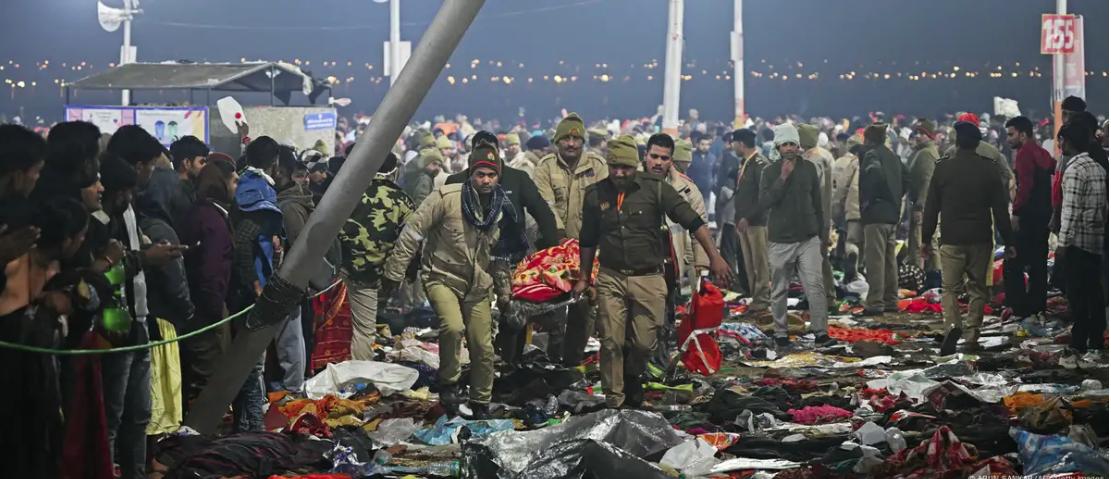
| 29 Jan 2025 | Maha Kumbh, Mauni Amavasya, Prayagraj | 30 | UP Police said 30 died and that barricades gave way. A judicial commission was set up; we could not find its report. |
| 8 Jan 2025 | Vaikunta Dwara token counters, Tirupati | 6 | A one-man inquiry commission, as reported, said crowd-control rules were not enforced at one counter; the state acted against officials. |
| 2 Jul 2024 | Satsang at Phulrai village, Hathras, Uttar Pradesh | 121 | The judicial commission report, tabled on 5 March 2025, faulted overcrowding, mismanagement by organisers and negligence in granting permission (as reported). Permission had been sought for 80,000 people; 2.5 to 3 lakh came. |
The National Crime Records Bureau counts more widely than the table. It recorded 25 stampede cases and 147 deaths in 2024, against 32 deaths in 2023 (Accidental Deaths & Suicides in India 2024). The 2024 total is far higher mostly because of one event, Hathras.
What the record shows
- A rumour set off at least two. At Lakhisarai and Haridwar the trigger given was a rumour of live electric current, and Goa’s police chief also pointed to a rumour. If you hear a sudden shout about a wire, a collapse or a fire, do not run with the crowd. Look for the nearest open side and move calmly.
- Gates, stairs and bridges came up again and again. Chorbagan was an exit gate, New Delhi a foot overbridge staircase. A narrow point plus a crowd arriving from both sides is the pattern.
- Permission on paper is not capacity on the ground. At Hathras, permission was sought for 80,000 people and 2.5 to 3 lakh were reported to have come.
- Where findings are public, they point at planning and control. In the three inquiries whose findings we could find reported (Hathras, Bengaluru, Tirupati), the blame fell on organisers and officials, not on the people in the crowd.
The National Disaster Management Authority’s crowd guide (2014) gives visitors one more rule that fits the survival steps above: where something blocks the way in front, do not push through or push back. Hold, and warn the people behind you to hold until it clears. It also tells visitors to travel light and to learn where the entry and exit points are before the crowd builds. For the warning signs and what organisers must do, see Crowd-Crush Warning Signs, and for station crowds see Railway Station Stampedes in India.
What needs to change
- Organisers must keep crowds within the permitted number, with live monitoring at religious and public events.
- One-way entry and exit routes at large gatherings.
- Trained volunteer marshals at local festivals and satsangs.
- Public address systems and clear signs at every major venue.
- Emergency exits kept open, lit and marked.
- Police checks of the venue before the event, as the Hathras commission recommended.
Before your next mela or match
Tell your family three rules: stay on your feet, keep your arms up to protect your chest, and move sideways to the edge. Agree where you will meet if you get separated, and leave early if it starts getting too tight.
What needs attention
- Most crush victims die because they cannot breathe, not from trampling
- Narrow gates, two-way flows and locked exits turn a big crowd into a deadly one
- Women made up most of the stampede deaths NCRB recorded in 2024
- Leaving early, before the crowd gets too tight, is the safest choice
- Walls, gates and railings are where people get crushed
- Crowd control is the organiser's job; the Hathras commission blamed the organisers first
Controls that reduce risk
- Check how crowded an event is before you go in
- Note the main and side exits when you arrive
- Wear closed shoes and comfortable clothes
- Charge your phone and share your location with family
- Put a phone number in children's pockets and fix a meeting point
- Leave early if the crowd starts getting tight
Common unsafe practices
- Staying in a crowd that is already too tight
- Bending down to pick up a chappal, phone or bag
- Pushing back against the flow
- Leaning on walls, gates or railings
- Running or shouting in a packed crowd
- Going without a family meeting point




Leave a comment