
What happened here
 1 / 3
On Sunday, 1 November 2026, three small boys died in a village pond at Jhadeswarpur, Mahanga block, Cuttack district, Odisha, under the Bhadreswar police station. OrissaPOST puts the time at about 9 am. ETV Bharat and OdishaTV report that the boys, two brothers and a neighbour's child, aged roughly three to six, were trying to pluck water lily flowers and slipped into deep water. Family members and villagers, who spotted their footwear at the edge, searched, and the children were pulled out and taken to a hospital, where doctors declared them dead on arrival. Police registered a case, sent the bodies for post-mortem and are investigating. Reports differ on the ages, the panchayat name and who brought the boys out. Pond fencing, adult supervision and any assistance to the families were not reported.
Quick answers
What happened in Mahanga, Cuttack on 1 November 2026?
Three small boys drowned in a village pond at Jhadeswarpur in Mahanga block, Cuttack district, Odisha, while trying to pluck water lilies. They were taken to a hospital and declared dead on arrival.
How old were the children?
Roughly three to six years. ETV Bharat gives 6, 4 and 3; OrissaPOST gives 6, 5 and 6; OdishaTV describes them by school class. Their names are not used here.
How did the boys drown?
They reportedly slipped into deeper water while trying to pluck water lilies. The cause of death will be known after the post-mortem. How long they were out of sight is not reported.
Who brought the children out of the pond?
Reports differ. ETV Bharat says fire personnel pulled them out; OdishaTV says villagers, including a relative, pulled them out. The reports do not settle it.
Was the pond fenced or marked with a warning?
No report we opened says. Pond ownership, depth and fencing were not reported.
Has any compensation been announced?
None was reported in the pages we opened.
Why are water lilies dangerous for children?
Water lilies grow in deeper water on long stems, and the muddy bank is slippery and shelves away. A child can be out of depth in seconds and may make little sound.
What should I do if a child falls in a pond?
Shout for help, reach with a pole or throw a rope or float, and do not jump in without one. Call 112 or 108, and if the child is not breathing and you are trained, begin rescue breaths and chest compressions.
What happened
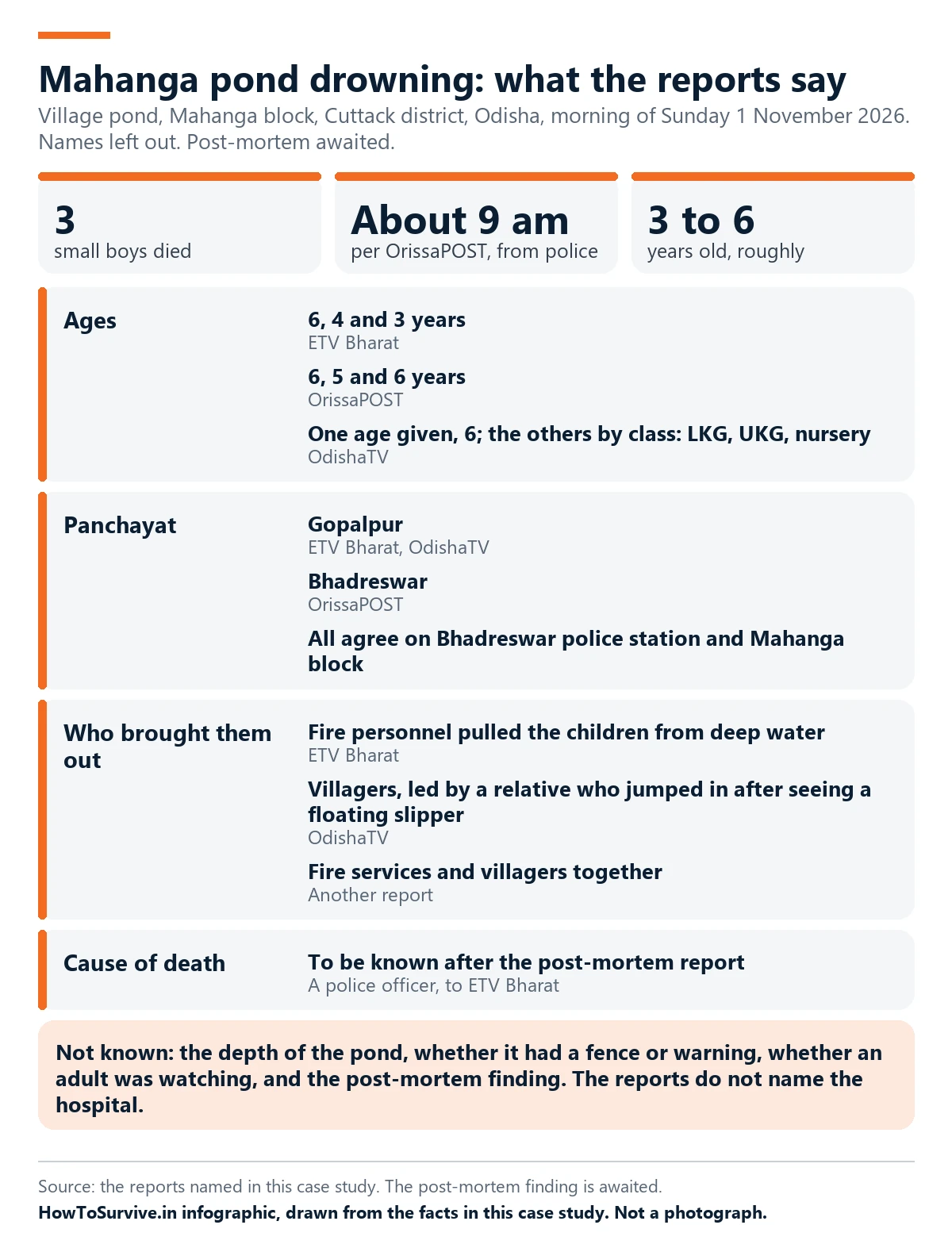
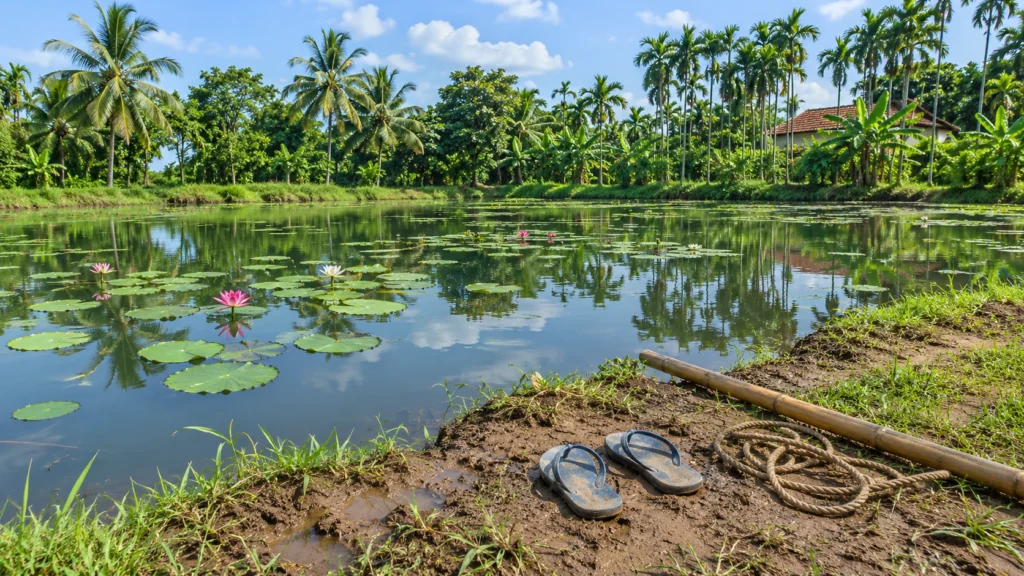
On the morning of Sunday, 1 November 2026, three small boys drowned in a village pond in Mahanga block of Cuttack district, Odisha. The Bhadreswar police station covers the village. The boys had gone to the water’s edge to pluck water lily flowers (kainchha or koi phula, as locals call them). They slipped into deeper water and did not come out. OrissaPOST quotes the Bhadreswar police inspector-in-charge for a time of around 9 am. ETV Bharat reports that family members and neighbours started looking for the boys after they went missing while playing near the pond, and spotted their footwear at the edge. All three were brought out of the water and taken to a hospital; ETV Bharat and OdishaTV report that doctors declared them dead on arrival. Checked on 3 November 2026; the latest reports we could open were dated 1 November.
Two of the boys were brothers and the third was a neighbour’s child, according to OrissaPOST, ETV Bharat and OdishaTV. The reports give their ages as roughly three to six years and say they were in nursery-level classes. We have left out their names. Police registered a case, sent the bodies for post-mortem and are investigating; a police officer told ETV Bharat that the exact cause of death will be known after the post-mortem report arrives.
What the reports say and where they differ
- Deaths: three boys, all reported dead. No report we opened mentions anyone surviving.
- Ages: ETV Bharat gives 6, 4 and 3 years. OrissaPOST gives 6, 5 and 6. OdishaTV gives only one age (6) and describes the others by class (LKG, UKG, nursery). We say “about three to six years”.
- Village and panchayat: the village is spelled Jhadeswarpur or Jhadeshwarpur. ETV Bharat and OdishaTV place it in Gopalpur panchayat; OrissaPOST says Bhadreswar panchayat. All agree on Bhadreswar police station and Mahanga block. The map point on this page is the Bhadreswar area, not the pond.
- Time: about 9 am per OrissaPOST (from police); “morning” per OdishaTV; not stated by the others.
- Who brought them out: ETV Bharat says fire personnel pulled the unconscious children from deep water and took them to a nearby hospital. OdishaTV says villagers, led by a relative who jumped in after seeing a floating slipper, pulled them out. Another report says fire services and villagers together rushed them to hospital. These may all be partly true; the reports do not settle it.
- Hospital: the hospital is not named in the reports we opened.
What is not known
- The depth of the pond and how the boys went in, one after another or together. OdishaTV says only that they “may have slipped”.
- Whether the pond had a fence, steps, a marker or any warning, and who owns it. No report says.
- Whether any adult was watching the children at the time.
- The post-mortem finding.
- Any ex gratia or assistance for the families. None was reported in the pages we opened.
Why water lilies are dangerous for children
A pond in an Odisha village is part of daily life. Flowers floating on the surface look close and easy, but a water lily grows from the bed on a long stem, usually in water that is already deeper than a small child is tall. The mud edge is slippery and often shelves away sharply, and a child who steps or leans in can be out of depth in a second. Small children also do not splash or shout much when they go under. That is why drowning is called a silent event: nearby adults may hear nothing. Our guide to emergency numbers in India lists who to call, and the guide to basic first aid covers the steps for an unresponsive child.
This is not the only time the site has recorded a group of drownings where a rescue attempt or a poorly protected water body was part of the story. See the Sai River drowning near Lucknow, where an unplanned rescue became a danger in itself, and the Sangareddy lake drownings.
Live or work in Cuttack or Mahanga block? Our Cuttack safety guide lists the emergency numbers, the fire stations in the city and the main local risks.
Safety steps for families and villages
These are general practices, not findings about this pond.
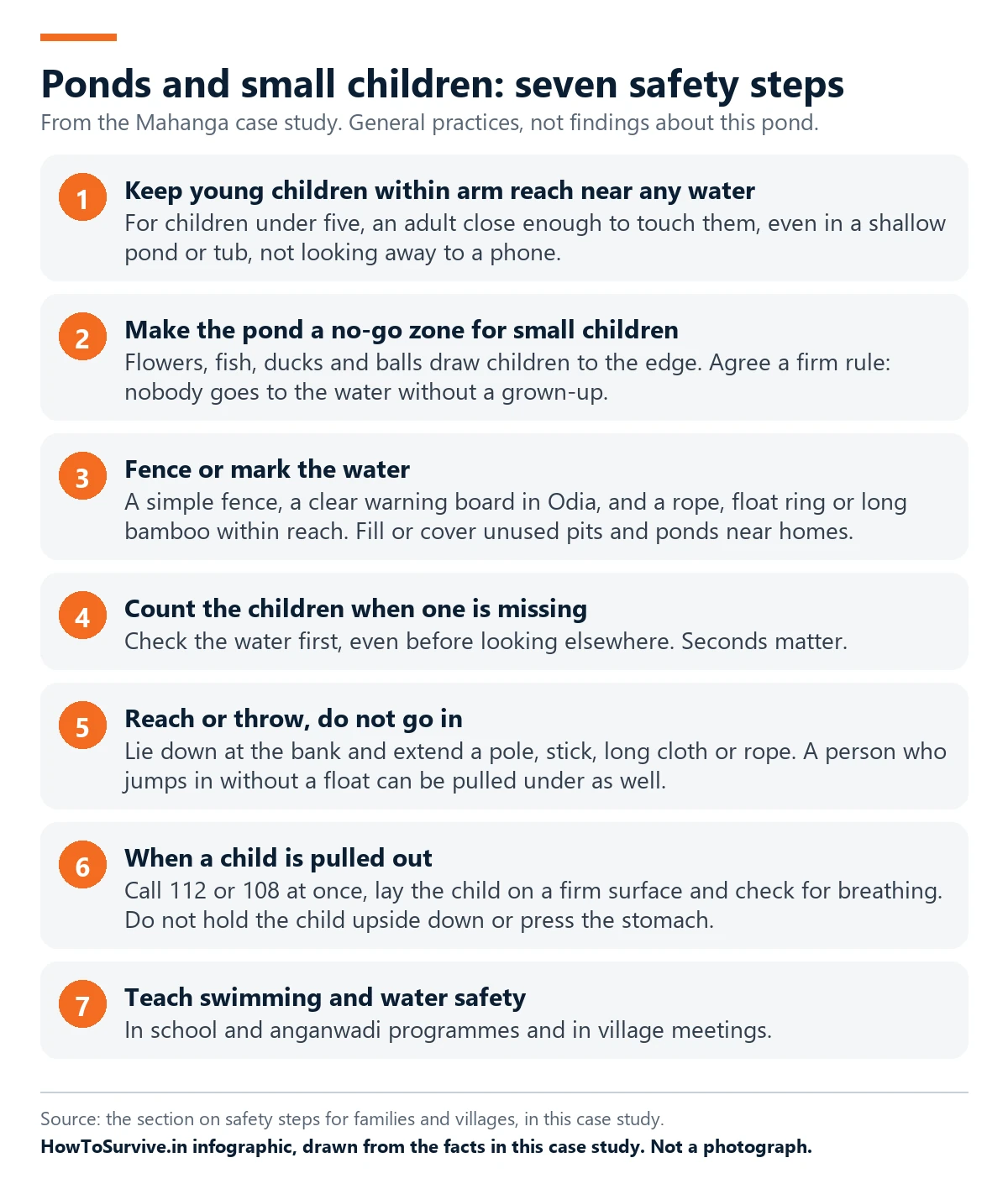
- Keep young children within arm’s reach of an adult near any water. For children under five, an adult should be close enough to touch them, even in a shallow pond or tub, and should not look away to a phone.
- Make the pond a no-go zone for small children, and tell older ones why. Flowers, fish, ducks and balls draw children to the edge. Agree a firm rule: nobody goes to the water without a grown-up.
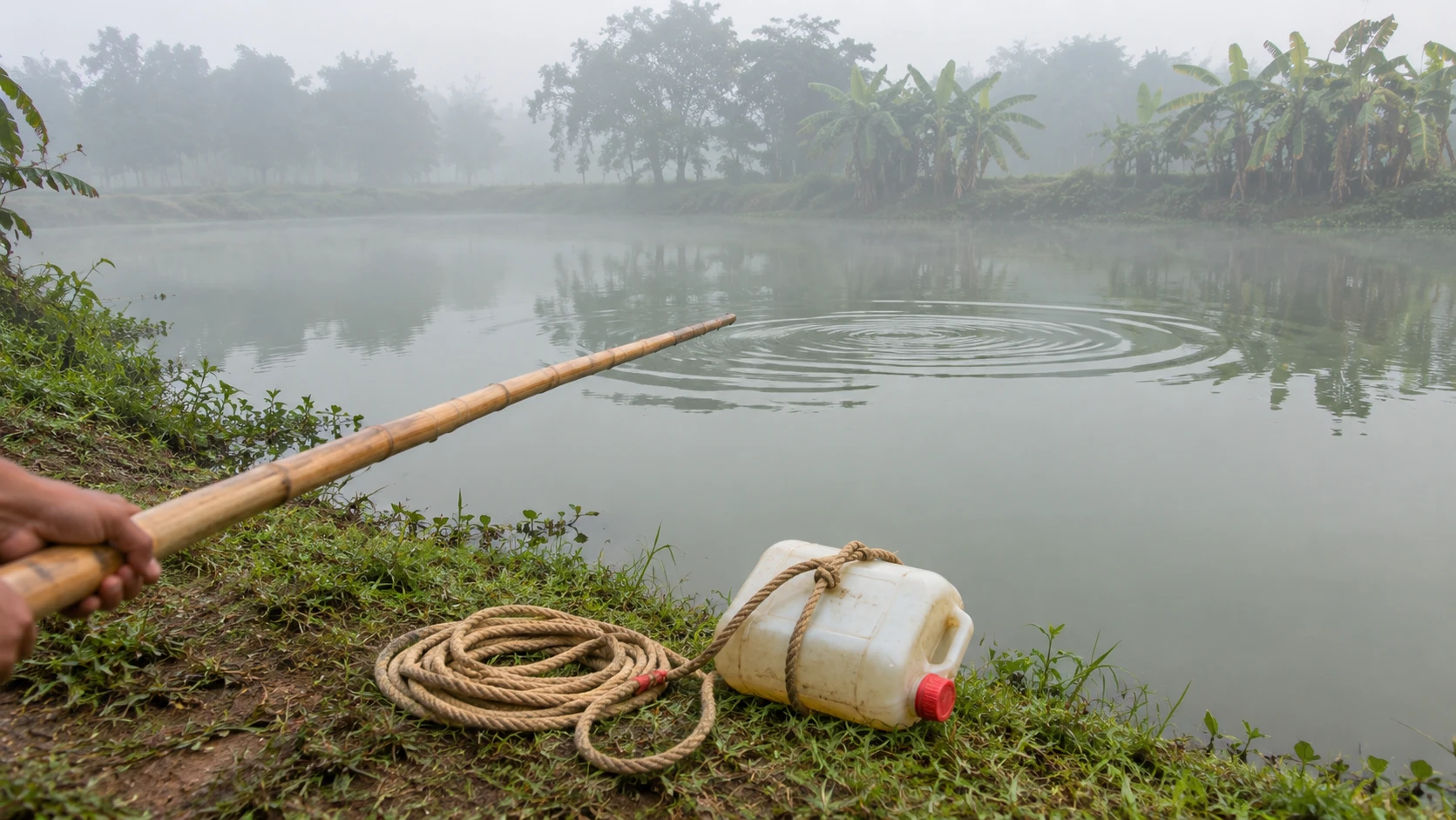
- Fence or mark the water. Panchayats and owners can put up a simple fence or barrier, a clear warning board in Odia and a rope and a float ring or a long bamboo within reach. Fill or cover unused pits and ponds near homes.
- Count the children when one is missing. If a child cannot be found, check the water first, even before looking elsewhere. Seconds matter.
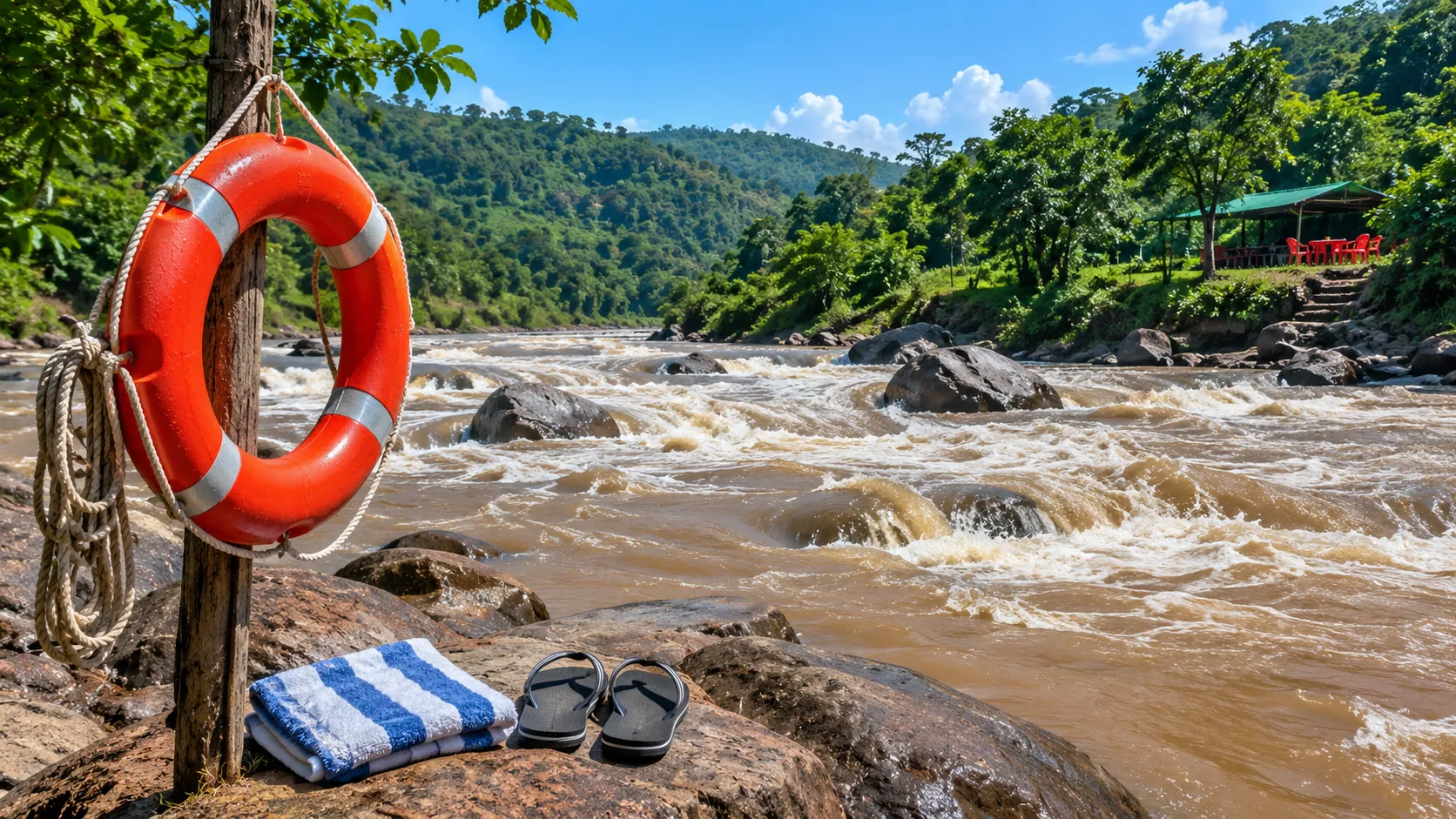
- Reach or throw, do not go in. If you see a child in trouble, lie down at the bank and extend a pole, a stick, a long cloth or a rope. A person who jumps in without a float can be pulled under as well, and that is how one drowning becomes three. Our related guide on how to rescue a drowning person without risking your own life explains this in detail.
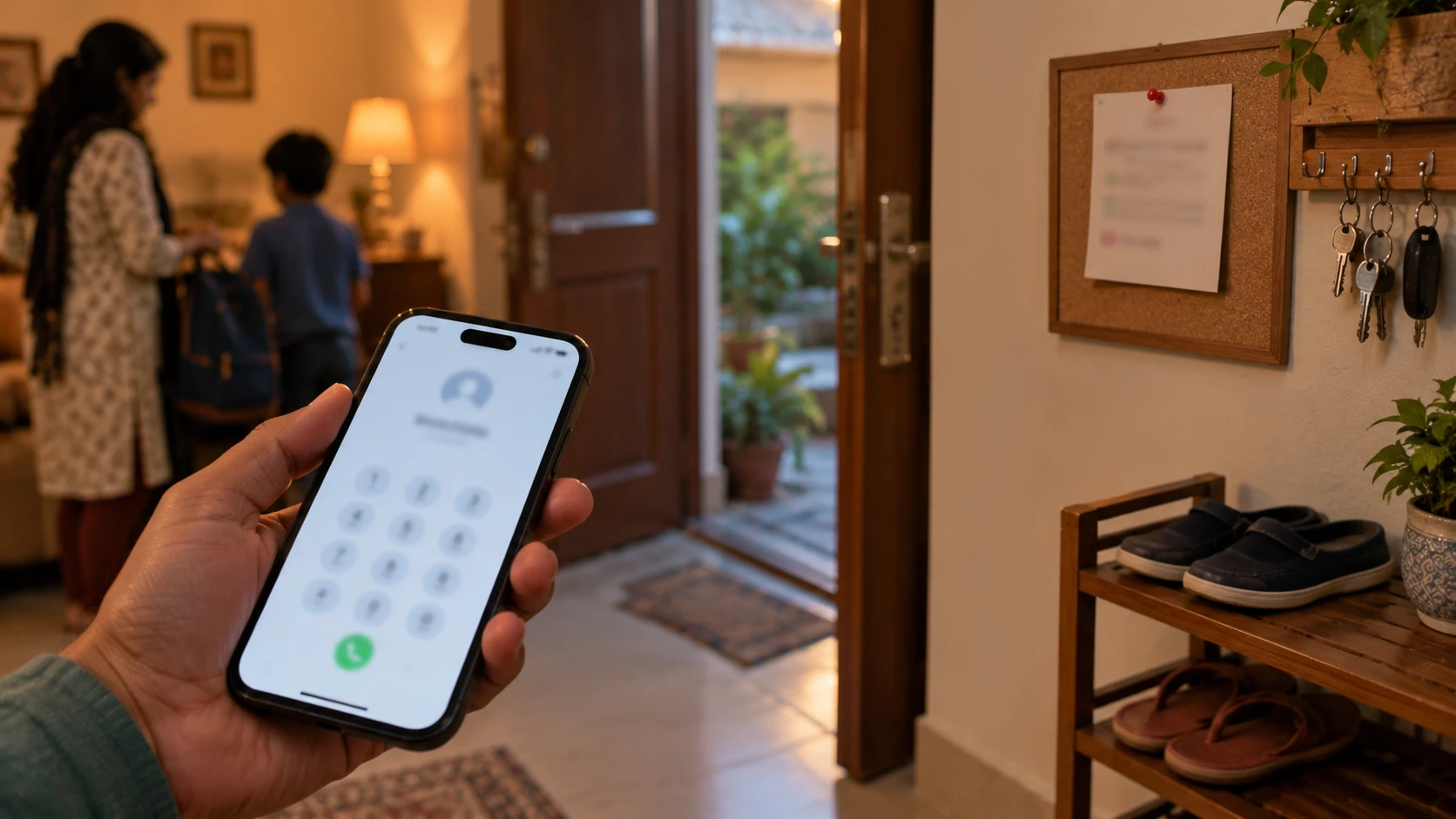
- When a child is pulled out, call 112 or 108 at once, lay the child on a firm surface, check for breathing and, if trained, begin rescue breaths and chest compressions while the ambulance is on its way. Do not hold a child upside down or press the stomach to drain water.
- Teach swimming and water safety in school and anganwadi programmes and in village meetings. Our related guide on water safety in rivers, ponds and wells is a good place to start.
- Three small boys go to a village pond at Jhadeswarpur to pluck water lilies and slip into deeper water
- Family members and neighbours search after the boys go missing; footwear is seen at the edge of the pond
- The boys are pulled out by fire personnel and villagers (reports differ) and taken to a hospital, where doctors declare them dead on arrival
- Bhadreswar police reach the spot, register a case and send the bodies for post-mortem
- Kalinga TV, OTV, News18 Odia, OrissaPOST, OdishaTV and ETV Bharat report the deaths
- No post-mortem finding, assistance announcement or pond-safety action found in any report we could open
Why consequences escalated
- Three small boys drowned in a village pond in Mahanga block, Cuttack district, on the morning of 1 November 2026.
- They were reported to be plucking water lilies when they slipped into deep water.
- They were taken to a hospital and declared dead on arrival.
- Police have registered a case; the post-mortem result is awaited.
- Reports differ on ages, panchayat name and who brought the children out.
Failures and risk multipliers
- No finding of fault has been made and none is stated here.
- Whether the pond had a fence, steps, a warning or a marker is not reported.
- Whether an adult was watching the boys at the time is not reported.
- The boys reportedly were playing near the pond and went missing; it is not known how long they were out of sight.
- The depth of the pond and the cause of death are not established; the post-mortem is awaited.
Actions that reduce risk
- Keep children under five within arm's reach of an adult near any water.
- Make ponds, ditches and pits near homes no-go areas for small children; fence, cover, fill or mark them.
- If a child is missing, check the water first.
- Reach or throw a pole, rope or float; do not jump in without one.
- Call 112 or 108 and start rescue breathing and compressions if trained; do not press the stomach or hang the child upside down.





Leave a comment