

Quick answers
Should I breathe through my nose or mouth if I am trapped in smoke?
No fire service we opened gives a rule. One US university guide says to hold your breath as much as possible and otherwise breathe shallowly through the nose. Our advice is to keep the cloth over both nose and mouth and take slow, small breaths. Getting out matters far more than the technique.
Does a wet cloth protect you from smoke?
It may reduce some particles, and Indian state guidance lists it, but the Public Health Agency of Canada says a scarf or bandana will not protect against wildfire smoke. Treat it as a last resort and never as a reason to wait.
Is a wet cloth better than a dry one?
The evidence is mixed. A FEMA FAQ on chemical attacks says a dry folded handkerchief filtered particles best and that wet material was harder to breathe through. Use a thick folded cloth, and wet it only if water is at hand.
Does a wet cloth stop carbon monoxide?
No. Carbon monoxide is colourless and odourless, according to the US CDC, and a cloth cannot filter it. That is why you should leave, not wait.
Why should I stay low in a smoky room?
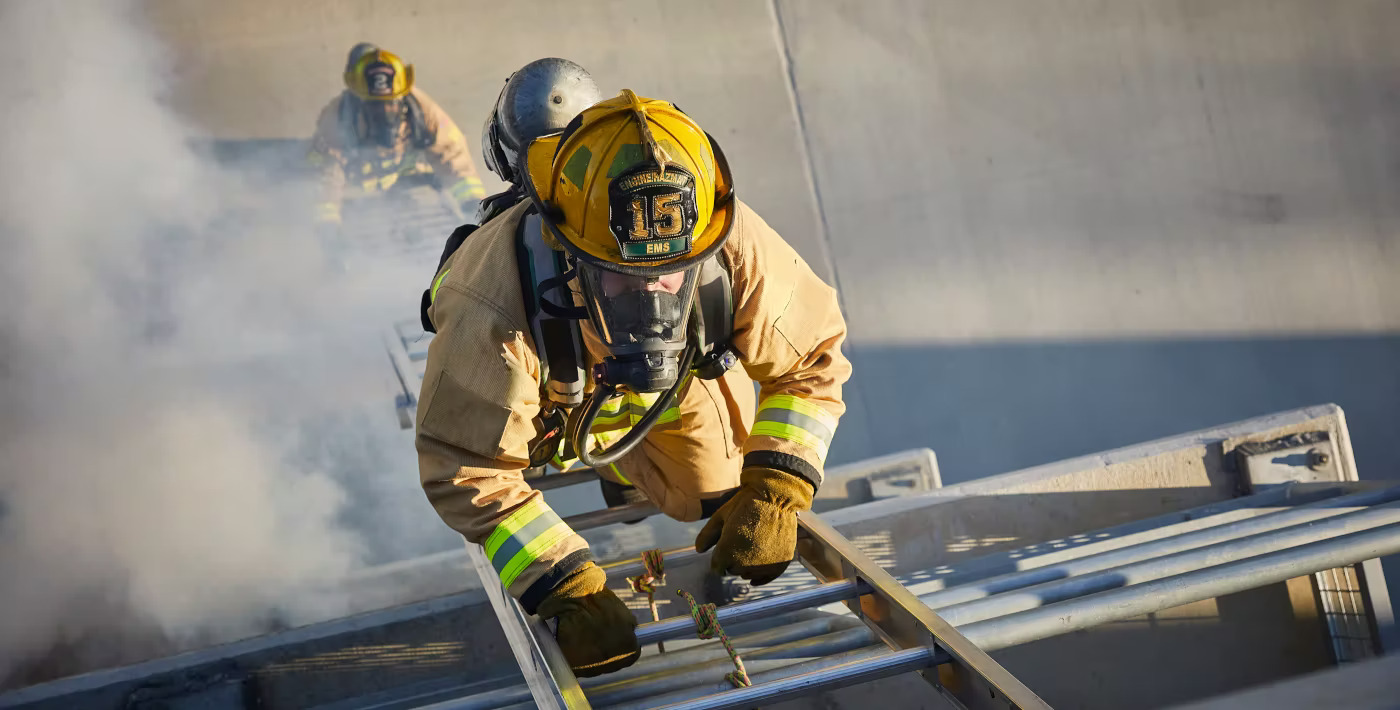
The US Fire Administration says to get low and go, and the Manipur State Disaster Management Authority says to lie down or sit near the floor if trapped. Smoke rises to the ceiling, so the air near the floor is usually better.
Can I use the lift to escape a fire?
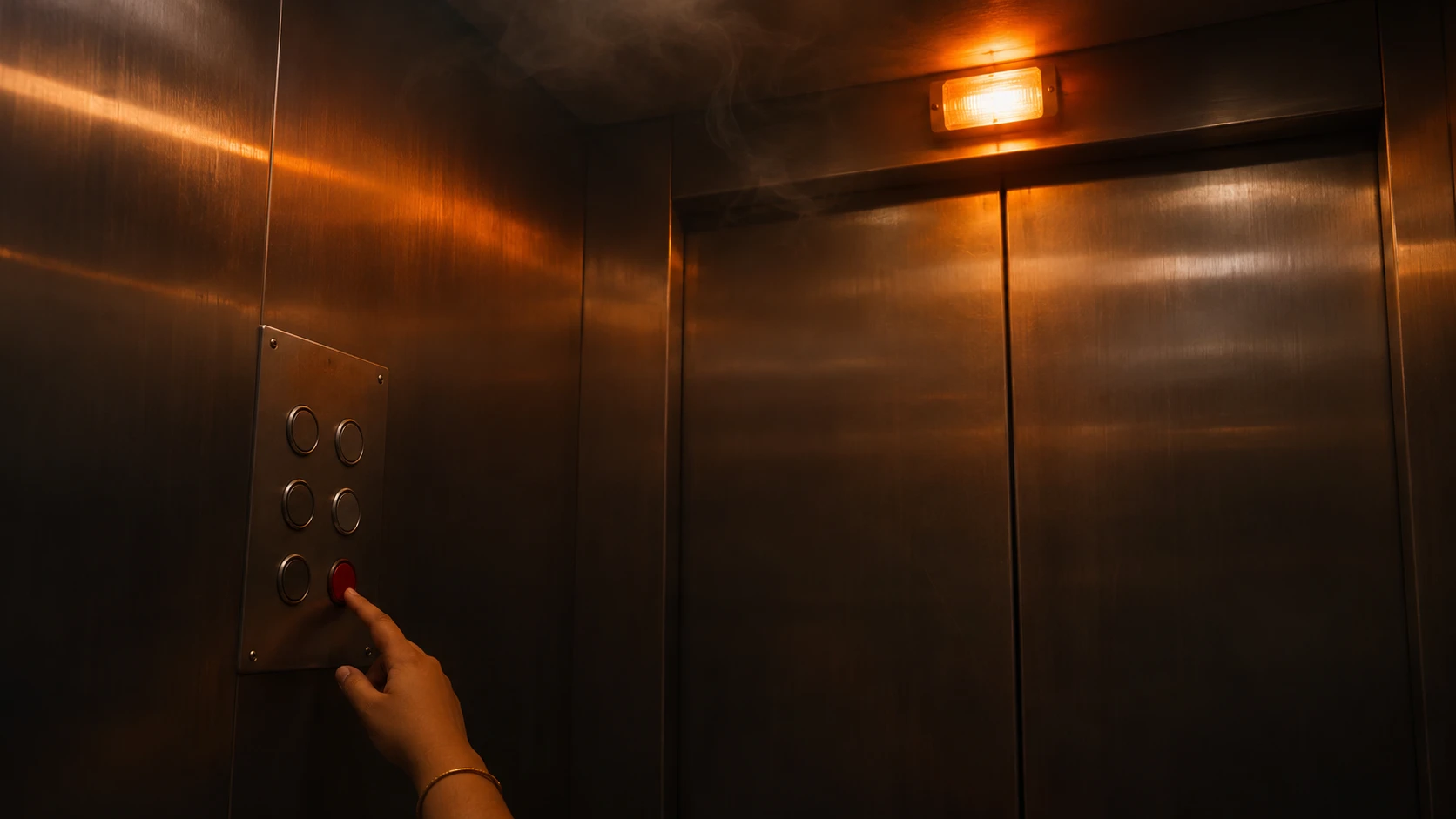
No. The Delhi Fire Service says not to use the lift as a means of escape. Only a building's designated evacuation lift, if it has one, may be used, and only as its fire plan or staff direct.
What do I do if I cannot get out of the room?
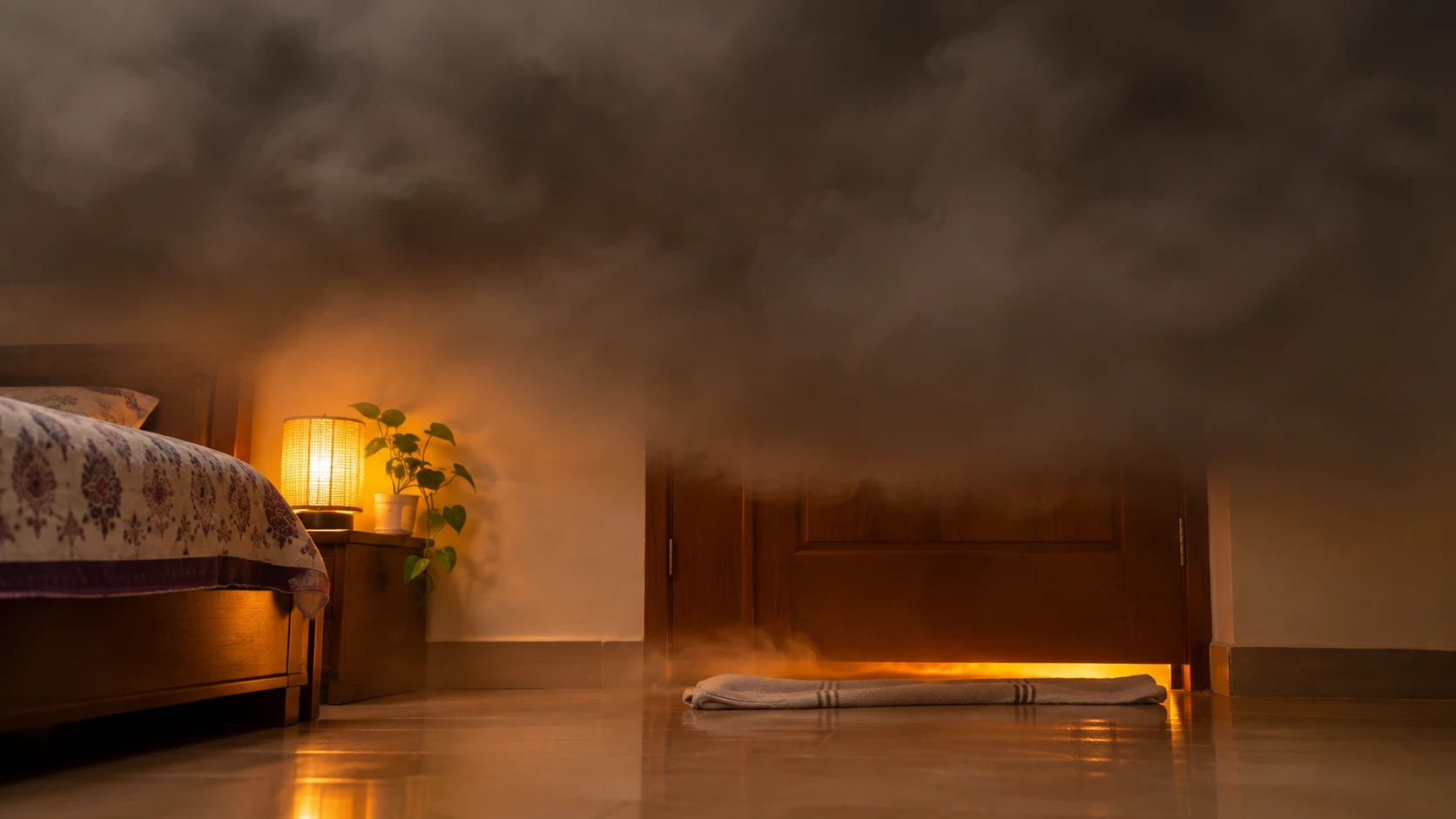
Close the door, cover the vents and cracks around it with cloth, call 101 or 112, say exactly where you are and signal from the window with a light-coloured cloth or a torch. Do not break the glass unless it is absolutely necessary.
Is a smoke hood better than a wet cloth?
A hood is a sealed device. One UK fire service says its hoods protect against toxic gases, vapours and particles for at least 15 minutes. We found no Indian standard for household hoods, so ask your local fire station before buying one.
It is a fair question, and it is the one people actually type into a search box: if I am trapped in smoke, should I breathe through my nose or my mouth? The honest answer is that no fire service or disaster authority we could open gives a firm rule on it. What the guidance does agree on is more useful. Get low, cover your face if you can, keep your breathing slow and shallow, and spend your effort on getting out or on sealing yourself into a room, rather than on how you breathe. Checked 3 November 2026.
In short
- Nose or mouth: there is no official ruling. The only specific line we found, from a US university’s emergency guide, says to hold your breath as much as possible and otherwise breathe shallowly through the nose. Indian authorities say wet cloth and staying low, and say nothing on nose versus mouth.
- A wet cloth is a last resort, not a shield. It may cut some of the particles. It does nothing about carbon monoxide, which you cannot see or smell.
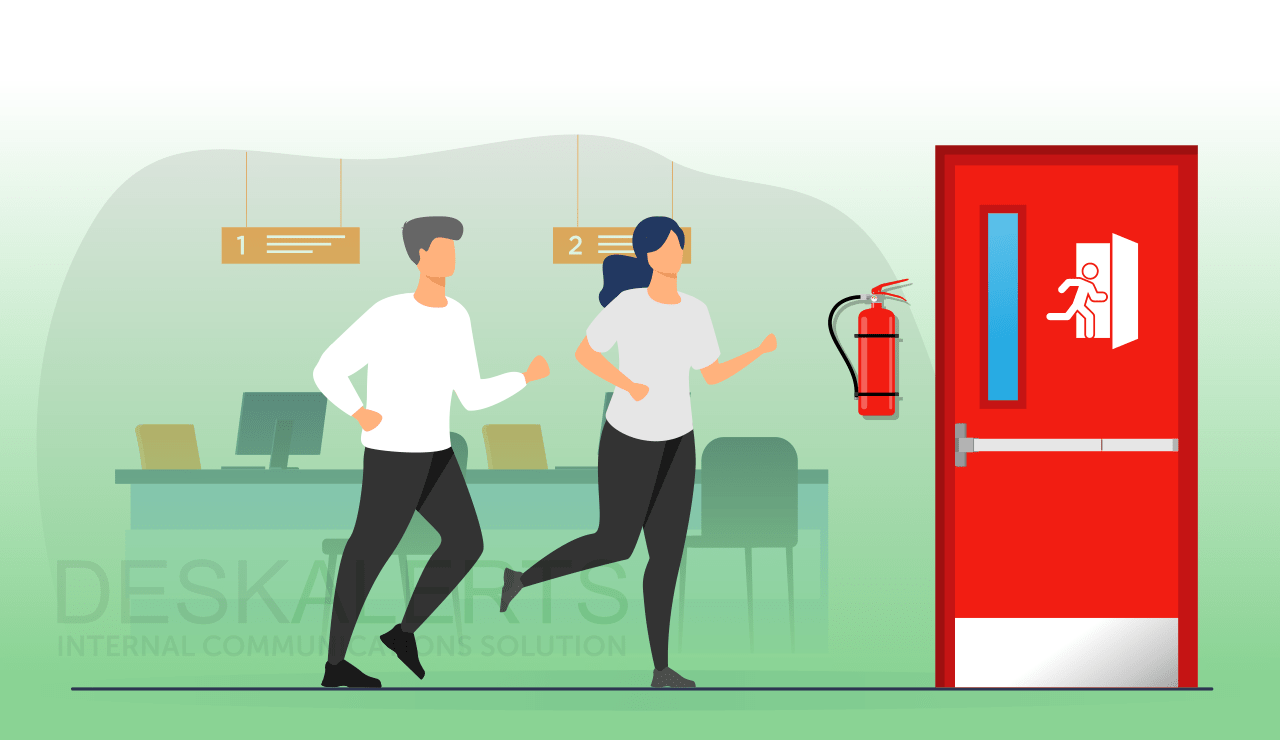
- Leave first. Take the nearest clear exit, stay low, do not use the lift, and call 101 or 112 once you are out or if you cannot get out.
- If you cannot get out, close the door, block the gaps with cloth, call, and signal from a window with a light-coloured cloth or a torch.
Nose or mouth: what the guidance actually says
We went looking for a clear instruction and did not find one from a fire service. The Manipur State Disaster Management Authority’s fire do’s and don’ts sheet says that if you are trapped you should lie down or sit near the floor, cut down the smoke entering the room, look for an exit and breathe through a wet cloth. It does not say through which opening. The Delhi Fire Service sheets we opened say nothing on breathing at all. The US Fire Administration says “get low and go” under the smoke, also without a word on nose or mouth.
The one explicit line came from the University of Illinois Chicago’s emergency guidelines, which tell people caught in smoke to hold their breath as much as possible, to breathe shallowly through the nose, and to use a shirt or towel as a filter. That is a university safety office, not a fire authority, and it does not say why. We looked for a medical source on whether the nose filters smoke better than the mouth and found only wellness and clinic pages, so we are not going to claim it.
So here is how we would put it, and this part is our own plain reasoning, not a quoted rule. Whatever the cloth does, it can only do it for air that passes through it, so keep it over both your nose and your mouth and do not breathe around its edges. Take slow, small breaths rather than gasping. If you can reach clear air within a few steps, hold your breath for those steps. Spend your attention on moving, not on breathing technique.
Stay low, but keep moving
All the sources we opened agree on this. The US Fire Administration’s escape message is to get low and go. The Manipur sheet says to lie down or sit near the floor if trapped. The University of Illinois guidance says smoke rises to the ceiling, so stay low and crawl toward an exit if you can. We did not find an Indian or US official source we could open that gives a height in feet or inches for where the clean air starts, so we do not give one. The point is simply to keep your head below the thickest smoke, and still to keep going towards the exit.
The wet cloth: what it can and cannot do
| Question | What the sources we opened say | What it means for you |
|---|---|---|
| Does a wet cloth filter smoke? | Indian state guidance lists breathing through a wet cloth as something to do if you are trapped. The Public Health Agency of Canada says a scarf or bandana will not protect you against wildfire smoke. | Treat it as a last-resort aid that may cut down the particles you breathe in. Do not treat it as protection. |
| Is wet better than dry? | A US FEMA FAQ on chemical attacks says that in studies a dry folded handkerchief was the best filter for particles, and that wet material filtered vapours worse and was harder to breathe through. That page is about chemical releases, not house fires. | The evidence is mixed. Use a thick, folded cotton cloth. Wet it only if water is at hand and it costs you no time. |
| Does it stop carbon monoxide? | The US CDC describes carbon monoxide as colourless and odourless. Canada’s public health agency says even a proper respirator does not protect against the gases in smoke. | No. A cloth cannot filter a gas you cannot see or smell. This is the main reason to leave rather than wait. |
| Does it help with heat? | None of the official sources we opened makes a claim either way. | We cannot say. Do not rely on a cloth to make hot air safe. |
| Should I stop to wet it? | Not addressed directly. The Delhi Fire Service sheet says to leave by the nearest exit. | If the exit is close and the route is clear, go first and cover your face as you move. |
We could not find a controlled test of a wet cloth against house-fire smoke that we could open, so none of this is a measured claim about how many particles a cloth stops. If you keep a thick cotton towel or dupatta in a bedroom or by the door, that is fine, but do not rely on it, and never let it become the reason you wait.
Getting out: the order that matters
- Know two ways out. The Manipur sheet asks every household to learn at least two escape routes and keep them free from obstacles. Our guide to a home fire escape plan shows how to draw one.
- Go to the nearest clear exit. The Delhi Fire Service sheet says to leave the premises by the nearest available exit, to close doors behind you, and not to shout or run, because that tends to cause panic.
- Feel the door before you open it. The US Fire Administration says to use the back of your hand, and if the door is hot, leave it closed and use your second way out.
- Close doors behind you. Both the US Fire Administration and the Delhi Fire Service say to do this as you leave. We have not found a test figure to quote on how much it slows smoke, but it is the guidance.
- Stay out. The US Fire Administration says never to go back in for any reason. Our evacuation plan guide explains the assembly point and head count.
Lifts: when not to use them
The Delhi Fire Service sheet is direct: do not use the lift as a means of escape. Use the stairs. There is one wrinkle. The 2026 National Building Construction Standards, Part F, define a fireman’s lift, which is for the fire service and is part of a protected firefighting shaft, and an evacuation lift, which it describes as a lift that can be used during an emergency for self-evacuation. An ordinary lift in an apartment block or office is neither. If your building has an evacuation lift, follow what the building’s fire plan or the staff tell you, not your own guess. If you are stuck inside any lift, read our guide on how to survive a lift fire or power failure.
If you cannot get out
This is where the guidance is clearest. The US Fire Administration says that if you cannot get out, close the door and cover the vents and the cracks around it with cloth to keep smoke out, call the fire department, say where you are, and signal for help at the window with a light-coloured cloth or a torch. The University of Illinois guidance adds a wet cloth around or under the door and says not to break glass unless it is absolutely necessary. The Manipur sheet likewise says to keep the smoke from entering the room.
You may have read elsewhere that you should open a window for fresh air. None of the official sources we opened says that. They use the window for signalling. If you are not sure, tell the operator what you can see and follow what they say.
Calling for help
Dial 101 for the fire service. The Delhi Fire Service sheet says its services are free and that you dial 101 irrespective of the size of the fire. The national emergency number is 112, and our guide on the fire brigade number in India covers what to tell the operator. For all the numbers side by side, see emergency numbers in India. Give the building name, the floor, the nearest landmark and how many people are with you.
What about a smoke hood?
An escape hood, or smoke hood, is a different thing from a cloth. It is a sealed hood with a filter that goes over the head. The London Fire Brigade has a short video explaining fire escape hoods, and the Dorset and Wiltshire Fire and Rescue Service said in April 2021 that the hoods it introduced protect against toxic fire-related gases, vapours and particles for at least 15 minutes. That is one service’s description of its own equipment. We did not find an Indian authority or standard that we could open on household smoke hoods, and we did not test any product. If you are thinking of keeping one in a high-rise flat, ask your building’s fire consultant or the local fire station what they accept, and check that it is meant for escape and that you know how to put it on in the dark. A hood is only useful if it is within reach and you have practised.
Once you are out
Stay out and let the fire brigade lead. If you or anyone with you breathed smoke, tell the ambulance crew or a doctor, even if you feel fine, and watch for headache, dizziness or confusion. The CDC lists headache, dizziness, weakness and nausea among the signs of carbon monoxide poisoning and notes that people who are asleep can be poisoned before they notice. We did not find an Indian medical body page to quote on smoke inhalation aftercare, so this is general advice and not a medical protocol.
What the numbers say, and what they do not
The NCRB recorded 5,971 fire accidents and 5,888 deaths in India in 2024. Most of the deaths, 3,555 or 60.4 per cent, were in homes. That is why this advice is written for flats and houses as much as for factories. These are counts as reported by states and union territories. The NCRB table does not separate deaths by smoke from deaths by burns, so it cannot tell us how many people died breathing smoke, and we do not give a figure for that. In our case reports, smoke features in incidents such as the Kurla tower duct fire in Mumbai, where nine people were hurt by smoke and the Sitapura jewellery factory fire in Jaipur, where two workers were reported dead of suffocation and the cause was not confirmed. The Malviya Nagar guest house fire in Delhi is one of our reports on a building with a single exit.
Why this keeps coming up
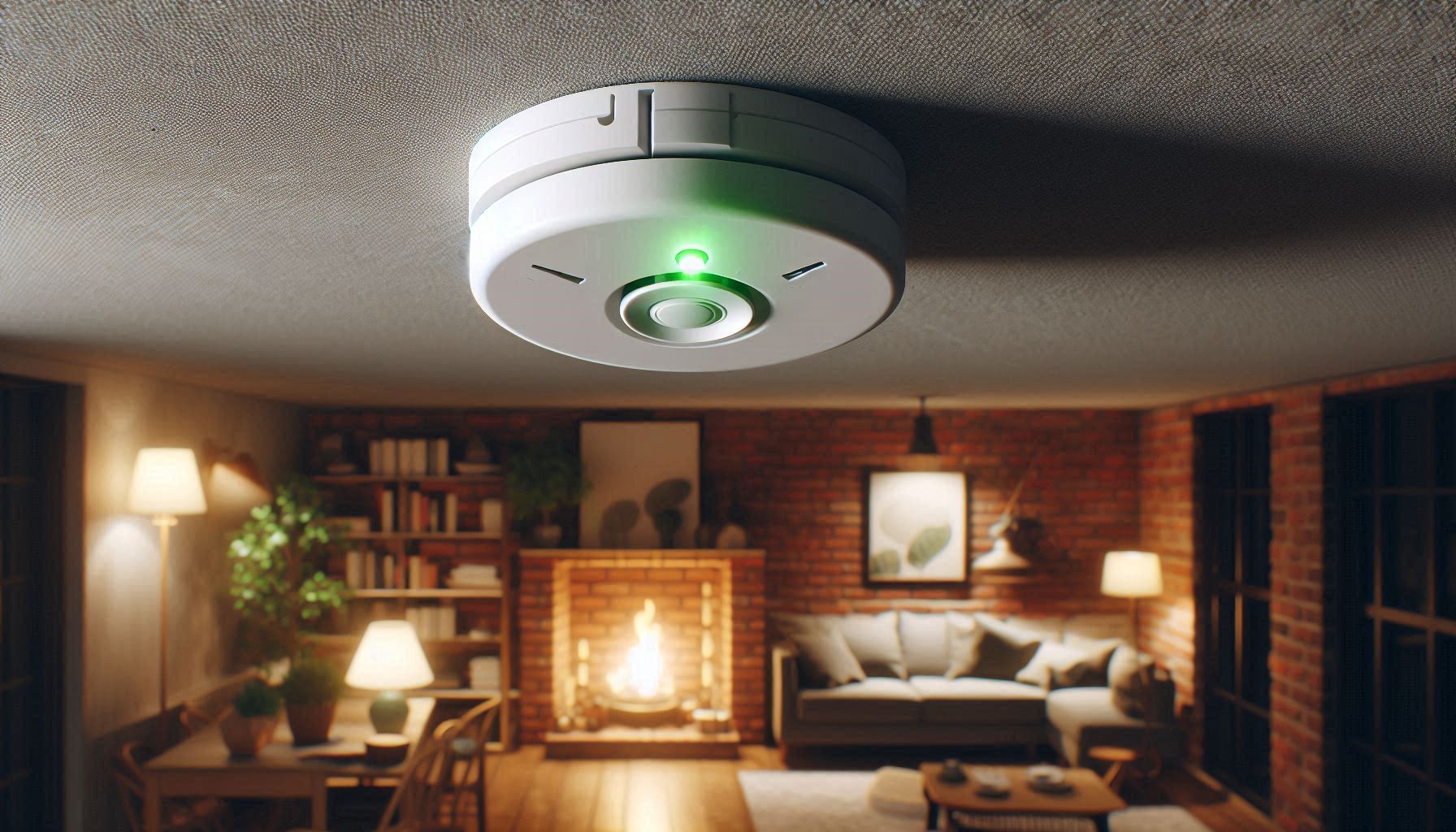
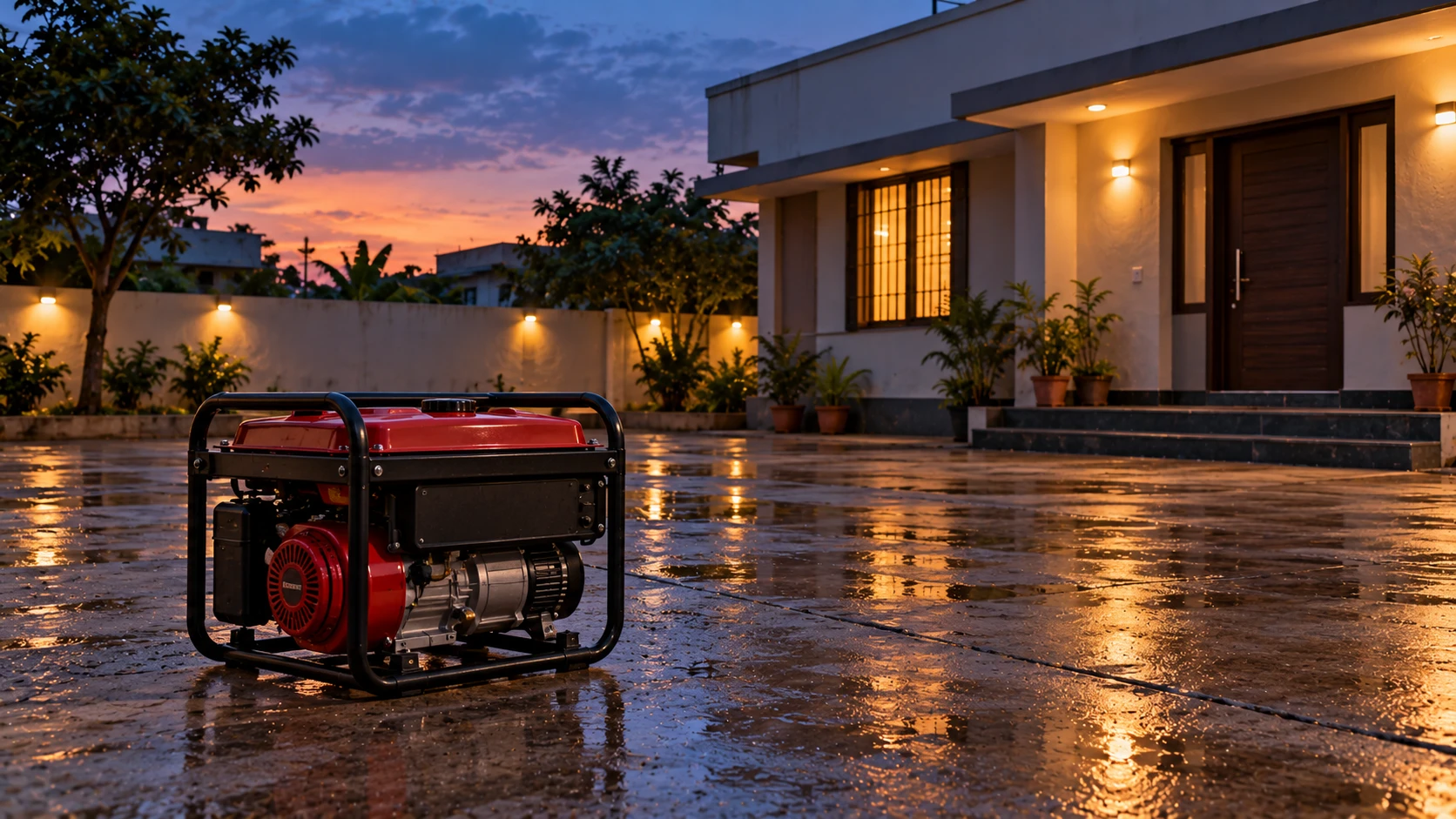
Smoke is the part of a fire people are least ready for, because it moves faster and farther than flame and you cannot see through it. Our older note on how to escape a smoke-filled room covers the basics. This guide goes deeper on the questions people ask most: how to breathe, what the cloth can do, and when to stay put. A working alarm is what buys you the time, so read how to use smoke detectors at home, and if the smoke comes from a gas or generator rather than a fire, our guide on carbon monoxide and power cuts applies. For factories, see our guide on locked gates and blocked stairs.
What we could not confirm
- Any Indian or international fire-service rule on nose versus mouth breathing in smoke. We found only a university guide.
- A controlled test of a wet cloth against house-fire smoke. The FEMA finding is from a chemical-attack FAQ and the PHAC page is about wildfire smoke.
- The NDMA’s own fire do’s and don’ts. We could not open the pocket book, so we cite the Manipur State Disaster Management Authority and the Delhi Fire Service instead.
- Any Indian standard for household smoke hoods.
- Whether the videos below mention smoke or breathing. We did not watch them in full. No Instagram, Facebook or LinkedIn video was opened in this pass, so none is listed.
Do this today
Walk the route from your bedroom to the stairs and count how many steps it is. Find your second way out. Put a thick cotton cloth where you can reach it from your bed, and write 101 and 112 on a card next to the door. Then read our home fire escape plan guide and share it with your family.
What needs attention
- No official source we could open settles nose versus mouth breathing in smoke; the one specific line is from a US university.
- Indian state guidance recommends breathing through a wet cloth, while the Public Health Agency of Canada says a scarf or bandana will not protect against wildfire smoke, so the cloth should be treated as a last resort.
- Nothing that covers the face stops carbon monoxide, which cannot be seen or smelled.
- The strongest, most consistent advice across sources is to get low, get out by the nearest clear exit, close doors behind you and not use the lift.
- If trapped, the sources agree on closing the door, cloth in the gaps, calling and signalling from a window.
- The NCRB records 3,555 of 5,888 fire deaths in 2024 in homes, so this advice matters at home as much as at work.
Controls that reduce risk
- Count the steps from your bed to the stairs and learn a second way out.
- Keep a thick cotton cloth within reach of the bed.
- Write 101 and 112 on a card by the door.
- Fit and test smoke alarms.
- Practise getting low and moving to the exit with the family.
- If you want a smoke hood, ask the local fire station or a fire consultant first.
Common unsafe practices
- Stopping to soak or find a cloth when a clear exit is a few steps away.
- Believing a wet cloth makes smoke safe to breathe.
- Standing up and running upright through thick smoke.
- Opening a door without feeling it first.
- Using the lift.
- Leaving doors open behind you.
- Breaking a window without need.
- Going back in for belongings or pets.







Leave a comment