
☣️ Gas Leak Incidents Since Vizag 2020 – Status & Response (India 2025)
What needs attention
- The article topic must be linked to the actual occupancy and hazard
- Prevention and early warning provide more safety margin than last-second intervention
- Equipment is effective only when correctly selected, accessible and maintained
- People need short practised actions and a clear decision to stop and escape
- Children, visitors and people needing assistance require explicit planning
- Records, drills and inspections matter only when defects are corrected
Controls that reduce risk
- Complete a task- and site-specific hazard assessment
- Verify applicable Indian, state and local requirements
- Use competent inspection for installed systems and specialist hazards
- Keep alarms, exits, signs and emergency access usable
- Train intended users and practise evacuation
- Record defects with an owner and completion date
- Review the plan after changes, incidents or near misses
Understand and apply the guidance
🔴 Truth Drop
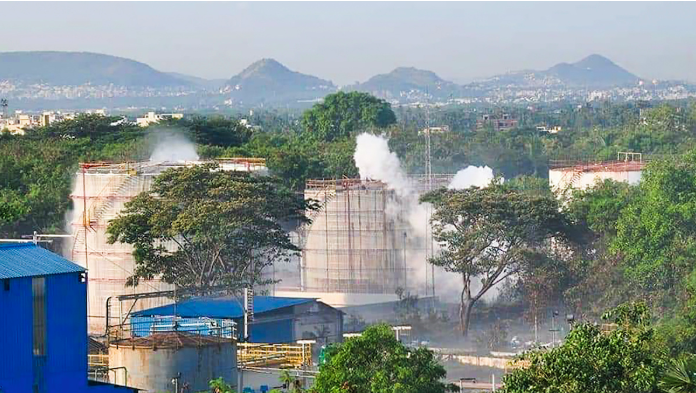
On 7 May 2020, a deadly Styrene gas leak at LG Polymers, Visakhapatnam, killed 12 people, injured over 1,000, and exposed over 3 lakh residents to toxic fumes.
It was called “India’s Bhopal Gas Tragedy 2.0.”
Since then, India has witnessed over 110 major gas or chemical leak incidents (2020–2025) — an average of one every 20 days — with more than 350 deaths and 4,000+ hospitalizations.
(Source: NDMA, MoEFCC, DGFASLI, State Pollution Boards, 2025)
👉 Five years later, the promises made post-Vizag remain mostly on paper.
📖 Why This Matters
Industrial gas leaks are not accidents — they’re results of poor maintenance, weak enforcement, and missing emergency plans.
Toxic exposure doesn’t just kill — it disables, blinds, and poisons entire communities for life.
India has over 7,000 chemical and hazardous units, but only a fraction conduct annual safety audits.
When the next leak happens, it’s the nearby worker or resident — not the system — who pays the price.
📊 Gas Leak Incidents in India (2020–2025)
| Year | Major Incidents | Deaths | Injured / Hospitalized | Key Locations |
|---|---|---|---|---|
| 2020 | 18 | 63 | 900+ | Vizag (Styrene), Raigad (Hydrogen Sulphide), Chhattisgarh (Amonia) |
| 2021 | 21 | 68 | 720+ | Surat (Nandesari), Ludhiana, Jharkhand |
| 2022 | 19 | 54 | 600+ | Gujarat, Hyderabad, Haryana |
| 2023 | 26 | 81 | 1,050+ | Ludhiana (H2S, 11 dead), Ankleshwar, Odisha |
| 2024 | 17 | 57 | 700+ | Thoothukudi, Nagpur, Dombivli |
| 2025 (Till Aug) | 9 | 28 | 400+ | Gujarat, Maharashtra, Tamil Nadu |
(Sources: NDMA Disaster Database 2025, NCRB Industrial Accident Register, State PCB Reports)
📈 Total (2020–2025):
- Incidents: 110+
- Deaths: 350+
- Injuries: 4,000+
- Economic Loss: ₹9,500 crore+
⚠️ Common Gases Involved
| Gas / Chemical | Common Source | Effect on Humans |
|---|---|---|
| Styrene | Plastic industry | Drowsiness, coma, nervous system damage |
| Ammonia (NH₃) | Fertilizer, cold storage | Eye & lung burns, respiratory failure |
| Chlorine (Cl₂) | Water treatment, paper, chemical | Suffocation, chemical burns |
| Hydrogen Sulphide (H₂S) | Sewage, tanneries, refineries | Rapid asphyxiation, cardiac arrest |
| Carbon Monoxide (CO) | Boilers, foundries | Brain damage, unconsciousness |
👉 60% of India’s gas leaks come from chemical, fertilizer, and textile plants — all located near dense populations.
🧠 Key Case Studies (Post-2020)
1️⃣ Vizag LG Polymers (2020)
- 12 dead, 1,000+ hospitalized.
- Cause: Polymerization of styrene in storage tank due to poor temperature control.
- Status: Company shut; compensation disbursed; no systemic nationwide policy reform implemented.
2️⃣ Ludhiana (2023)
- 11 killed, 9 hospitalized after H₂S gas leak in residential area near dairy units.
- Cause: Chemical reaction in drain mixing industrial effluents.
- Revealed: Illegal discharge, zero gas sensor network in district.
3️⃣ Nandesari, Gujarat (2021)
- 7 workers dead due to reactor blast & toxic fumes in GIDC zone.
- Fire hydrants dry, workers had no gas masks.
- Local hospitals unprepared for mass toxic exposure.
4️⃣ Thoothukudi (2024)
- 6 killed by ammonia leak in fish processing plant.
- Nearby school unaffected only due to holiday.
- Highlighted absence of gas leak siren and evacuation SOP.
📊 Root Causes of Gas Leak Disasters
| Cause | % Share | Observation |
|---|---|---|
| Neglected Maintenance | 35% | Old valves, rusted pipelines, expired tanks |
| Human Error | 22% | Lack of training, careless chemical handling |
| Process Safety Failure | 18% | Overpressure, wrong mixing, sensor failure |
| Illegal Effluent Discharge | 15% | Sewage-gas interaction in drains |
| Storage / Design Flaws | 10% | Overfilled tanks, poor ventilation |
(Source: DGFASLI & MoEFCC Hazardous Incident Review 2025)
🧩 Systemic Failures Identified
- Weak Enforcement: Hazardous industries rarely inspected post-NOC issuance.
- Poor Inter-Agency Coordination: PCB, Fire, SDMA, Labour Dept work in silos.
- Zero Public Preparedness: No citizen evacuation training near chemical zones.
- Absence of Sensors & Alerts: Most GIDC zones lack fixed gas detectors or siren networks.
- Delayed Medical Response: Hospitals not equipped for toxic exposure triage.
📈 Policy Review – What Changed Since Vizag
| Action / Policy | Status (2025) | Comments |
|---|---|---|
| NDMA Guidelines for Chemical Disaster Mgmt (rev. 2020) | ✅ Adopted | Implementation poor at district level |
| District Crisis Groups (DCGs) | ⚠️ 60% Active | Many inactive or not updated |
| Online Safety Audits (CIF Portal) | ⚠️ Functional | Data not public |
| On-Site & Off-Site Drills | ⚠️ Conducted in <25% zones | Poor participation |
| Public Alert Systems (SMS / Siren) | ❌ Not integrated | Most inactive or absent |
🛡 Survival Lessons for Workers & Citizens
✅ Know the warning signs – chemical smell, throat irritation, sudden dizziness.
✅ Evacuate upwind – never run against wind direction.
✅ Cover mouth & nose with wet cloth – reduces gas absorption.
✅ Don’t light fires near leak zones.
✅ Move to higher ground – most gases are heavier than air.
✅ Call 108 / 112 immediately – report plant name, smell, and wind direction.
📢 Systemic Lessons
India must:
- Establish National Chemical Emergency Response Force (NCERF).
- Mandate real-time gas sensor networks in every GIDC / industrial cluster.
- Launch public evacuation awareness near hazardous zones.
- Digitize chemical storage & transport tracking (Bharat101 integration).
- Ensure 24×7 hospital toxicology units in industrial districts.
- Empower VFF India Foundation volunteer programs for rapid response training.
📣 Call to Action
🚨 The next gas leak is not a matter of “if” — but “when.”
👉 Demand public sirens, periodic drills, and transparent audits.
Because what leaks from a factory should never leak into the lungs of a city.
Lives can’t be treated as collateral for production.
📎 References
- NDMA Chemical & Industrial Disaster Reports (2020–2025)
- DGFASLI Annual Industrial Safety Database 2025
- MoEFCC Hazardous Industry Compliance Report 2024
- GIDC & State SDMA Safety Audits 2023–25
- WHO-SEARO “Toxic Exposure in South Asia” Report 2024
- NITI Aayog Industrial Safety Outlook 2025
🔚 Closing Line
Toxic gas kills in seconds — but negligence kills in silence.
This is why we built HowToSurvive.in — to make every worker, citizen, and system ready before the next leak steals another breath.
Common unsafe practices
- Relying on equipment without a hazard assessment
- Blocking or compromising escape routes
- Delaying the alarm or emergency call
- Attempting a response beyond training or safe conditions
- Re-entering before authorised clearance
- Treating a checklist as a substitute for competent inspection