
♿ Evacuation for People with Disabilities – Guidelines
What needs attention
- The article topic must be linked to the actual occupancy and hazard
- Prevention and early warning provide more safety margin than last-second intervention
- Equipment is effective only when correctly selected, accessible and maintained
- People need short practised actions and a clear decision to stop and escape
- Children, visitors and people needing assistance require explicit planning
- Records, drills and inspections matter only when defects are corrected
Controls that reduce risk
- Complete a task- and site-specific hazard assessment
- Verify applicable Indian, state and local requirements
- Use competent inspection for installed systems and specialist hazards
- Keep alarms, exits, signs and emergency access usable
- Train intended users and practise evacuation
- Record defects with an owner and completion date
- Review the plan after changes, incidents or near misses
Understand and apply the guidance
🔴 Truth Drop
During disasters, persons with disabilities (PwDs) face up to 3x higher risk of death or injury compared to others.
(Source: UNDRR – Global Disability Inclusion Report, 2024)
“A rescue plan that forgets even one person isn’t a plan — it’s a failure.”
Yet most Indian homes, offices, and public buildings have no evacuation protocol for people with mobility, hearing, or visual impairments.
📖 Why This Matters
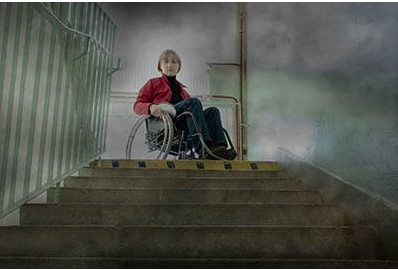
In fires, earthquakes, or floods, evacuation delays for PwDs aren’t about inability — they’re about inaccessibility.
- No ramps or tactile guidance
- Alarms without sound or light signals
- Panic and crowd neglect
Inclusive evacuation ensures equal right to survive, not charity.
Safety must be designed, not improvised.
🧩 Understanding Needs (The 4 Major Categories)
| Disability Type | Key Requirement During Emergency |
|---|---|
| Mobility Impairment | Physical support, evacuation chair, ramps |
| Visual Impairment | Verbal cues, tactile markings, clear routes |
| Hearing Impairment | Visual alarms, hand signals, written guidance |
| Cognitive / Neuro-diverse | Calm explanation, simple instructions |
⚙️ Step-by-Step Evacuation Plan
1️⃣ Prepare in Advance
- Identify at-risk individuals in your family, society, or office.
- Assign “buddy pairs” — each person with disability has a trained helper.
- Maintain emergency contact cards with health and mobility info.
- Keep assistive devices (wheelchair, cane, hearing aid) accessible — not stored away.
2️⃣ Adapt the Environment
- Install ramps with handrails and wide doors for wheelchair movement.
- Use glow tape or tactile flooring to guide visually impaired persons.
- Place flashing light alarms along with sound-based ones.
- Label exits in Braille or embossed symbols where possible.
💡 Small design changes save large numbers of lives.
3️⃣ During the Emergency
- Stay calm and communicate clearly:
👉 Use short sentences, gestures, or written notes.
👉 For hearing-impaired persons — make eye contact, use hand signals.
👉 For visually impaired persons — offer arm support and describe surroundings aloud. - Move slowly but continuously; avoid dragging or lifting improperly.
- Keep wheelchairs, canes, or braces with the person at all times.
4️⃣ In Multi-storey Buildings
- Use fire-rated evacuation chairs on staircases.
- Designate safe refuge areas (pressurized stair lobbies or landings).
- Keep these areas clearly marked, well-lit, and unlocked.
- Do not rely on lifts unless they are fire-rated evacuation lifts.
During drills, always practice real evacuation routes — not shortcuts.
5️⃣ After Evacuation
- Check for missing mobility devices or medicines — they’re part of survival.
- Provide quiet, stable zones for people with sensory sensitivity.
- Allow service animals or caregivers to remain together.
- Inform first responders of special medical needs immediately.
🧠 Community & Family Readiness
| Role | Key Action |
|---|---|
| Families | Map exits that suit everyone; keep one backup plan. |
| Schools | Train teachers to guide children with diverse needs calmly. |
| Housing Societies | Maintain list of PwDs; conduct inclusive drills quarterly. |
| Employers | Make workplace drills accessible & appoint “safety buddies.” |
🧭 Tips for First Responders
✅ Approach calmly; never pull or push without consent.
✅ Speak directly to the person, not through the companion.
✅ Describe every action before doing it.
✅ Never separate a person from their assistive device.
✅ Use both audio + visual + tactile warnings in public spaces.
⚠️ Common Mistakes to Avoid
❌ Using lifts during fire unless certified for evacuation.
❌ Leaving wheelchairs or aids behind.
❌ Shouting instructions at hearing-impaired persons.
❌ Treating people with disabilities as “helpless” — respect independence.
❌ Conducting drills that exclude them entirely.
📢 Systemic Lessons
India must:
- Enforce inclusive design standards (NBC 2016 – Accessibility Code) in every building.
- Mandate accessible drills under fire & disaster safety audits.
- Provide tax incentives for retrofitting ramps, alarms, and signage.
- Train public servants and responders in disability sensitivity.
- Integrate disability-inclusive emergency modules in NDMA awareness programs.
📣 Call to Action
🚨 Safety is a shared responsibility — inclusion begins at planning.
👉 Every building, school, and family must ensure that persons with disabilities have equal access to survival.
When everyone is counted, no one is left behind.
📎 References
- NDMA “Guidelines on Disability-Inclusive Disaster Risk Reduction,” 2024
- UNDRR “Disability and Disasters Global Report,” 2024
- Ministry of Social Justice & Empowerment “Accessible India Campaign Review,” 2023
- VFF India “Inclusive Safety and Evacuation Study,” 2025
🔚 Closing Line
A truly safe nation is one where even the slowest step finds a clear path.
This is why we built HowToSurvive.in — to make safety universal, humane, and inclusive.
Common unsafe practices
- Relying on equipment without a hazard assessment
- Blocking or compromising escape routes
- Delaying the alarm or emergency call
- Attempting a response beyond training or safe conditions
- Re-entering before authorised clearance
- Treating a checklist as a substitute for competent inspection