
⚡ Electrical Safety at Home – Emerging Risks (2019–2025)
What needs attention
- The article topic must be linked to the actual occupancy and hazard
- Prevention and early warning provide more safety margin than last-second intervention
- Equipment is effective only when correctly selected, accessible and maintained
- People need short practised actions and a clear decision to stop and escape
- Children, visitors and people needing assistance require explicit planning
- Records, drills and inspections matter only when defects are corrected
Controls that reduce risk
- Complete a task- and site-specific hazard assessment
- Verify applicable Indian, state and local requirements
- Use competent inspection for installed systems and specialist hazards
- Keep alarms, exits, signs and emergency access usable
- Train intended users and practise evacuation
- Record defects with an owner and completion date
- Review the plan after changes, incidents or near misses
Understand and apply the guidance
🔴 Truth Drop
Electrical faults cause nearly 45% of all home fires in India — killing over 3,000 people every year.
(Source: NCRB Fire Accident Data 2025)
“Every spark ignored today can become tomorrow’s tragedy.”
📖 Why This Matters
In every home, electricity runs silently behind walls — powering our comfort and convenience.
But poor wiring, cheap equipment, and careless habits make our homes vulnerable to short circuits, shocks, and fires.
A modern lifestyle demands modern electrical discipline — yet most households rely on outdated setups.
📊 India’s Electrical Fire Data (2019–2025)
| Year | Total Electrical Fires | Deaths | Major Cause | Region Most Affected |
|---|---|---|---|---|
| 2019 | 6,230 | 740 | Short circuits | Delhi NCR |
| 2020 | 6,870 | 810 | Overloading | Maharashtra |
| 2021 | 7,310 | 860 | Loose wiring | Gujarat |
| 2022 | 7,960 | 930 | Faulty appliances | Tamil Nadu |
| 2023 | 8,580 | 1,010 | Old circuits | UP, Rajasthan |
| 2024 | 9,210 | 1,150 | Non-ISI materials | Kerala, MP |
| 2025 (till Aug) | 5,900 | 710 | Plug misuse | Pan-India |
(Sources: NCRB, NDMA Fire Database, BIS Electrical Audit Report 2025)
📈 Key Insights:
- Electrical fires up 48% since 2019.
- Night-time incidents (8 p.m.–4 a.m.) cause 65% of deaths.
- 60% of buildings in India lack proper circuit protection (MCBs/Earthing).
⚙️ Common Causes of Electrical Fires
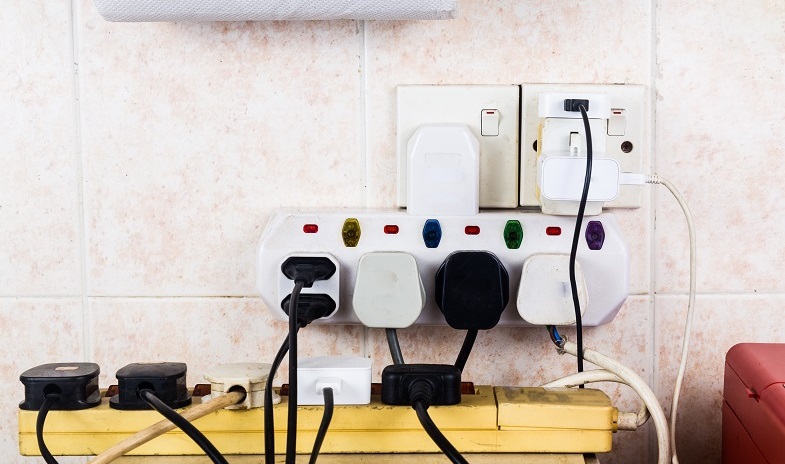
1️⃣ Overloaded plug points — too many appliances on one board.
2️⃣ Loose or old wiring — sparks behind walls.
3️⃣ Use of substandard switches or cables — quick heat-up, slow disaster.
4️⃣ Non-grounded equipment — causes shocks and burns.
5️⃣ Lack of earthing and RCCB (Residual Current Circuit Breaker).
🧠 Case Study: Pune Apartment Fire (2023)
- Incident: Fire started in power distribution box; spread to corridor.
- Cause: Overloaded circuits, no MCB protection.
- Damage: 6 flats destroyed, 2 fatalities due to smoke.
- Lesson: Wires don’t need fuel — they are fuel.
🧩 Signs Your Home Wiring Needs Urgent Check
⚡ Flickering lights
🔥 Burning smell from sockets
💡 Frequent tripping or fuse blowouts
🔌 Warm switches or buzzing noise
⚠️ Sparks while plugging/unplugging
🧭 Prevention Steps for Every Home
✅ Use only ISI-certified appliances and wires.
✅ Never overload a single socket — distribute load.
✅ Install Miniature Circuit Breaker (MCB) and RCCB in main panel.
✅ Get wiring audited every 5 years by licensed electrician.
✅ Replace damaged plugs and cords immediately.
✅ Keep flammable materials away from electric points.
✅ Unplug heavy appliances (iron, heater) after use.
🧠 Quick Tip: MCB vs RCCB
| Device | Function | Protects From |
|---|---|---|
| MCB | Trips on overload/short circuit | Fire risk |
| RCCB | Detects current leakages | Electric shock |
Install both — one saves your house, the other saves you.
💡 Children & Elderly Safety
👶 Use plug guards in low sockets.
👴 Place switchboards at reachable height for elderly.
🚫 Keep extension cords off wet floors.
📢 Systemic Lessons
India must:
- Mandate Electrical Safety Certificate (ESC) for all new homes.
- Include earthing and MCB installation in building approvals.
- Launch “Safe Wiring Bharat” campaign through DISCOMs.
- Enforce strict penalties for non-ISI electrical products.
- Train electricians under national safety certification programs.
📣 Call to Action
🚨 Electricity is safe only when respected.
👉 Check your sockets, test your breakers, and replace what’s old.
Don’t wait for a short circuit to spark change.
📎 References
- NCRB “Fire Accident Data,” 2025
- Bureau of Indian Standards “Home Electrical Safety Audit,” 2024
- NDMA “Residential Fire Report,” 2024
- Central Electricity Authority “Domestic Safety Code,” 2023
🔚 Closing Line
Electricity powers our homes — but awareness powers our safety.
This is why we built HowToSurvive.in — to ensure the same current that lights your lamp never takes your life.
Common unsafe practices
- Relying on equipment without a hazard assessment
- Blocking or compromising escape routes
- Delaying the alarm or emergency call
- Attempting a response beyond training or safe conditions
- Re-entering before authorised clearance
- Treating a checklist as a substitute for competent inspection