
⚡ How to Rescue Someone from Electric Shock Safely
What needs attention
- The article topic must be linked to the actual occupancy and hazard
- Prevention and early warning provide more safety margin than last-second intervention
- Equipment is effective only when correctly selected, accessible and maintained
- People need short practised actions and a clear decision to stop and escape
- Children, visitors and people needing assistance require explicit planning
- Records, drills and inspections matter only when defects are corrected
Controls that reduce risk
- Complete a task- and site-specific hazard assessment
- Verify applicable Indian, state and local requirements
- Use competent inspection for installed systems and specialist hazards
- Keep alarms, exits, signs and emergency access usable
- Train intended users and practise evacuation
- Record defects with an owner and completion date
- Review the plan after changes, incidents or near misses
Understand and apply the guidance
🔴 Truth Drop
Every year, 7,000+ Indians die from electric shocks — most while trying to help someone else.
(Source: NCRB Accidental Deaths Data, 2024)
“Electricity doesn’t forgive mistakes — not even of good intentions.”
A wrong move during rescue can kill both the victim and the rescuer.
Knowing how to act safely makes the difference between a rescue and another tragedy.
📖 Why It Happens
Electrical shocks can occur anywhere — at home, office, or roadside:
- Wet hands while plugging devices
- Broken cables or exposed wires
- Faulty switches or equipment
- Contact with fallen power lines
- Using metal rods near electric poles
- Working in rain without insulation
Most victims die not from the shock itself, but because of delayed rescue, cardiac arrest, or secondary injuries like burns or falls.
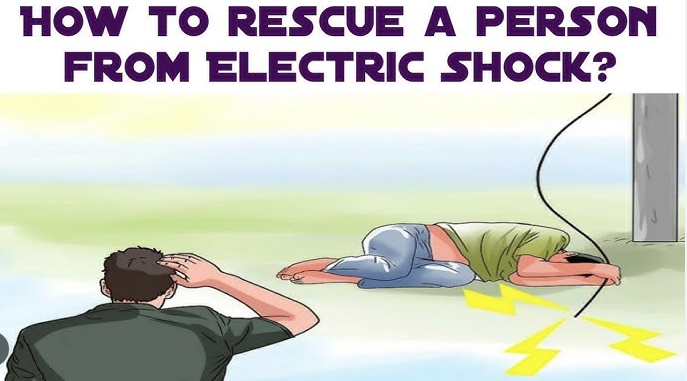
⚠️ First Rule: Never Touch the Victim Directly
Electricity travels through bodies, metal, and even wet floors.
Your first goal: cut the power, not rush to pull the person away.
🧩 Step-by-Step Rescue Process
1️⃣ Ensure Your Safety First
- Do not touch or go near the victim until the power source is confirmed off.
- Turn off main switchboard, circuit breaker, or plug if accessible.
- If you can’t find it, shout for help — don’t approach blindly.
💡 Remember: Electricity may be invisible, but it’s always present where wires are alive.
2️⃣ Cut Power Supply (Safely)
- Use dry wooden stick, PVC pipe, plastic chair, or cloth rope to push the wire away.
- Stand on dry wooden plank, rubber mat, or thick plastic — never directly on ground.
- Keep at least 3 feet distance while disconnecting.
🚫 Never use metal tools, wet hands, or bare feet.
3️⃣ Move the Victim to Safety (Once Power is Off)
- If safe, pull the person using dry cloth, rope, or non-metallic material.
- Drag gently away from the wire — at least 10 feet.
- Lay the person on their back on a flat surface.
4️⃣ Check Response and Breathing
- Tap shoulders, call loudly.
- If unconscious, check breathing for 10 seconds:
→ No breathing or pulse → Start CPR immediately.
→ If breathing → Place in recovery position (side-lying).
(Refer to Blog #53 – CPR Basics for Everyone for full CPR steps.)
5️⃣ Treat Burns and Injuries
- Identify entry and exit wounds (usually small but deep).
- Cool the burn with clean, running water for 10 minutes.
- Do not break blisters or apply creams.
- Cover with sterile gauze or clean cloth.
6️⃣ Call for Emergency Help
- Dial 108 / 112 (mention “electrocution” clearly).
- If near workplace, inform safety officer or electrical engineer.
- Continue CPR if no pulse until medical team arrives.
🧠 Signs of Severe Electric Injury
⚠️ Take victim to hospital even if they appear “fine” — internal damage can be fatal.
| Symptom | Possible Injury |
|---|---|
| Irregular heartbeat | Cardiac arrhythmia |
| Burns at entry/exit | Deep tissue injury |
| Numbness or weakness | Nerve damage |
| Confusion / memory loss | Brain impact |
| Shortness of breath | Lung damage |
🧰 Everyday Prevention Checklist
✅ Always switch off main power before repairs.
✅ Keep electrical boards away from sinks and stoves.
✅ Never use wet hands to touch switches or plugs.
✅ Replace damaged wires and use insulated tools.
✅ Teach children never to touch wires or sockets.
✅ Install RCCB (Residual Current Circuit Breaker) in homes — it cuts current during faults.
✅ Avoid using extension cords for heavy equipment.
⚙️ For Outdoor Situations (Fallen Wires, Floods, Work Areas)
- Stay 10 metres (30 feet) away from fallen power lines.
- Warn others loudly — “Stay back, live wire!”
- In floods, do not touch metal fences, poles, or submerged switches.
- Wait for electricity department to isolate the line.
🧭 Myth vs Truth
| Myth | Truth |
|---|---|
| “Rubber shoes always protect you.” | ❌ Not guaranteed — moisture can still conduct. |
| “Wood is always safe.” | ❌ Only dry wood works; wet wood conducts electricity. |
| “Victim looks okay, so no need for hospital.” | ❌ Wrong — internal organs may be damaged. |
| “Electric shock burns are visible.” | ❌ Many deep burns are hidden under skin. |
📢 Systemic Lessons
India must:
- Mandate RCCB and grounding audits for all residential and industrial buildings.
- Introduce electric shock rescue training in schools, workplaces, and safety programs.
- Ensure Electricity Boards have quick emergency isolation response systems.
- Publish awareness signage at construction and public work zones.
📣 Call to Action
⚡ Electricity saves lives — but ignorance takes them.
👉 Learn the safe rescue method today.
Your calm mind and dry hands can make the difference between tragedy and survival.
📎 References
- NDMA “Electrical Safety & Accident Prevention Manual,” 2024
- Ministry of Power “Household Electrocution Data Report,” 2023
- WHO “First Response to Electrical Injuries,” 2022
- VFF India “Public Electrocution Awareness Study,” 2025
🔚 Closing Line
You don’t need to be an electrician to save a life — just aware, alert, and careful.
This is why we built HowToSurvive.in — to teach safe action before fear takes control.
Common unsafe practices
- Relying on equipment without a hazard assessment
- Blocking or compromising escape routes
- Delaying the alarm or emergency call
- Attempting a response beyond training or safe conditions
- Re-entering before authorised clearance
- Treating a checklist as a substitute for competent inspection