
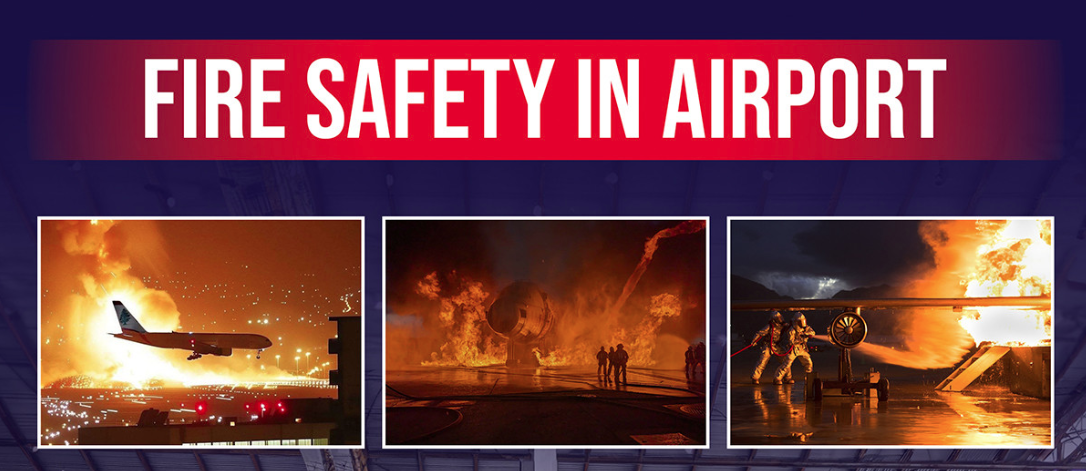
✈️ Airport Fire Safety – A Disaster Waiting to Happen
What needs attention
- The article topic must be linked to the actual occupancy and hazard
- Prevention and early warning provide more safety margin than last-second intervention
- PPE cannot compensate for an uncontrolled hazard
- People need short practised actions and a clear decision to stop and escape
- Children, visitors and people needing assistance require explicit planning
- Records, drills and inspections matter only when defects are corrected
Controls that reduce risk
- Complete a task- and site-specific hazard assessment
- Verify applicable Indian, state and local requirements
- Use competent inspection for installed systems and specialist hazards
- Keep alarms, exits, signs and emergency access usable
- Train intended users and practise evacuation
- Record defects with an owner and completion date
- Review the plan after changes, incidents or near misses
Understand and apply the guidance
📍 What We Found (During Recent Travels)
In just a few days of travel, we documented shocking safety lapses at India’s busiest airports. These are not small errors — they are potential death traps in case of fire or emergency evacuation.
- Ahmedabad Airport – Smoke detectors & sprinklers covered with caps 🚫
➝ If covered, these systems cannot detect smoke or release water during a fire.
➝ When questioned, staff said: “Under maintenance.” But how can an under-maintenance airport open for passengers?


- Mumbai Airport – Sprinkler covered with a cap 🚫
➝ This makes it non-functional. In a real fire, water would never spray.


- Delhi Airport – Fire hydrant box locked 🚫
➝ Hydrants are meant for emergency use by staff/passengers. Locked hydrants = zero response.


- Raipur Airport – Fire exit locked 🚫
➝ In case of emergency, thousands of passengers could be trapped inside.


🔍 Why This Matters
Airports are high-density public spaces where:
- Tens of thousands of people move daily
- Flammable materials (fuel, luggage, electronics) are present
- Evacuation routes must always remain clear and functional
Even one blocked exit, one locked hydrant, one disabled detector can turn a small spark into a national tragedy.
⚠️ The Core Mistake
👉 Safety systems installed only for show, not function.
👉 “Under maintenance” used as an excuse — while keeping airports open.
👉 No accountability for daily checks or public reporting.
🛡 How to Survive – What Public Must Do
✅ Observe – Look up: Are sprinklers capped? Are smoke detectors visible?
✅ Check exits – Are fire doors open and marked?
✅ Report – Tell airport staff/security immediately
✅ Document – If safe, take photo/video evidence
✅ Share – Send details to us at HowToSurvive.in & tag authorities
📢 Public Call to Action
If YOU notice safety lapses at airports, malls, hotels, or railway stations:
- 📍 Record details (location, time, photo/video if possible)
- 📞 Report to local fire officials or airport authority staff
- 📨 Share with us at HowToSurvive.in — so we can amplify your voice
🚨 Your observation can prevent the next tragedy.
📊 Data Context (India)
- India sees over 35 major fire incidents in airports & aviation-linked facilities every year (DGCA, MoCA data).
- NCRB reports show “infrastructure failure” is a leading cause of mass-casualty fire incidents.
- Most are preventable with working detectors, sprinklers, hydrants, and open exits.
📌 Tags
#AirportSafety #PublicAwareness #FireSafetyIndia #HowToSurvive #PreventDisasters #GoldenHourMatters
🔚 Closing Line
Airports symbolize progress and connection.
But progress without safety = disaster in waiting.
This is why we built HowToSurvive.in — to give every citizen the courage to see, report, and prevent the preventable.
Common unsafe practices
- Relying on equipment without a hazard assessment
- Blocking or compromising escape routes
- Delaying the alarm or emergency call
- Attempting a response beyond training or safe conditions
- Re-entering before authorised clearance
- Treating a checklist as a substitute for competent inspection