
❤️🩹 CPR Myths That Cost Lives – Truth You Must Know
What needs attention
- The article topic must be linked to the actual occupancy and hazard
- Prevention and early warning provide more safety margin than last-second intervention
- Equipment is effective only when correctly selected, accessible and maintained
- People need short practised actions and a clear decision to stop and escape
- Children, visitors and people needing assistance require explicit planning
- Records, drills and inspections matter only when defects are corrected
Controls that reduce risk
- Complete a task- and site-specific hazard assessment
- Verify applicable Indian, state and local requirements
- Use competent inspection for installed systems and specialist hazards
- Keep alarms, exits, signs and emergency access usable
- Train intended users and practise evacuation
- Record defects with an owner and completion date
- Review the plan after changes, incidents or near misses
Understand and apply the guidance
⚠️ The Misconception
From movies to social media, CPR is often shown as a miracle move — two chest pushes and one deep breath, and the person wakes up dramatically.
But real CPR isn’t like that — and wrong methods can reduce survival chances to zero.
✅ The Fact
CPR is a scientifically timed sequence of chest compressions that keeps oxygen flowing to the brain until medical help arrives.
There’s no magic revival — it’s about buying time for the heart and brain.
“Correct CPR doesn’t bring life back — it prevents it from leaving.”
📊 Survival Data (Global & India 2025)
| Region | Cardiac Arrest Survival Rate | Bystander CPR Rate | Key Observation |
|---|---|---|---|
| India | 6–8% | 1.8% | Lowest in Asia |
| USA | 45% | 63% | High due to training programs |
| Japan | 43% | 55% | Community-wide CPR culture |
| Singapore | 39% | 52% | CPR training in schools mandatory |
| UK | 38% | 50% | Defibrillators in public places |
(Sources: WHO Global Resuscitation Survey, NDMA Health Emergency Data, 2025)
📈 In India, less than 2 in 100 people know how to perform proper CPR.
💔 Common CPR Myths vs Facts
| Myth | Fact |
|---|---|
| “CPR restarts the heart instantly.” | False – it only maintains blood flow until help arrives. |
| “Mouth-to-mouth is always necessary.” | False – Hands-only CPR is enough for adults. |
| “You can harm a person if you press too hard.” | Wrong – Broken ribs heal, dead hearts don’t. |
| “Only doctors or nurses can do CPR.” | False – Anyone trained can perform it safely. |
| “Check pulse before starting.” | Wrong – Every second counts; start compressions immediately if unresponsive. |
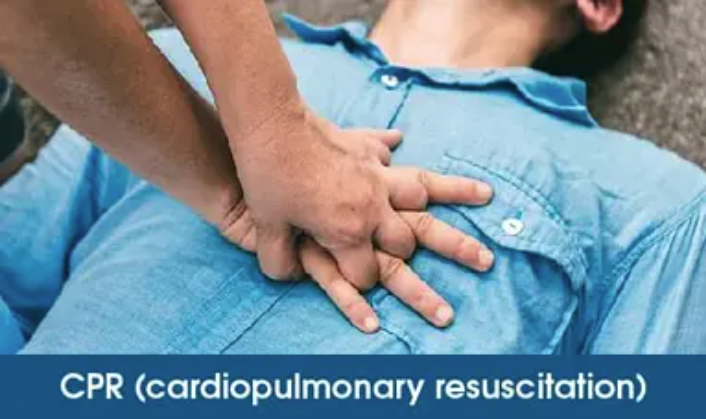
🧠 How CPR Works (Hands-Only for Adults)
1️⃣ Check responsiveness: Shake shoulders, shout “Are you okay?”
2️⃣ Call for help: Dial 108 or 112 immediately.
3️⃣ Position hands: Center of chest, interlocked fingers.
4️⃣ Compression rate: 100–120 per minute (like the beat of “Stayin’ Alive”).
5️⃣ Depth: 2 inches (5 cm) in adults.
6️⃣ Continue until: Ambulance or medical help takes over.
💡 Each minute without CPR reduces survival by 7–10%.
🧠 Case Study: Bengaluru Metro Incident (2023)
- 45-year-old commuter collapsed on platform.
- Crowd gathered, no one started CPR for 6 minutes.
- When 108 team arrived, pulse was gone.
- Doctors confirmed: “Survival chance lost due to delay.”
- Lesson: Lack of confidence kills faster than lack of knowledge.
💡 How to Learn CPR
✅ NDMA & Red Cross offer free public workshops.
✅ Online training via AIIMS, St. John Ambulance, Heart Care Foundation.
✅ Practice on mannequins or certified CPR dummies.
✅ Encourage schools & offices to conduct CPR awareness drills.
📢 Systemic Lessons
CPR training should be as common as learning to drive.
A population of 140 crore can become the world’s largest emergency-ready force — if each person knows what to do in those first 2 minutes.
📣 Call to Action
❤️ Learn Hands-Only CPR today — it takes 30 minutes, saves infinite lives.
🚨 Encourage your office, school, or society to host a training session.
👉 Follow verified medical sources — not viral CPR videos.
📎 References
- NDMA “Health Emergency Preparedness Report,” 2025
- WHO “Global Resuscitation Guidelines,” 2024
- Indian Red Cross Society “Public CPR Training Data,” 2024
- AIIMS “Basic Life Support Handbook,” 2025
🔚 Closing Line
The difference between life and death can be a pair of hands that know what to do.
This is why we built HowToSurvive.in — to make every citizen a potential lifesaver, not a helpless witness.
✅ Blog #93 completed.
Common unsafe practices
- Relying on equipment without a hazard assessment
- Blocking or compromising escape routes
- Delaying the alarm or emergency call
- Attempting a response beyond training or safe conditions
- Re-entering before authorised clearance
- Treating a checklist as a substitute for competent inspection