
🌊 How to Save a Drowning Victim — The Right Way to Rescue Without Risking Your Life
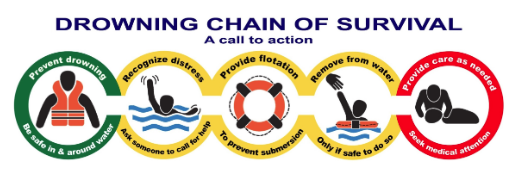
What needs attention
- The article topic must be linked to the actual occupancy and hazard
- Prevention and early warning provide more safety margin than last-second intervention
- Equipment is effective only when correctly selected, accessible and maintained
- People need short practised actions and a clear decision to stop and escape
- Children, visitors and people needing assistance require explicit planning
- Records, drills and inspections matter only when defects are corrected
Controls that reduce risk
- Complete a task- and site-specific hazard assessment
- Verify applicable Indian, state and local requirements
- Use competent inspection for installed systems and specialist hazards
- Keep alarms, exits, signs and emergency access usable
- Train intended users and practise evacuation
- Record defects with an owner and completion date
- Review the plan after changes, incidents or near misses
Understand and apply the guidance
1️⃣ Why You Must Know This
Drowning is one of the top ten causes of accidental death worldwide. In India, thousands die each monsoon—often within minutes—because rescuers or bystanders panic or don’t know what to do. Mount Sinai Health Library calls near-drowning “survival for at least 24 hours after submersion or suffocation in liquid.” These survivors still risk brain injury, lung infection, and cardiac arrest if not treated correctly.
2️⃣ Immediate Rescue Steps (Do This First)
- Call for help (108 / nearest rescue service) immediately.
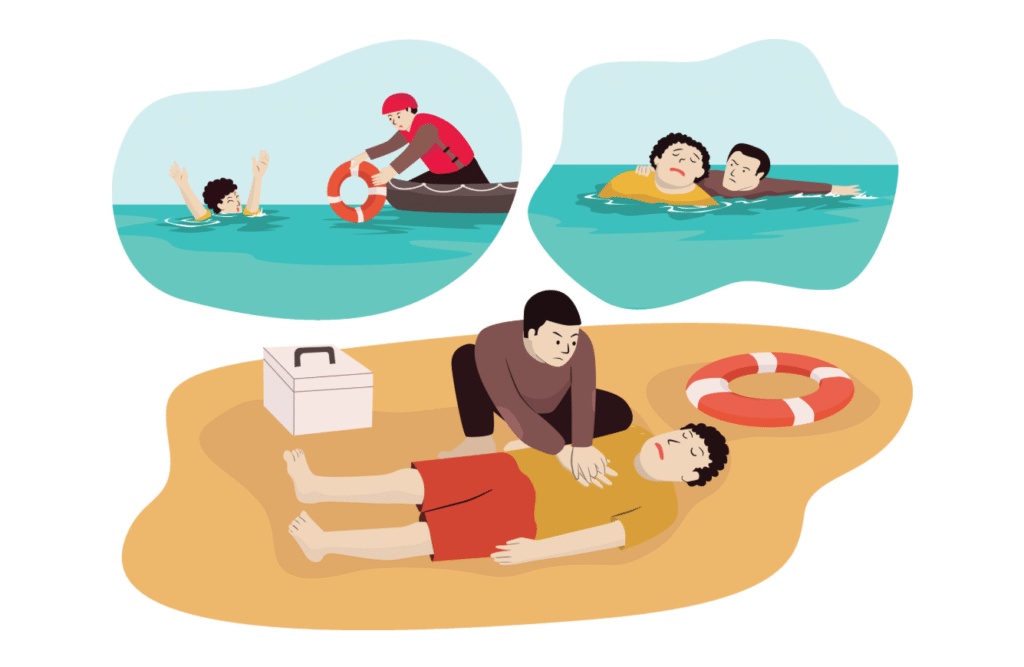
- Do not jump in unless trained. Use the “Reach-Throw-Row-Go” rule:
- Reach with a stick, towel or branch.
- Throw a rope, life ring, or bottle that floats.
- Row a boat if available.
- Go in only as a last resort with flotation aid.
- Pull the victim to safety while lying flat to avoid being dragged in.
- Lay the person on their back, head tilted slightly back, chin lifted. Check for breathing and pulse.
- If no breathing, start CPR immediately: 30 compressions + 2 rescue breaths, repeat until help arrives or they breathe.
3️⃣ After Rescue — Critical Care Actions
✅ Place the person on their side (recovery position) if breathing but unconscious → keeps airway clear.
✅ Remove wet clothes and cover with blanket to prevent hypothermia.
✅ If vomiting starts, turn head sideways to avoid aspiration.
✅ Check for persistent cough, frothy sputum, chest pain or blue lips — these signal fluid in lungs (secondary drowning).
✅ Transport to hospital even if they seem fine. Lung damage can worsen within 6–24 hours.
4️⃣ What NOT to Do
❌ Don’t turn the person upside-down to “drain water.” It delays CPR and causes vomiting.
❌ Don’t assume conscious victims are safe — complications can develop later.
❌ Don’t use water to revive or slap the face.
5️⃣ When to Seek Emergency Care (Always)
- Difficulty breathing or persistent cough.
- Foamy sputum or chest pain.
- Blue skin or lips.
- Confusion, vomiting, or drowsiness after incident.
6️⃣ Visual Infographic Reference
7️⃣ Prevention Tips from Mount Sinai and WHO
- Supervise children around any water — bathtubs, buckets, wells.
- Install fencing and self-latching gates around pools.
- Teach swimming and floating skills early.
- Avoid alcohol near water activities.
- Always wear life jackets when boating.
8️⃣ Related Case
“In June 2024, a teen in Assam was revived after a friend performed hands-only CPR within two minutes of rescue and kept him warm until ambulance arrived — a rare example of quick response saving a life.”
Final Words
“Near-drowning does not end when the person is out of water. Awareness in those first five minutes decides if they will breathe for life again.”
Common unsafe practices
- Relying on equipment without a hazard assessment
- Blocking or compromising escape routes
- Delaying the alarm or emergency call
- Attempting a response beyond training or safe conditions
- Re-entering before authorised clearance
- Treating a checklist as a substitute for competent inspection