
🌊 Water Safety – Surviving Drowning Situations
What needs attention
- The article topic must be linked to the actual occupancy and hazard
- Prevention and early warning provide more safety margin than last-second intervention
- Equipment is effective only when correctly selected, accessible and maintained
- People need short practised actions and a clear decision to stop and escape
- Children, visitors and people needing assistance require explicit planning
- Records, drills and inspections matter only when defects are corrected
Controls that reduce risk
- Complete a task- and site-specific hazard assessment
- Verify applicable Indian, state and local requirements
- Use competent inspection for installed systems and specialist hazards
- Keep alarms, exits, signs and emergency access usable
- Train intended users and practise evacuation
- Record defects with an owner and completion date
- Review the plan after changes, incidents or near misses
Understand and apply the guidance
🔴 Truth Drop
Every year, over 77,000 people die from drowning in India — that’s one life every 7 minutes.
(Source: WHO & NCRB 2024)
The tragedy? Most victims never intended to enter deep water.
A slip, a panic reaction, or a rescue attempt gone wrong — and life is lost within seconds.
“Drowning is fast, silent, and preventable — not loud like in movies.”
📖 Why It Happens
Drowning is not just a swimming pool issue — it’s a national safety crisis.
Common causes in India include:
- Sudden immersion during floods or heavy rains
- Falling into open wells, tanks, or rivers
- Boat capsizes during fishing or tourism
- Children near water bodies without barriers
- Alcohol consumption near water
- Untrained rescuers jumping in without flotation devices
Children, villagers, and outdoor workers form the majority of victims.
🧩 Recognizing Drowning (The Silent Signs)
A drowning person usually:
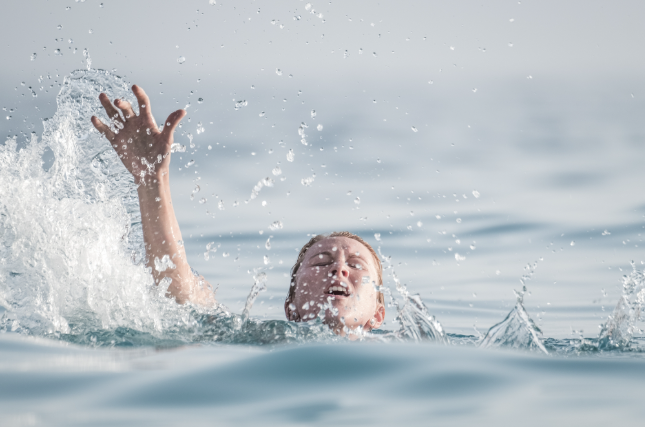
- Cannot wave or shout — they’re too busy trying to breathe
- Head tilts back, mouth at water level
- Eyes wide open or glassy, unable to focus
- No visible splashing — body may be vertical and still
- Lasts only 20–60 seconds before submersion
If you see this — act immediately.
⚠️ Step-by-Step Rescue – Safe for You & the Victim
1️⃣ Shout for Help
- Alert nearby people — teamwork saves lives.
- Ask someone to call 108 or 112 immediately.
2️⃣ Reach, Throw, Row — But Don’t Go
Never jump in blindly.
Follow this golden rescue rule:
Reach → Extend a stick, towel, rope, or hand (lying flat on ground).
Throw → Toss a floating object — plastic can, bottle, life ring, tyre tube.
Row → Use a boat or raft only if stable.
Don’t Go → Jumping in without training risks two deaths, not one.
3️⃣ Pull the Victim Out Safely
Once near shore or edge:
- Hold under the armpits or shoulders, keep head above water.
- Roll victim onto firm surface face-up.
❤️ After Rescue – First Aid Steps
✅ Check for Response & Breathing
- Tap shoulders and call out.
- No response → check breathing for 10 seconds.
✅ If Not Breathing → Start CPR Immediately
- 30 chest compressions + 2 rescue breaths.
- If alone, give 2 initial rescue breaths before compressions.
- Continue until breathing resumes or medical help arrives.
(Refer to Blog #53: CPR Basics for Everyone for step-by-step visuals.)
✅ If Breathing but Unconscious
- Turn to recovery position (on their side, head tilted slightly back).
- Keep warm and monitor breathing.
✅ Clear Airways
- Tilt head sideways to allow water/vomit to drain naturally.
- Do not try to squeeze the stomach or hang upside down.
💡 Quick Facts
| Situation | Action |
|---|---|
| Caught in current | Float on back, don’t fight — swim diagonally to shore |
| Boat capsized | Stay with boat — easier to spot by rescuers |
| Flood inside house | Move upward, shut power, carry ID & phone |
| Child missing near water | Check water bodies first, not last |
| Cramps in water | Float, stretch leg, call for help |
🧠 Common Mistakes to Avoid
❌ Jumping in without safety gear or training.
❌ Panic swimming — tires out energy fast.
❌ Trying to “pull up” a struggling person from above water (they’ll drag you down).
❌ Attempting mouth-to-mouth in water.
❌ Ignoring small ponds, tanks, or wells — children drown in shallow water too.
🧭 Prevention is the Real Lifesaver
✅ Install barriers or covers over open wells and tanks.
✅ Never let children near water unsupervised.
✅ Avoid alcohol before swimming or boating.
✅ Learn basic swimming and floating skills — make it part of school PE programs.
✅ Keep rope, plastic bottles, or tyre tubes near rural water bodies.
✅ During floods, always wear bright clothes or carry a whistle.
📢 Systemic Lessons
India must:
- Make swimming & water safety part of all school curriculums.
- Install warning boards and barriers at wells, ghats, and riversides.
- Mandate life jackets for all boating and ferry activities.
- Strengthen NDRF water-rescue volunteer network in flood-prone states.
- Launch public awareness campaigns every monsoon season.
📣 Call to Action
🚨 Drowning is preventable — not fate.
👉 Learn to recognize the signs, stay calm, and use the right rescue method.
Your awareness could save a stranger, a child, or your own family.
📎 References
- WHO Global Drowning Report, 2024
- NDMA “Water Safety & Flood Rescue Guidelines,” 2023
- Indian Red Cross “Bystander Rescue Framework,” 2024
- VFF India “Community Drowning Prevention Study,” 2025
🔚 Closing Line
Still water hides fast danger — but trained minds save lives.
This is why we built HowToSurvive.in — to teach calm, courage, and correct action when seconds decide fate.
Common unsafe practices
- Relying on equipment without a hazard assessment
- Blocking or compromising escape routes
- Delaying the alarm or emergency call
- Attempting a response beyond training or safe conditions
- Re-entering before authorised clearance
- Treating a checklist as a substitute for competent inspection