
🌍 International Models of First Responding We Can Adopt (2025)
What needs attention
- The article topic must be linked to the actual occupancy and hazard
- Prevention and early warning provide more safety margin than last-second intervention
- Equipment is effective only when correctly selected, accessible and maintained
- People need short practised actions and a clear decision to stop and escape
- Children, visitors and people needing assistance require explicit planning
- Records, drills and inspections matter only when defects are corrected
Controls that reduce risk
- Complete a task- and site-specific hazard assessment
- Verify applicable Indian, state and local requirements
- Use competent inspection for installed systems and specialist hazards
- Keep alarms, exits, signs and emergency access usable
- Train intended users and practise evacuation
- Record defects with an owner and completion date
- Review the plan after changes, incidents or near misses
Understand and apply the guidance
🔴 Truth Drop
India loses one life every two minutes to preventable emergencies — fires, accidents, or medical crises — largely due to delayed first response.
In contrast, nations with smaller populations and limited budgets have achieved near-instant response ecosystems through community participation, decentralization, and digital integration.
“The world’s best emergency systems aren’t built by money — they’re built by mindset.”
📖 Why This Matters
India’s emergency response still revolves around government machinery — centralized, delayed, and under-staffed.
The next leap must come from local volunteerism + smart coordination + legal accountability.
When citizens and systems act as one, survival becomes certain.
📊 Global Benchmark: Emergency Response Systems
| Country | Model Name | Avg. Urban Response Time | Key Strength | Relevance to India |
|---|---|---|---|---|
| USA | 911 Integrated Response System | 7–9 min | Unified dispatch for police, fire, EMS | Model for India’s 112 system |
| Japan | Community Disaster Volunteers (Bōsai) | 5–8 min | Trained citizens in every neighborhood | Ideal for VFF’s volunteer framework |
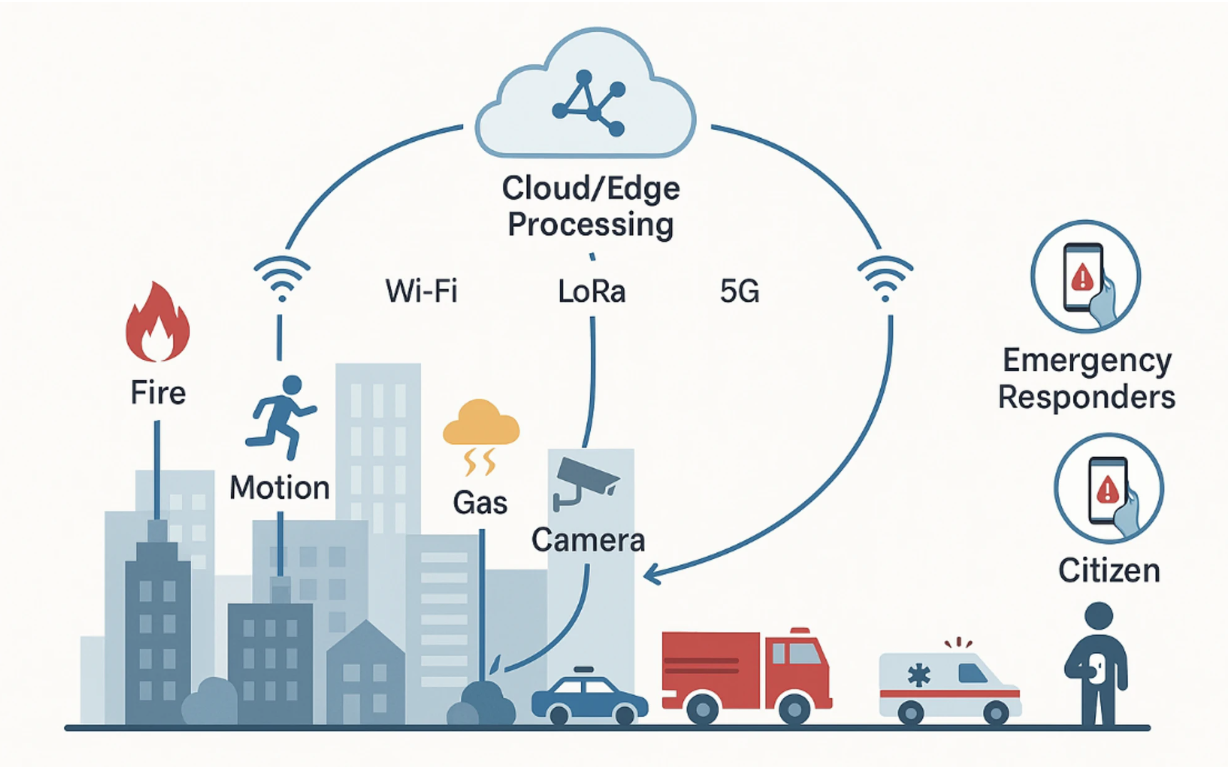
| Singapore | SCDF – Smart Nation Emergency Grid | 6 min | IoT sensors & citizen alerts | Perfect for Smart City adoption |
| Germany | Fire Brigade Volunteer Model | 8–10 min | 70% firefighters are civilians | Volunteer force potential for Bharat |
| Australia | State Emergency Service (SES) | 10–12 min | Decentralized state-led volunteer units | Can guide India’s SDRF scaling |
| Israel | United Hatzalah Network | 3 min | GPS-tracked paramedics on bikes | Blueprint for urban medical response |
| China | Integrated Command Structure | 9 min | Strong coordination between agencies | Example for NDMA–SDMA reform |
| UK | NHS & Police Joint Response Unit | 8 min | Shared dispatch and medical-police support | Model for urban co-response teams |
🧠 Case Study 1: Japan – Community First
After the 2011 Tōhoku earthquake, Japan built a network of over 5 million local volunteers under Bōsai Kyouiku (Disaster Education).
- Every citizen trained in basic rescue and first aid.
- Schools & companies conduct biannual drills.
- Local ward offices act as command centers.
Lesson for India: Disaster education must be part of daily life — not post-tragedy awareness campaigns.
🧠 Case Study 2: Israel – United Hatzalah
A non-governmental volunteer network that uses a GPS-based mobile app to connect nearest trained responders before ambulances arrive.
- Response time: under 3 minutes.
- Volunteers: 6,000+ paramedics and medics.
- Cost-effective: community-funded, tech-driven.
Lesson for India: Integration of trained citizen responders into 112 and 108 systems could save thousands during the “Golden Hour.”
⚙️ Common Principles Behind Successful Models
1️⃣ Decentralized control: State or district-level autonomy for faster deployment.
2️⃣ Community training: Volunteers, not just professionals, act as first responders.
3️⃣ Technology integration: GPS, mobile apps, AI prediction tools.
4️⃣ Unified emergency number: Single-window dispatch and coordination.
5️⃣ Accountability: Time-bound reporting, real-time tracking, and public dashboards.
💡 India’s Adaptation Path
✅ Strengthen 112 Unified Emergency Response (integrate police, fire, health).
✅ Build District Volunteer Forces under SDMAs — inspired by Japan & Germany.
✅ Launch citizen responder app — nearest CPR-trained person alerted first.
✅ Digitize real-time tracking dashboards in every EOC.
✅ Introduce mandatory school safety & first aid curriculum nationwide.
🧭 What Bharat Can Teach the World
🌏 Cultural empathy: “Vasudhaiva Kutumbakam” — the idea that every life matters.
🌏 Community resilience: From floods to pandemics, Indians self-organize quickly.
🌏 Resource optimization: India can build large-scale safety models at lower cost.
🌏 Volunteerism: A population of 140 crore holds limitless potential if guided and trained.
“Where the world uses money, Bharat can use unity.”
📢 Systemic Lessons
India doesn’t need to copy the world — it needs to connect its strengths.
With 50 lakh trained volunteers, smart cities, and unified systems, Bharat can redefine global disaster response.
📣 Call to Action
🌍 Learn from every model — build your own.
🚨 Join community responder programs in your city.
🧭 Follow HowToSurvive.in to understand and act — not just read.
📎 References
- UNDRR “Global Disaster Response Framework,” 2024
- WHO “Emergency Medical Systems Review,” 2025
- INSARAG “Global Response Time Index,” 2024
- NDMA “International Collaboration Report,” 2025
🔚 Closing Line
The future of survival is global — but the heart of it is Bharatiya.
This is why we built HowToSurvive.in — to learn from the world and make Bharat the world’s model of saving lives.
Common unsafe practices
- Relying on equipment without a hazard assessment
- Blocking or compromising escape routes
- Delaying the alarm or emergency call
- Attempting a response beyond training or safe conditions
- Re-entering before authorised clearance
- Treating a checklist as a substitute for competent inspection