
🌐 Early Warning Systems – Success Stories & Gaps (India 2025)
What needs attention
- The article topic must be linked to the actual occupancy and hazard
- Prevention and early warning provide more safety margin than last-second intervention
- Equipment is effective only when correctly selected, accessible and maintained
- People need short practised actions and a clear decision to stop and escape
- Children, visitors and people needing assistance require explicit planning
- Records, drills and inspections matter only when defects are corrected
Controls that reduce risk
- Complete a task- and site-specific hazard assessment
- Verify applicable Indian, state and local requirements
- Use competent inspection for installed systems and specialist hazards
- Keep alarms, exits, signs and emergency access usable
- Train intended users and practise evacuation
- Record defects with an owner and completion date
- Review the plan after changes, incidents or near misses
Understand and apply the guidance
🔴 Truth Drop
Every disaster gives a warning — nature speaks before it strikes.
The tragedy is that we often hear it too late or don’t act soon enough.
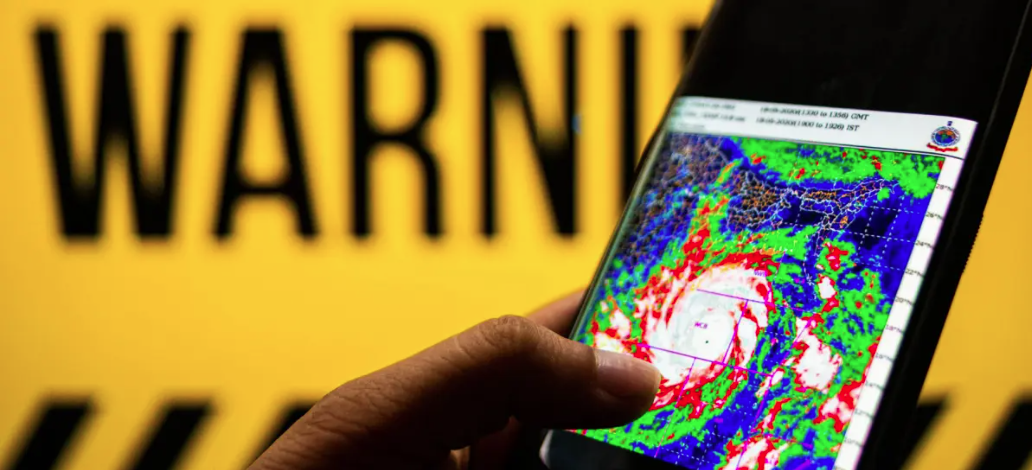
India today has one of the world’s largest multi-hazard early warning systems, covering cyclones, floods, heatwaves, landslides, and earthquakes.
Yet, between 2019 and 2025, over 35,000 lives were lost due to disasters that were forecast but not fully heeded.
(Source: NDMA, IMD, UNDRR 2025)
👉 The system works. The chain of communication doesn’t.
📖 Why This Matters
Warnings save lives only when they reach the last person in time — and in language they understand.
India’s early warning systems are strong on satellites and sensors but weak in public awareness, data coordination, and response readiness.
Every “red alert” is a test — not of technology, but of trust and community action.
📊 India’s Multi-Hazard Early Warning Framework (2025)
| Hazard Type | Forecasting Agency | Warning Lead Time | Success Rate | Gaps |
|---|---|---|---|---|
| Cyclones | IMD, INCOIS | 3–5 days | 95% | Evacuation delays, power outage info gaps |
| Floods | CWC, IMD | 24–72 hrs | 70% | Local drainage data missing |
| Heatwaves | IMD | 48–72 hrs | 85% | Weak local awareness & hydration points |
| Earthquakes | IMD, IIT Roorkee | 0–30 sec | 15% | Detection without public dissemination |
| Landslides | NRSC, GSI | 12–48 hrs | 60% | Limited hill sensor networks |
| Lightning & Thunderstorms | IMD, IITM | 30–45 min | 75% | Alerts not reaching mobile users |
| Tsunami | INCOIS, NDMA | 15–30 min | 90% | Awareness on coastal drills low |
(Sources: IMD, CWC, NDMA, INCOIS Annual Reports 2025)
📈 India’s forecasting accuracy has improved 4x in a decade — but warning reach and reaction time remain major gaps.
🧠 Success Stories – Where Warnings Saved Lives
- Cyclone Fani (Odisha, 2019) – Early alerts and mass evacuation saved over 1.2 million lives.
- Cyclone Biparjoy (Gujarat, 2023) – Over 94,000 people evacuated before landfall, minimal casualties.
- Chennai Floods (2024) – Improved rainfall alerts enabled earlier metro shutdown and school evacuation.
- Odisha Lightning Alerts (2022–24) – Mobile alert system reduced lightning deaths by 40% in two years.
- Heatwave Alerts (Telangana, 2023) – Localized text warnings and shade shelters cut hospitalizations by 30%.
👉 When science meets community, lives are saved.
📉 Gaps That Still Cost Lives
- Last-Mile Communication Failure
– 40% of vulnerable rural areas don’t receive alerts in local language or actionable format. - No Integration with 108/112 Response
– Alerts issued, but emergency services not pre-positioned. - Lack of Trust
– People often ignore warnings due to false alarms or lack of visible enforcement. - Urban Planning Disconnect
– City systems (e.g., drainage, fire, building safety) don’t respond to alerts dynamically. - Accessibility Barriers
– Elderly, disabled, and poor households lack mobile access or electricity during alerts.
📊 Data Snapshot (2019–2025)
| Indicator | 2019 | 2025 | Change |
|---|---|---|---|
| IMD Forecast Accuracy (Cyclones) | 75% | 95% | ↑ Improved dramatically |
| Flood Forecast Points (CWC) | 325 | 1,030 | ↑ Expanded 3x |
| Landslide Sensors Installed | 50 | 275 | ↑ Still limited |
| Heatwave Alerts Issued | 40 | 180+ | ↑ Expanded coverage |
| State-Level Control Rooms (24×7) | 14 | 28 | ↑ All states operational |
| Average Warning-to-Action Gap | ~5 hrs | ~2.5 hrs | ↓ Improving slowly |
(Source: NDMA, IMD, IITM, NDRF 2025)
🧩 The Human Factor
Technology doesn’t save lives — people using it do.
Odisha’s success is not just better satellites — it’s trained volunteers, school drills, and coastal awareness.
Where public trust and participation exist, warnings translate into survival.
Where alerts remain digital and disconnected — they die on the screen.
🛡 Survival Lessons for Citizens
✅ Register for IMD and NDMA alerts via official apps (e.g., Mausam, Damini, CWC Flood Portal).
✅ Follow only verified government sources — not viral social media forwards.
✅ Know your district control room numbers and safe shelter routes.
✅ Keep emergency kits ready before cyclone or flood season.
✅ If red alert issued — act, don’t wait for confirmation.
✅ Join community WhatsApp or VFF volunteer groups for verified updates.
📢 Systemic Lessons
India must:
- Integrate Early Warning → Response Chain (alerts auto-notify 108/112/SDRF).
- Localize alerts in regional languages & voice formats for rural areas.
- Mandate public drills after every major warning cycle (cyclone, flood, heatwave).
- Develop AI-based predictive modeling for flash floods & landslides.
- Include community training modules under school curriculum & Smart City Missions.
- Create a unified National Early Warning Dashboard accessible to citizens.
📣 Call to Action
🚨 Technology can predict disasters — but only awareness can prevent death.
👉 Share alerts. Educate your community.
The next warning you forward could be the life someone keeps.
Preparedness isn’t about fear — it’s about readiness.
📎 References
- India Meteorological Department (IMD) Annual Report 2025
- NDMA “Early Warning and Response Review,” 2025
- Central Water Commission (CWC) Flood Forecasting Data 2024
- INCOIS “Tsunami and Coastal Resilience Report,” 2024
- UNDRR “Early Warning for All – South Asia Update,” 2025
🔚 Closing Line
A warning is not a message — it’s a second chance.
This is why we built HowToSurvive.in — to ensure no life is lost because the alert came, but the action didn’t.
Common unsafe practices
- Relying on equipment without a hazard assessment
- Blocking or compromising escape routes
- Delaying the alarm or emergency call
- Attempting a response beyond training or safe conditions
- Re-entering before authorised clearance
- Treating a checklist as a substitute for competent inspection