
🎇 Firecracker Industry Accidents – Tamil Nadu & Beyond (2019–2025)
What needs attention
- The article topic must be linked to the actual occupancy and hazard
- Prevention and early warning provide more safety margin than last-second intervention
- Equipment is effective only when correctly selected, accessible and maintained
- People need short practised actions and a clear decision to stop and escape
- Children, visitors and people needing assistance require explicit planning
- Records, drills and inspections matter only when defects are corrected
Controls that reduce risk
- Complete a task- and site-specific hazard assessment
- Verify applicable Indian, state and local requirements
- Use competent inspection for installed systems and specialist hazards
- Keep alarms, exits, signs and emergency access usable
- Train intended users and practise evacuation
- Record defects with an owner and completion date
- Review the plan after changes, incidents or near misses
Understand and apply the guidance
🔴 Truth Drop
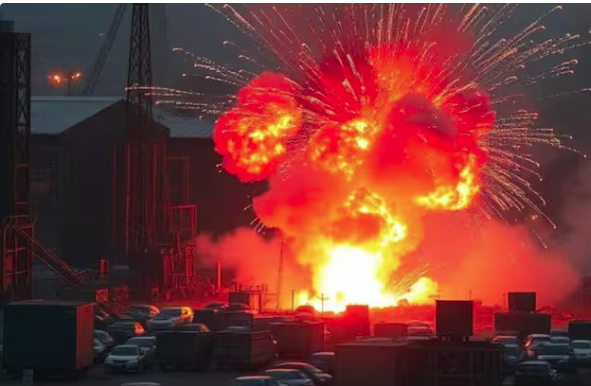
Between 2019 and 2025, India’s firecracker industry — led by Sivakasi (Tamil Nadu) and smaller clusters in Andhra Pradesh, Odisha, and Uttar Pradesh — witnessed over 180 factory explosions and warehouse fires, killing 480+ workers and injuring 1,200+.
(Source: DGFASLI, NDMA, and State Fire Services Reports 2019–2025)
👉 Nearly every accident was preventable — caused by unsafe storage, friction ignition, and untrained handling of explosives.
Sivakasi alone accounts for over 70% of national firecracker production, yet continues to record one blast every few weeks.
📖 Why This Matters
The firecracker industry employs over 2.5 lakh people, including women and child laborers, in high-risk environments where safety often takes a backseat to production speed.
Each festival season brings headlines of “Factory Explosion in Sivakasi” — a grim reminder that we celebrate festivals of light built on shadows of neglect.
“These are not accidents — they are administrative failures in slow motion.”
📊 5-Year Data on Firecracker Accidents (2019–2025)
| Year | Incidents | Deaths | Injured | Key States Affected |
|---|---|---|---|---|
| 2019 | 32 | 68 | 140 | Tamil Nadu, Odisha |
| 2020 | 28 | 55 | 120 | Tamil Nadu, Andhra Pradesh |
| 2021 | 36 | 80 | 210 | Tamil Nadu, Rajasthan, UP |
| 2022 | 29 | 75 | 180 | Tamil Nadu, MP |
| 2023 | 34 | 110 | 310 | Tamil Nadu (Virudhunagar, Sivakasi), AP |
| 2024 | 27 | 65 | 170 | TN, Odisha, Maharashtra |
| 2025 (Till Aug) | 15 | 33 | 70 | TN, MP, UP |
(Sources: NDMA, DGFASLI, NCRB, Tamil Nadu Fire & Rescue Services)
📈 Total (2019–2025):
201 incidents | 486 deaths | 1,190 injuries | ₹400+ crore economic loss
🧠 Pattern Analysis
| Cause | % Share | Typical Trigger |
|---|---|---|
| Friction / Impact Ignition | 35% | Manual mixing or drying of explosive powder |
| Static Electricity / Heat | 25% | Metal tools, dry heat during summer months |
| Overcrowded Workrooms | 15% | More workers and chemicals than license allows |
| Unlicensed Units / Illegal Storage | 15% | Rural sheds operating without permits |
| Transportation & Storage Fires | 10% | Truck ignition, godown overheating |
👉 94% of accidents occur in mixing, filling, or drying stages, often without temperature control or anti-static flooring.
📍 Hotspots of Hazard
| State | Districts Most Affected | Key Observations |
|---|---|---|
| Tamil Nadu | Virudhunagar (Sivakasi), Madurai | 70% of national production; 60% of fatal accidents |
| Andhra Pradesh | Anantapur, East Godavari | Illegal mini-units, weak inspections |
| Odisha | Khurda, Balasore | Unlicensed godowns; child labor |
| Uttar Pradesh | Rampur, Bulandshahr | Festival-season illegal storage |
| Madhya Pradesh | Katni, Dewas | Warehouse fires during transit |
⚙️ Technical & Structural Failures
- Overloading of explosive quantity — permitted 15 kg, actual 30–50 kg in small sheds.
- Poor segregation — raw, mixed, and finished goods stored together.
- Dry heat + friction — high summer temperatures (>38°C) trigger spontaneous ignition.
- Untrained labor — workers unaware of spark risks or grounding methods.
- No water / sand buckets nearby — first response missing.
- Rural areas — no fire station within 10 km radius.
⚠️ Major Case Studies
1️⃣ Sivakasi Blast (2023)
- Location: Virudhunagar district, Tamil Nadu
- Loss: 13 workers killed, 25 injured
- Cause: Friction during aluminum powder mixing
- Finding: No license renewal since 2020; extinguishers expired
- Lesson: Explosives and carelessness cannot coexist.
2️⃣ Anantapur Factory Fire (2022)
- Loss: 8 dead, 20 injured
- Cause: Sparks from nearby welding during storage operations.
- Lesson: Hot work & fireworks = fatal mix.
3️⃣ Khurda Warehouse Explosion (2024)
- Loss: 9 killed, 14 injured
- Cause: Illegal storage of 2 tons of finished crackers.
- Lesson: Enforcement absent even after multiple prior warnings.
📊 Human & Economic Toll
- Average worker age: 25–40 years
- Women workforce: 55% in Sivakasi region
- Average family compensation: ₹2–3 lakh (state relief)
- Insurance coverage: <10% of affected workers
- Cumulative loss (2019–2025): ₹400–450 crore
🛡 Survival & Prevention Lessons
✅ No metal tools near powder or filling tables — use wooden or plastic instruments.
✅ Install anti-static flooring in mixing and drying rooms.
✅ Segregate units — separate raw, semi-processed, and finished goods.
✅ Control humidity & temperature — monitor with simple sensors.
✅ Train workers in evacuation and firefighting (sand, bucket, CO₂).
✅ No smoking / mobile phones near production sheds.
✅ Always display danger symbols & emergency numbers.
📢 Systemic Lessons
India must:
- Digitize and geo-tag all licensed firecracker units.
- Mandate quarterly safety inspections and public audit reports.
- Establish district-level industrial fire stations near high-risk clusters.
- Launch national-level worker safety training programs in local languages.
- Crack down on illegal sub-leasing and backyard cracker sheds.
- Integrate real-time heat and humidity sensors linked to Bharat101 alert system.
- Extend insurance + welfare schemes for all registered workers.
📣 Call to Action
🚨 Festivals should light skies, not burn lives.
👉 Before buying firecrackers, ask where and how they were made.
Support ethical, safe manufacturers — because every saved worker’s life is a real Diwali of humanity.
📎 References
- DGFASLI “Industrial Explosion & Fire Safety Report” (2019–2025)
- NDMA “Explosives and Fireworks Sector Risk Review,” 2024
- Tamil Nadu Fire & Rescue Services Annual Data 2025
- Ministry of Labour & Employment Safety Audit Reports (2024–25)
- IIT Madras “Sivakasi Safety Improvement Study,” 2023
🔚 Closing Line
The sparkle of a festival should never come from a factory’s ashes.
This is why we built HowToSurvive.in — to make awareness the real light that saves lives.
Common unsafe practices
- Relying on equipment without a hazard assessment
- Blocking or compromising escape routes
- Delaying the alarm or emergency call
- Attempting a response beyond training or safe conditions
- Re-entering before authorised clearance
- Treating a checklist as a substitute for competent inspection