
🎒 School Safety – Fire Drills & Preparedness Status (2019–2025)
What needs attention
- The article topic must be linked to the actual occupancy and hazard
- Prevention and early warning provide more safety margin than last-second intervention
- Equipment is effective only when correctly selected, accessible and maintained
- People need short practised actions and a clear decision to stop and escape
- Children, visitors and people needing assistance require explicit planning
- Records, drills and inspections matter only when defects are corrected
Controls that reduce risk
- Complete a task- and site-specific hazard assessment
- Verify applicable Indian, state and local requirements
- Use competent inspection for installed systems and specialist hazards
- Keep alarms, exits, signs and emergency access usable
- Train intended users and practise evacuation
- Record defects with an owner and completion date
- Review the plan after changes, incidents or near misses
Understand and apply the guidance
🔴 Truth Drop
India has over 15 lakh schools, yet fewer than 25% conduct regular fire or evacuation drills.
(Source: NDMA School Safety Review 2024)
“We test children for marks every week — but never test if they can survive a fire.”
📖 Why This Matters
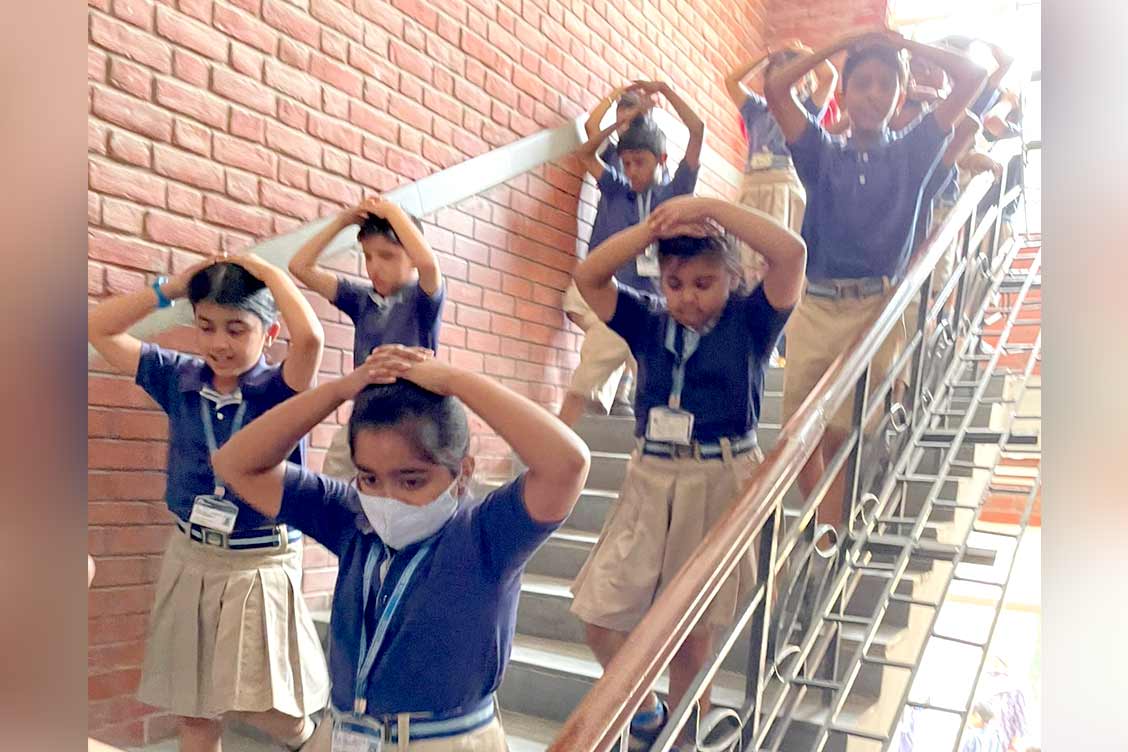
From Surat’s Takshashila tragedy (2019) to Delhi’s school electrical fires (2022), our education spaces reveal a painful truth — most Indian schools are unprepared for emergencies.
Children panic easily in crisis, and lack of drills, signage, and escape planning turns accidents into mass casualties.
Preparedness must be part of learning — not an afterthought.
📊 Fire Safety Readiness in Indian Schools (2019–2025)
| Year | Total Schools Surveyed | Schools with Fire Safety Certificate | Schools Conducting Drills | Major Incidents Reported |
|---|---|---|---|---|
| 2019 | 9,80,000 | 38% | 16% | 22 |
| 2020 | 10,50,000 | 40% | 18% | 15 |
| 2021 | 11,00,000 | 42% | 20% | 19 |
| 2022 | 12,10,000 | 43% | 21% | 23 |
| 2023 | 13,40,000 | 45% | 23% | 20 |
| 2024 | 14,80,000 | 47% | 25% | 17 |
| 2025 (till Aug) | 15,00,000+ | 50% | 26% | 9 |
(Sources: NDMA, CBSE, State Fire Services, School Safety Portal 2025)
📈 5-Year Trend Summary:
- Only 1 in 4 schools practice annual evacuation drills.
- 50% of schools in India still lack certified extinguishers.
- Rural schools face higher structural risk (thatched roofs, no exits).
🔥 Common Safety Gaps Found
1️⃣ No alarm systems or manual call points installed.
2️⃣ Extinguishers expired or non-functional.
3️⃣ Blocked stairways used for storage.
4️⃣ Teachers and guards untrained in emergency procedures.
5️⃣ No assembly points marked on premises.
🧠 Case Study: Surat Takshashila Fire (2019)
- Location: Coaching center on 4th floor of commercial building.
- Incident: Fire from transformer ignited plastic canopy; exit blocked.
- Result: 22 students killed, many jumped to death.
- Cause: No evacuation training, no alarms, no fire exit.
- Lesson: Fire safety is not paperwork — it’s practice and preparedness.
🏫 NDMA School Safety Guidelines (Key Points)
✅ Every school must:
- Conduct biannual evacuation drills.
- Have functional extinguishers and alarms on every floor.
- Appoint a School Disaster Management Committee.
- Display evacuation routes and contact numbers.
- Keep records of all mock drills and safety audits.
(Ref: NDMA National School Safety Policy Guidelines, 2024)
👩🏫 How Schools Can Become Safer
✅ Train all teachers and staff in Basic Fire Response & First Aid.
✅ Make students safety monitors for peer awareness.
✅ Display clear exit signage and floor maps.
✅ Install smoke alarms and panic lighting.
✅ Include safety lessons in curriculum once every term.
✅ Coordinate with local fire stations for live demos.
📢 Systemic Lessons
India must:
- Make fire & disaster safety mandatory in all education board audits.
- Include fire preparedness training in teacher certification programs.
- Establish state-wide “Safe School Index” ranking for accountability.
- Incentivize schools with best safety compliance.
📣 Call to Action
🚨 Ask your child’s school: “When was your last fire drill?”
👉 Awareness begins with parents, action begins with schools.
Let’s make education safe — not risky.
📎 References
- NDMA “National School Safety Policy Guidelines,” 2024
- CBSE “Safety Audit & Infrastructure Compliance Report,” 2025
- NCRB “Fire Incidents in Educational Institutions,” 2019–2024
- Ministry of Education “School Safety Framework,” 2023
🔚 Closing Line
Children should learn math and science — not how to jump from burning buildings.
This is why we built HowToSurvive.in — to make every school a place of learning, not loss.
Common unsafe practices
- Relying on equipment without a hazard assessment
- Blocking or compromising escape routes
- Delaying the alarm or emergency call
- Attempting a response beyond training or safe conditions
- Re-entering before authorised clearance
- Treating a checklist as a substitute for competent inspection