
🏗️ How Poor Planning Increases Disaster Severity – With Examples (India 2019–2025)
What needs attention
- The article topic must be linked to the actual occupancy and hazard
- Prevention and early warning provide more safety margin than last-second intervention
- Equipment is effective only when correctly selected, accessible and maintained
- People need short practised actions and a clear decision to stop and escape
- Children, visitors and people needing assistance require explicit planning
- Records, drills and inspections matter only when defects are corrected
Controls that reduce risk
- Complete a task- and site-specific hazard assessment
- Verify applicable Indian, state and local requirements
- Use competent inspection for installed systems and specialist hazards
- Keep alarms, exits, signs and emergency access usable
- Train intended users and practise evacuation
- Record defects with an owner and completion date
- Review the plan after changes, incidents or near misses
Understand and apply the guidance
🔴 Truth Drop
Disasters rarely start with nature or machines — they start with planning failures.
From Surat’s Takshashila fire (2019) to Rajkot Game Zone (2024), from Delhi floods (2023) to Morbi bridge collapse (2022) — every tragedy reveals the same truth:
👉 We built faster than we thought, and neglected safety before it began.
According to NDMA and CAG (2025), over 80% of man-made disaster losses in India are directly linked to poor urban planning, unregulated construction, and non-enforcement of safety laws.
📖 Why This Matters
Planning decides not just how cities look — but how safely they breathe, move, and survive.
When rules are bent for profit or convenience, a simple rain becomes a flood, a spark becomes a tragedy, and a crowd becomes chaos.
Poor planning kills silently — long before the actual disaster.
“Every unapproved floor, every missing hydrant, every blocked exit — is a delayed time bomb.”
📊 India’s Urban Disaster Snapshot (2019–2025)
| Category | Incidents Linked to Planning Failures | Deaths | Economic Loss (₹ Cr) | Key Examples |
|---|---|---|---|---|
| Urban Fires | 2,800+ | 1,700 | 9,500 | Surat, Rajkot, Mundka, Delhi, Mumbai |
| Floods / Waterlogging | 600+ | 1,200 | 18,000 | Chennai, Mumbai, Delhi, Hyderabad |
| Building Collapses | 1,200+ | 2,300 | 7,000 | Gurugram, Bhiwandi, Surat, Delhi |
| Industrial Accidents | 1,000+ | 2,800 | 10,000 | GIDC, Vizag, Dombivli |
| Stampedes / Crowd Disasters | 150+ | 1,100 | 1,200 | Kumbh, Mathura, temple events |
(Sources: NDMA, NCRB, CAG Audit on Urban Resilience, 2025)
📈 Nearly 90% of these deaths could have been prevented through enforcement and design foresight.
🧠 Where Planning Breaks Down
| Level | Type of Failure | Impact |
|---|---|---|
| Urban Design | Construction over natural drains, loss of wetlands | Flooding after normal rain |
| Infrastructure | Narrow roads, no fire tender access | Delayed emergency response |
| Building Regulation | Illegal floors, poor materials, no fire exits | Structural collapses, trapped victims |
| Industrial Layouts | No buffer zones between chemical and residential areas | Gas leaks, toxic exposure |
| Crowd & Event Planning | No one-way movement, exit bottlenecks | Stampedes |
| Transport & Traffic | Flyover choke points, no ambulance lanes | Deaths in golden hour delay |
| Power & Water Design | Transformer overload, dry hydrants | Fire escalation, blackout chaos |
⚠️ Case Studies — Lessons Written in Ashes
1️⃣ Surat Takshashila Fire (2019)
- Trigger: Short circuit in illegal coaching center above a commercial complex.
- Violation: No fire exit, illegal mezzanine, plastic roofing.
- Loss: 22 students died.
- Lesson: If authorities had enforced fire-safety rules, not one child would have died.
2️⃣ Morbi Bridge Collapse (2022)
- Trigger: Unsafe public reopening without structural audit.
- Loss: 135 people died in 15 seconds.
- Lesson: Public infrastructure without inspection is a public crime.
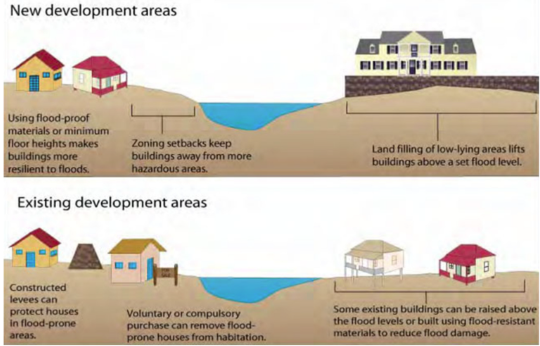
3️⃣ Delhi Flooding (2023)
- Trigger: River encroachment + stormwater drain blockage.
- Loss: ₹4,000+ crore, city paralyzed for days.
- Lesson: Natural water channels cannot be replaced by concrete; they always reclaim space.
4️⃣ Rajkot Game Zone Fire (2024)
- Trigger: Electric spark + illegal mezzanine in a gaming zone.
- Loss: 33 lives, including 9 children.
- Lesson: Even licensed buildings mean nothing when fire exits are sealed and NOCs are fake.
5️⃣ Bhiwandi Building Collapse (2021)
- Trigger: 50-year-old residential structure without retrofitting.
- Loss: 41 deaths.
- Lesson: Old buildings need structural health checks as seriously as human ones.
📊 Data Insights — Why Disasters Escalate
- Fire brigade access blocked in 40% of Indian cities due to illegal parking & narrow roads.
- 70% of drainage systems are unplanned or non-functional.
- 50% of industrial areas in India are surrounded by residential colonies.
- Less than 10% of cities conduct annual disaster drills.
- Urban tree cover decline: 1–3% annually, increasing heat stress & flood runoff.
(Source: CAG Urban Audit 2025, NDMA Urban Risk Atlas, MoHUA Smart City Reports)
🧩 The Human Factor
Poor planning doesn’t just fail buildings — it fails people:
- Authorities ignore audits.
- Builders cut costs on safety systems.
- Citizens stay silent — until it’s too late.
Sustainable safety requires public participation as much as policy enforcement.
Every citizen must become a watchdog for life safety.
🛡 Survival & Prevention Lessons
✅ Demand structural audit certificates before renting or buying.
✅ Never study or work in a building without visible fire exits or alarms.
✅ Avoid basements used for storage or residence.
✅ During rain, avoid underpasses or encroached drains — flash floods rise fast.
✅ Join local safety committees or VFF volunteer cells.
✅ Report unsafe construction or blocked hydrants to civic helplines.
📢 Systemic Lessons
India must:
- Integrate Urban Safety Index in every Smart City dashboard.
- Digitally link building NOC renewals to physical inspection data (via Bharat101).
- Mandate zoning discipline — no hazardous industry within 2 km of residences.
- Conduct annual mock drills in schools, markets, and high-rise societies.
- Enforce fire-tender access audits in all dense wards.
- Create public accountability dashboards — citizens should see where their city stands on safety.
📣 Call to Action
🚨 Poor planning kills silently — in drafts, maps, and ignored warnings.
👉 Let’s rebuild India’s cities with foresight, not hindsight.
Ask before approving: “Is it safe — or just shiny?”
Every citizen has the power to question, and every question can save a life.
📎 References
- NDMA “National Urban Risk Atlas,” 2024
- CAG Audit on Urban Disaster Preparedness, 2025
- NCRB “Accidental Deaths and Disasters in India” 2025
- MoHUA Smart Cities Progress Review 2024
- IIT Roorkee “Structural Health & Urban Risk Report” 2023
- VFF India Foundation “Fire and Infrastructure Safety Study,” 2025
🔚 Closing Line
Every bridge, drain, and building is a promise between life and civilization.
This is why we built HowToSurvive.in — to make planning not just about progress, but about protection.
Common unsafe practices
- Relying on equipment without a hazard assessment
- Blocking or compromising escape routes
- Delaying the alarm or emergency call
- Attempting a response beyond training or safe conditions
- Re-entering before authorised clearance
- Treating a checklist as a substitute for competent inspection