
🏙️ Urban Planning Failures Leading to Environmental Risks (2019–2025)
What needs attention
- The article topic must be linked to the actual occupancy and hazard
- Prevention and early warning provide more safety margin than last-second intervention
- Equipment is effective only when correctly selected, accessible and maintained
- People need short practised actions and a clear decision to stop and escape
- Children, visitors and people needing assistance require explicit planning
- Records, drills and inspections matter only when defects are corrected
Controls that reduce risk
- Complete a task- and site-specific hazard assessment
- Verify applicable Indian, state and local requirements
- Use competent inspection for installed systems and specialist hazards
- Keep alarms, exits, signs and emergency access usable
- Train intended users and practise evacuation
- Record defects with an owner and completion date
- Review the plan after changes, incidents or near misses
Understand and apply the guidance
🔴 Truth Drop
Every flood, fire, or building collapse in India’s cities is not a surprise — it’s a design flaw.
Between 2019 and 2025, over 2,300 urban disasters were directly linked to illegal construction, poor drainage, or lack of fire and environmental compliance.
(Source: NDMA Urban Risk Database, 2025)
“Our cities are expanding faster than our systems — and collapsing under their own weight.”
📖 Why This Matters
Unplanned urbanization isn’t just messy — it’s lethal.
When cities grow without drainage, ventilation, or open space, every rainfall turns to floodwater, every power line becomes a hazard, and every unregulated building becomes a death trap.
Environmental safety must be part of city design — not an afterthought.
📊 Urban Disasters Linked to Planning Failures (2019–2025)
| Year | Type of Disaster | Example City | Core Cause | Casualties |
|---|---|---|---|---|
| 2019 | Flood | Mumbai | Blocked stormwater drains | 32 deaths |
| 2020 | Fire | Delhi Anaj Mandi | Illegal electrical wiring | 43 deaths |
| 2021 | Building Collapse | Surat | Unapproved floor additions | 12 deaths |
| 2022 | Urban Heatwave | Ahmedabad | Low green cover, high concrete density | 70+ deaths |
| 2023 | Waterlogging & Sewage Overflow | Bengaluru | Encroached lakes, poor drainage | ₹1,000 Cr loss |
| 2024 | Smog & AQI Spike | Delhi NCR | Construction dust, vehicle load | AQI 700+ |
| 2025 | Flash Flood | Gurugram | Basement parking & zero water outlets | 9 deaths |
(Sources: NDMA, NCRB, IMD, CSE Urban Environment Studies 2025)
📈 Pattern Summary:
- 80% of Indian cities violate environmental planning norms.
- Only 34% have working stormwater systems.
- Less than 25% of high-rise buildings meet full fire & evacuation codes.
🧠 Root Causes of Urban Environmental Risks
1️⃣ Encroachment on Natural Drains & Lakes
Cities like Bengaluru, Chennai, and Hyderabad lost 70–90% of wetlands in 20 years — every storm now floods them back.
2️⃣ Vertical Growth Without Safety
Unregulated buildings rise, but firefighting systems don’t.
Most cities lack ladder trucks tall enough for new towers.
3️⃣ Uncontrolled Construction Dust
Contributes 40% of urban PM2.5 — choking residents year-round.
4️⃣ Paved Surfaces Everywhere
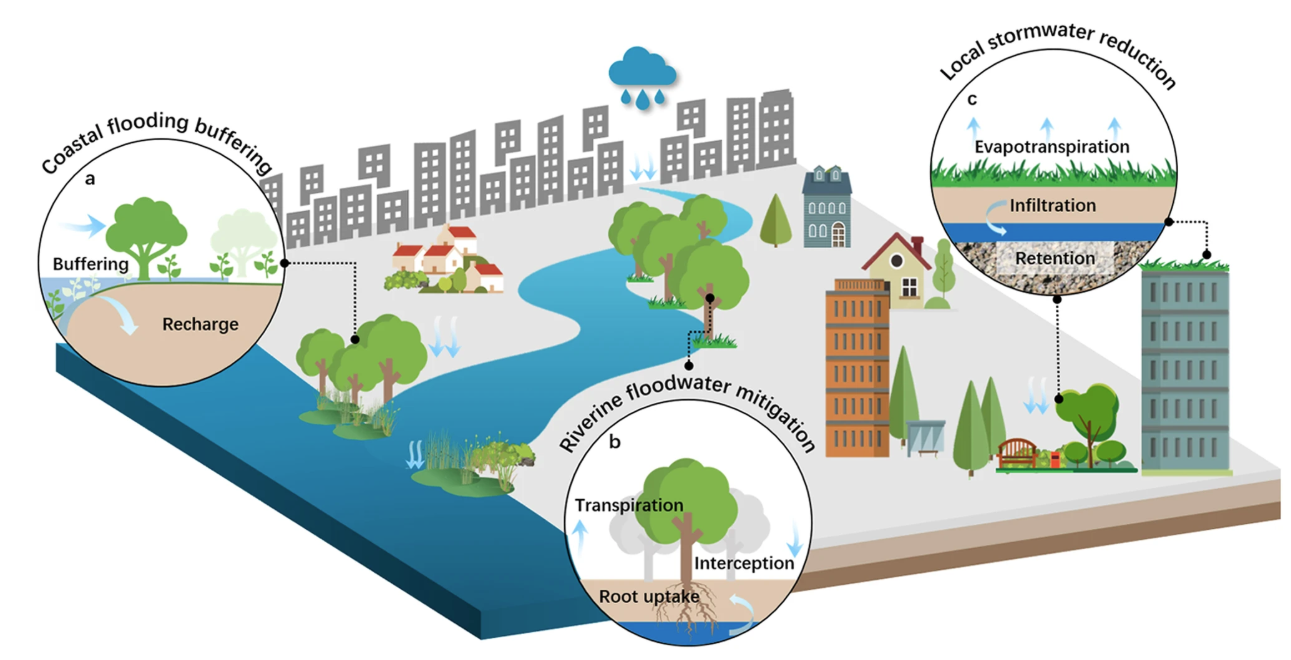
No green or porous soil left — groundwater recharge drops by 68% in metro zones.
5️⃣ Lack of Environmental Audits
Environmental Impact Assessments (EIA) often bypassed or diluted for urban projects.
🧠 Case Study: Bengaluru Floods (2023)
- Event: Record rainfall (131 mm in 24 hrs)
- Impact: Tech parks & apartments flooded
- Reason: Over 800 storm drains encroached or sealed
- Loss: ₹1,200 crore in property + 4 deaths
- Lesson: Nature’s path can’t be concreted — it always reclaims its flow.
💨 Ripple Effects of Poor Planning
- Health: Rise in respiratory diseases due to air stagnation and dust.
- Water: Urban floods mix sewage and waste into rivers (Yamuna, Mithi).
- Energy: Peak summer loads cause power failures and fires.
- Climate: Heat islands raise city temperature by 4–6°C.
🧭 The Way Forward – Building Safer Cities
✅ Mandate urban environmental audits every 2 years.
✅ Protect natural floodplains, lakes, and wetlands as “no-build zones.”
✅ Introduce Green Building Codes with local enforcement.
✅ Implement rainwater harvesting + green roofs in all new projects.
✅ Ban construction in identified flood & seismic zones.
✅ Upgrade firefighting & drainage infrastructure in high-rise clusters.
📢 Systemic Lessons
India must:
- Treat urban safety as environmental protection, not separate silos.
- Integrate fire, flood, and climate risk maps into master plans.
- Create District Urban Risk Cells under SDMAs for real-time monitoring.
- Incentivize citizens for rainwater harvesting, solar roofs, and waste segregation.
📣 Call to Action
🚨 Every citizen is part of the city’s design — and part of its defense.
👉 Report illegal encroachments, demand open spaces, and question how your city plans for survival.
Because unsafe planning costs more than any disaster relief ever will.
📎 References
- NDMA “Urban Risk and Resilience Report,” 2025
- CSE “State of Indian Cities – Environment 2024”
- IMD “Urban Flood and Heatwave Trend Report,” 2025
- MoHUA “Smart Cities Mission – Midterm Review,” 2024
🔚 Closing Line
Disasters don’t just strike cities — cities invite them.
This is why we built HowToSurvive.in — to inspire citizens and planners to build not just taller cities, but safer ones.
Common unsafe practices
- Relying on equipment without a hazard assessment
- Blocking or compromising escape routes
- Delaying the alarm or emergency call
- Attempting a response beyond training or safe conditions
- Re-entering before authorised clearance
- Treating a checklist as a substitute for competent inspection