
🏢 Emergency Preparedness in Workplaces – Current Stats (India 2025)
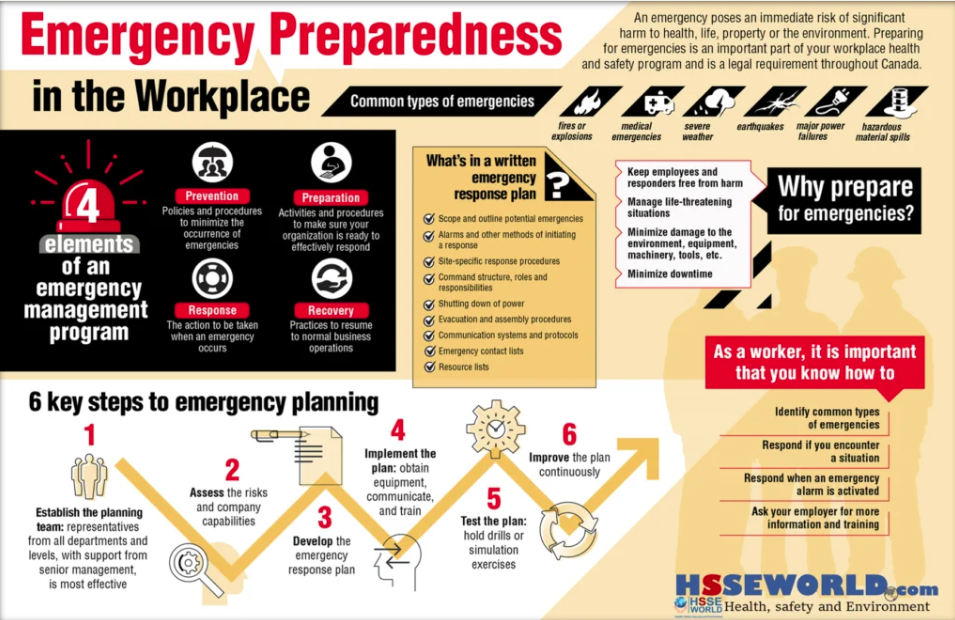
What needs attention
- The article topic must be linked to the actual occupancy and hazard
- Prevention and early warning provide more safety margin than last-second intervention
- Equipment is effective only when correctly selected, accessible and maintained
- People need short practised actions and a clear decision to stop and escape
- Children, visitors and people needing assistance require explicit planning
- Records, drills and inspections matter only when defects are corrected
Controls that reduce risk
- Complete a task- and site-specific hazard assessment
- Verify applicable Indian, state and local requirements
- Use competent inspection for installed systems and specialist hazards
- Keep alarms, exits, signs and emergency access usable
- Train intended users and practise evacuation
- Record defects with an owner and completion date
- Review the plan after changes, incidents or near misses
Understand and apply the guidance
🔴 Truth Drop
Every workplace — from offices to factories — is one short circuit, one cylinder leak, or one cardiac emergency away from disaster.
Yet, only 12% of Indian workplaces have basic emergency response systems or trained staff in place.
(Source: NDMA & Labour Ministry Workplace Safety Survey, 2025)
👉 In the last five years (2020–2025), India recorded over 10,000 workplace-related injuries and 1,700 deaths, many of which were preventable with simple preparedness.
📖 Why This Matters
Fire alarms, exit routes, and first aid kits look good on paper — but in real life, most are either locked, missing, or non-functional.
A fire, electrical fault, or medical crisis inside an office can spread panic faster than flames.
Preparedness is not a luxury; it’s a responsibility.
Every second counts — and every employee can be the first responder if trained right.
📊 India’s Workplace Preparedness Snapshot (2025)
| Category | Status | Key Data (2025) |
|---|---|---|
| Fire Safety Compliance | 🚨 Low | Only 28% offices/buildings have valid Fire NOC |
| First Aid Kits Availability | ⚠️ Inadequate | 35% workplaces have functional kits |
| Trained First Responders | ❌ Critically Low | Less than 10% staff trained in CPR or evacuation |
| Evacuation Drills | ⚠️ Rare | Only 15% offices conduct bi-annual drills |
| Emergency Equipment Maintenance | 🚨 Poor | 60% extinguishers expired or unserviced |
| AED (Defibrillator) Availability | ❌ Negligible | Only 1 in 100 workplaces have an AED |
(Sources: NDMA Workplace Safety Index 2025, Ministry of Labour Report, FICCI Corporate Safety Review)
🧠 Sector-Wise Breakdown
| Sector | Key Risks | Preparedness Level |
|---|---|---|
| IT & Corporate Offices | Electrical fires, cardiac arrests | 🔸Moderate – 40% have fire systems, but few have CPR/AED |
| Manufacturing Units | Chemical exposure, machine injuries | 🔻Low – 70% lack trained responders |
| Warehouses & Logistics | Vehicle accidents, storage fires | 🔻Low – 50% have blocked exits |
| Hospitals & Labs | Fire, oxygen leaks, infection control | ⚠️Variable – Better systems, weak drills |
| Educational Institutions | Fires, earthquakes, stampedes | ⚠️Inconsistent – Some drills, poor maintenance |
📊 Real Incidents (2020–2024)
- Surat Textile Unit Fire (2022): 6 dead, exit door locked.
- Delhi Office Basement Fire (2023): 11 lives lost due to smoke inhalation.
- Pune IT Park Short Circuit (2024): 3 employees died, no extinguisher used.
- Rajkot Game Zone Fire (2024): 35 lives lost; fire exits blocked, no alarm.
- ICU Hospital Fire (2023): Staff untrained, patients trapped.
Each tragedy repeats the same line — “No one knew what to do.”
📉 Data Insights
- Average response time during workplace emergencies: 12–15 minutes (vs ideal <3 min).
- Loss due to poor safety culture: ₹9,500 crore annually (Labour Ministry, 2025).
- Lives that could be saved with CPR training: up to 60% of cardiac arrest victims.
- Fire drills conducted annually in corporate India: only 1 out of 4 companies.
🧩 The Human Factor
Most employees freeze, panic, or run in the wrong direction during crises.
This isn’t negligence — it’s lack of conditioning.
A single two-hour session on fire safety, first aid, or evacuation can turn fear into response.
Preparedness isn’t about fear. It’s about responsibility, training, and awareness.
🛡 Survival Lessons for Workplaces
✅ Conduct mock drills every 6 months.
✅ Maintain unlocked, accessible fire exits at all times.
✅ Keep first aid kits, extinguishers, and AEDs visible and maintained.
✅ Train all staff in basic first aid & CPR — not just security teams.
✅ Display emergency contact boards with local 108 / 112 numbers.
✅ Appoint floor marshals and emergency coordinators for quick action.
✅ Store Life Safety Blankets (LSB) or fire blankets near electrical or chemical zones.
📢 Systemic Lessons
India must:
- Make workplace emergency preparedness mandatory under the Factories Act and Shops & Establishments Act.
- Mandate safety audits and certification renewal every 12 months.
- Introduce tax incentives for safety compliance.
- Integrate HowToSurvive.in modules into HR training programs nationwide.
- Create volunteer fire & first responder networks within industrial clusters under VFF India Foundation.
📣 Call to Action
🚨 Your office could be safe — or one short circuit away from disaster.
Don’t wait for policy. Build your own preparedness plan today.
👉 Ask your HR: “When was our last drill?”
👉 Learn CPR — it takes 15 minutes, but can save a colleague’s life.
Preparedness starts not with government orders, but with individual action.
📎 References
- NDMA “Workplace Safety in India” Report 2025
- Ministry of Labour & Employment Safety Audit 2024
- FICCI–CII Industrial Safety Index 2025
- NCRB Fire and Occupational Accident Data 2024
- WHO India Workplace Health Profile 2025
🔚 Closing Line
A workplace is safe not because it has alarms — but because people know how to act when they ring.
This is why we built HowToSurvive.in — to turn awareness into action, and workplaces into life-saving environments.
Common unsafe practices
- Relying on equipment without a hazard assessment
- Blocking or compromising escape routes
- Delaying the alarm or emergency call
- Attempting a response beyond training or safe conditions
- Re-entering before authorised clearance
- Treating a checklist as a substitute for competent inspection