
🐾 Human–Wildlife Conflict After Natural Disasters (2019–2025)
What needs attention
- The article topic must be linked to the actual occupancy and hazard
- Prevention and early warning provide more safety margin than last-second intervention
- Equipment is effective only when correctly selected, accessible and maintained
- People need short practised actions and a clear decision to stop and escape
- Children, visitors and people needing assistance require explicit planning
- Records, drills and inspections matter only when defects are corrected
Controls that reduce risk
- Complete a task- and site-specific hazard assessment
- Verify applicable Indian, state and local requirements
- Use competent inspection for installed systems and specialist hazards
- Keep alarms, exits, signs and emergency access usable
- Train intended users and practise evacuation
- Record defects with an owner and completion date
- Review the plan after changes, incidents or near misses
Understand and apply the guidance
🔴 Truth Drop
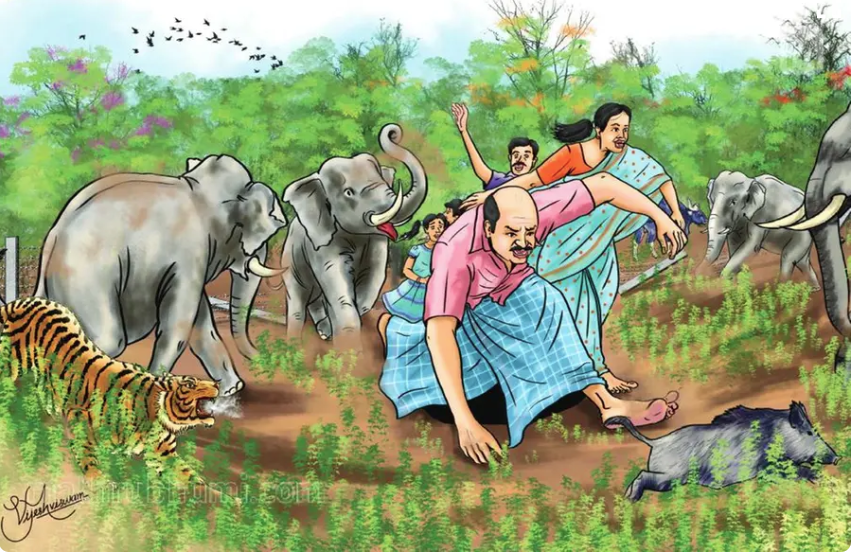
From Kaziranga’s floods to Uttarakhand’s fires and Odisha’s cyclones, every major natural disaster in India over the past five years has displaced thousands of wild animals — bringing them dangerously close to human habitats.
Between 2019 and 2025, India reported 3,700+ conflict incidents, 420 human deaths, and 1,100 wildlife fatalities linked directly to disaster-triggered migration.
(Source: MoEFCC, WII, NDMA Disaster-Wildlife Study 2025)
“Disasters don’t just destroy homes — they destroy boundaries between species.”
📖 Why This Matters
When disasters strike, wild animals flee flooded forests, burnt habitats, or collapsed caves — searching for food, water, and shelter.
Humans, meanwhile, expand into these same spaces for rescue, reconstruction, or survival.
The result: a clash of desperation on both sides.
These conflicts aren’t “attacks” — they’re signs of ecological imbalance.
📊 India’s Disaster-Linked Human–Wildlife Conflicts (2019–2025)
| Year | Disaster Trigger | Regions Most Affected | Human Deaths | Animal Deaths | Key Species |
|---|---|---|---|---|---|
| 2019 | Assam floods | Kaziranga, Majuli | 67 | 140 | Rhino, deer, elephants |
| 2020 | Cyclone Amphan | West Bengal, Odisha | 42 | 90 | Wild boar, snakes, monkeys |
| 2021 | Forest fires | Uttarakhand, HP | 58 | 180 | Leopards, birds, bears |
| 2022 | Drought migration | MP, Chhattisgarh | 77 | 220 | Elephants, nilgai, tigers |
| 2023 | Monsoon floods | Bihar, Assam, Kerala | 86 | 230 | Elephants, reptiles |
| 2024 | Cyclone Michaung & heatwaves | TN, AP, Rajasthan | 65 | 150 | Peacocks, langurs, reptiles |
| 2025 (till Aug) | Early droughts & wildfires | Central India | 25 | 95 | Leopards, elephants |
(Sources: NDMA, Wildlife Institute of India, MoEFCC Annual Reports)
📈 Trend Summary (2019–2025):
- Average 1 human death every 5 days from post-disaster conflict
- Elephants involved in 60% of fatal incidents
- Wildlife migration patterns shifting northward due to habitat loss
🧠 What Drives Conflict After Disasters
1️⃣ Habitat Loss & Fragmentation
Floods and fires destroy forests, forcing animals toward villages and highways.
Example: In 2023, Kaziranga National Park saw over 100 wild animals drown and 30 rhinos migrate to nearby villages.
2️⃣ Food & Water Scarcity
After droughts, elephants, wild boars, and monkeys enter farms for food, triggering retaliatory attacks.
3️⃣ Unplanned Reconstruction
Post-disaster rebuilding often encroaches further into forest fringes, reducing buffer zones.
4️⃣ Tourism Pressure
Rapid reopening of ecotourism zones post-fire or cyclone disturbs wildlife still in recovery.
🐘 Case Study: Odisha – Cyclone Amphan (2020)
- Disaster Type: Category 5 Cyclone
- Wildlife Impact: Over 25,000 hectares of mangroves damaged
- Conflict Rise: Snake bites + monkey raids increased 3x within 30 days post-cyclone
- Response: Forest department rescue teams relocated displaced animals
- Lesson: Disaster management must include wildlife rescue, not just human relief.
🦅 Ecological Consequences
- Disturbance of food chains — scavenger birds and predators migrate unpredictably.
- Increased road kills — animals crossing highways during migration.
- Spread of zoonotic diseases (e.g., leptospirosis, rabies) due to close contact.
- Loss of pollinators (bees, butterflies) affecting post-disaster crop recovery.
🧭 Preventive & Response Measures
✅ Include Wildlife in Disaster Management Plans.
Each state NDMA cell should have a forest-wildlife coordination desk.
✅ Establish Safe Corridors.
Mark animal movement routes with reflective boards and alert systems.
✅ Community Awareness Programs.
Train locals to identify, report, and avoid conflict zones.
✅ Rehabilitate Forest Habitats Early.
Replant fruit-bearing trees and restore waterholes within 3 months post-disaster.
✅ Use Drone Surveillance.
Track displaced herds or predators for safe relocation.
📢 Systemic Lessons
India must:
- Integrate wildlife protection into NDMA and SDMA protocols.
- Create joint wildlife–disaster task forces at district level.
- Use AI-driven migration forecasting based on satellite and weather data.
- Strengthen laws against retaliatory killings post-disaster.
- Promote eco-sensitive reconstruction policies in disaster zones.
📣 Call to Action
🚨 When you see a wild animal after floods or fires, it’s not aggression — it’s survival.
👉 Stay calm, maintain distance, inform the forest department (helpline 1926).
Coexistence is not philosophy — it’s the only sustainable strategy.
📎 References
- NDMA “Guidelines on Ecosystem-Sensitive Disaster Response,” 2024
- MoEFCC “Wildlife Conflict & Disaster Data Compendium,” 2025
- Wildlife Institute of India “Post-Disaster Biodiversity Studies,” 2023
- VFF India “Eco-Resilience & Conflict Prevention Report,” 2025
🔚 Closing Line
When we rebuild after disasters, we must also rebuild trust with nature.
This is why we built HowToSurvive.in — to protect every life, human or wild, that shares this land with us.
Common unsafe practices
- Relying on equipment without a hazard assessment
- Blocking or compromising escape routes
- Delaying the alarm or emergency call
- Attempting a response beyond training or safe conditions
- Re-entering before authorised clearance
- Treating a checklist as a substitute for competent inspection