
👮♂️ Police Response Time in Emergencies – State Rankings (2019–2025)
What needs attention
- The article topic must be linked to the actual occupancy and hazard
- Prevention and early warning provide more safety margin than last-second intervention
- Equipment is effective only when correctly selected, accessible and maintained
- People need short practised actions and a clear decision to stop and escape
- Children, visitors and people needing assistance require explicit planning
- Records, drills and inspections matter only when defects are corrected
Controls that reduce risk
- Complete a task- and site-specific hazard assessment
- Verify applicable Indian, state and local requirements
- Use competent inspection for installed systems and specialist hazards
- Keep alarms, exits, signs and emergency access usable
- Train intended users and practise evacuation
- Record defects with an owner and completion date
- Review the plan after changes, incidents or near misses
Understand and apply the guidance
🔴 Truth Drop
In India, the average police response time to emergencies is 18 minutes in cities and 30–45 minutes in rural areas.
(Source: Bureau of Police Research & Development – BPR&D, 2025)
“The difference between crime prevented and tragedy recorded is just minutes — sometimes, seconds.”
📖 Why This Matters
In road accidents, domestic violence, riots, or fires, the first responders are often the police.
Yet, delayed arrival means lost lives, destroyed evidence, and deepened trauma.
Despite modernization drives, response times remain inconsistent — often dependent on geography, manpower, and infrastructure gaps.
A strong police system doesn’t only solve crime — it saves lives.
📊 State-Wise Police Response Time (2025)
| Rank | State/UT | Avg. Urban Response Time | Avg. Rural Response Time | Notable Observation |
|---|---|---|---|---|
| 🥇 Delhi | 8 min | 14 min | Centralized GPS control room effective | |
| 🥈 Telangana | 10 min | 15 min | Integrated 112 & 108 emergency systems | |
| 🥉 Gujarat | 11 min | 17 min | Smart city surveillance network | |
| 4️⃣ Kerala | 12 min | 18 min | High community policing efficiency | |
| 5️⃣ Maharashtra | 14 min | 25 min | Traffic congestion delays metro areas | |
| 6️⃣ Karnataka | 15 min | 28 min | Good urban tech, rural gap persists | |
| 7️⃣ Tamil Nadu | 16 min | 30 min | Strong control rooms, low vehicle fleet | |
| 8️⃣ Uttar Pradesh | 19 min | 33 min | High call volume, shortage of patrol units | |
| 9️⃣ Rajasthan | 21 min | 36 min | Large geographic spread, few mobile units | |
| 🔟 Bihar | 25 min | 42 min | Poor communication infrastructure |
(Sources: BPR&D, MHA Crime & Response Data, NDMA 2025)
📈 National Average:
- Urban India: 18 minutes
- Rural India: 32 minutes
- Recommended benchmark (UN Standard): 10 minutes.
🧠 Case Study: Hyderabad Integrated Response Model (2024)
- System: 112 Emergency Command Control Center (ECCC).
- Impact: Cut police arrival time from 22 to 10 minutes in city zones.
- How: Real-time GPS tracking of patrol cars + AI-assisted call routing.
- Lesson: Integration and technology save more lives than manpower alone.
⚙️ Major Factors Behind Delay
1️⃣ Insufficient patrol vehicles – many stations have 1 or 2 active vehicles.
2️⃣ Understaffing – India has 155 police per lakh people (UN avg: 222).
3️⃣ Manual call routing – delays dispatch by 3–5 minutes.
4️⃣ Traffic congestion & poor navigation systems.
5️⃣ Lack of community-based early reporting.
🧩 Emergency Integration Challenge
India has three separate emergency numbers —
- 100 (Police)
- 108 (Ambulance)
- 101 (Fire)
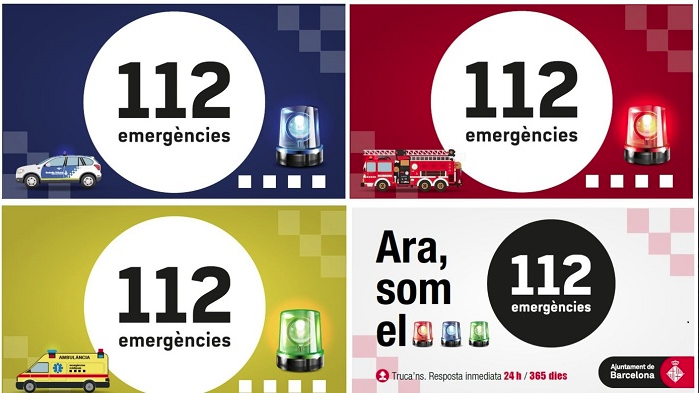
Many states have now adopted 112 (Unified Helpline), but integration is uneven.
In 14 states, 112 operates without real-time coordination among services.
💡 Positive Trends
✅ Drone surveillance for accident sites (Gujarat, Delhi).
✅ Women’s emergency patrols (She Teams) improving response to harassment calls.
✅ Emergency buttons in cabs, buses, and metro networks linked to control rooms.
✅ AI-based predictive policing helping deploy forces before crime occurs.
🧭 Reforms Needed
✅ National standard: 10-min urban, 20-min rural response mandate.
✅ Real-time digital map of patrol movement per district.
✅ Vehicle tracking system integrated with 112 command centers.
✅ Performance-linked incentives for police personnel.
✅ Citizen SOS app awareness across all smartphones.
📢 Systemic Lessons
India must evolve from reactive policing to proactive emergency response.
Technology can bridge distance — but only awareness bridges accountability.
When the next emergency call comes, Bharat must answer faster.
📣 Call to Action
🚨 Save 112 in your phone — India’s single emergency number.
📱 Learn to use in-built emergency features (press power button 3–5 times).
👉 Every citizen can help reduce response time by reporting quickly and clearly.
📎 References
- Bureau of Police Research & Development “Response Time Audit,” 2025
- NDMA “Emergency Coordination Review,” 2024
- Ministry of Home Affairs “112 Helpline Integration Report,” 2023
- NITI Aayog “Smart Policing Index,” 2025
🔚 Closing Line
An emergency isn’t a test of courage — it’s a test of system speed.
This is why we built HowToSurvive.in — to demand that no Indian ever dies waiting for help.
Common unsafe practices
- Relying on equipment without a hazard assessment
- Blocking or compromising escape routes
- Delaying the alarm or emergency call
- Attempting a response beyond training or safe conditions
- Re-entering before authorised clearance
- Treating a checklist as a substitute for competent inspection