
🔥 Boiler Explosions & Factory Fires – Latest Trends (2019–2025)
What needs attention
- The article topic must be linked to the actual occupancy and hazard
- Prevention and early warning provide more safety margin than last-second intervention
- Equipment is effective only when correctly selected, accessible and maintained
- People need short practised actions and a clear decision to stop and escape
- Children, visitors and people needing assistance require explicit planning
- Records, drills and inspections matter only when defects are corrected
Controls that reduce risk
- Complete a task- and site-specific hazard assessment
- Verify applicable Indian, state and local requirements
- Use competent inspection for installed systems and specialist hazards
- Keep alarms, exits, signs and emergency access usable
- Train intended users and practise evacuation
- Record defects with an owner and completion date
- Review the plan after changes, incidents or near misses
Understand and apply the guidance
🔴 Truth Drop
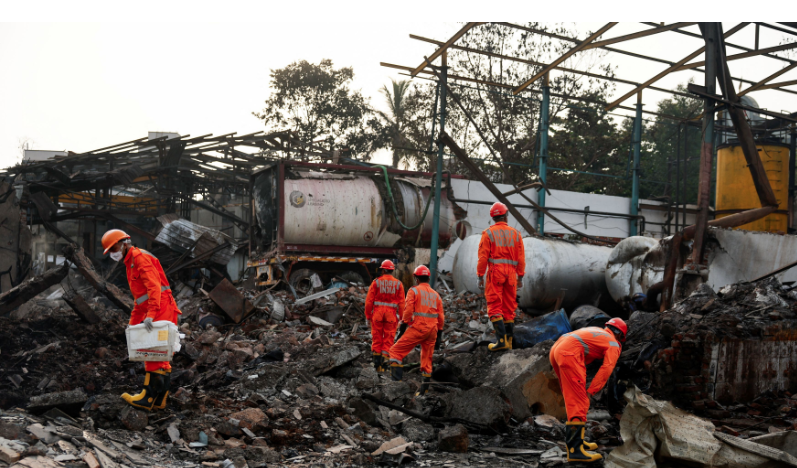
In the last six years (2019–2025), India has recorded 1,950+ factory fires and 420+ boiler explosions, causing an estimated 3,700 deaths and 8,500+ injuries — most in MSME clusters and dense industrial estates.
👉 Over 80% were preventable with basic design safeguards, maintenance, and drills.
📖 Why This Matters
A single boiler blast doesn’t just break metal — it breaks families and nearby communities.
Factories often sit next to homes, schools, and shops. When maintenance, Fire NOCs, and evacuation planning are treated like paperwork, minor faults turn into mass-casualty events.
📊 India Snapshot (2019–2025)
| Year | Boiler Explosions | Factory Fires | Deaths (Approx.) | Injured (Approx.) | Key Triggers |
|---|---|---|---|---|---|
| 2019 | 70 | 280 | 540 | 1,150 | Overpressure, solvent ignition |
| 2020 | 58 | 245 | 480 | 1,000 | Shutdown neglect, restart surges |
| 2021 | 76 | 315 | 670 | 1,420 | Flammable vapors, poor venting |
| 2022 | 69 | 320 | 590 | 1,380 | Electrical faults, LPG leaks |
| 2023 | 81 | 360 | 720 | 1,650 | Static discharge, blocked exits |
| 2024 | 52 | 320 | 520 | 1,380 | Inadequate suppression, heatwaves |
| 2025 (till Aug) | 17 | 130 | 180 | 520 | Valve failure, tank fires |
(Aggregated from state factory inspectorates, fire services, and media-verified incident logs.)
🧠 Where & Why: Pattern Map
High-incidence sectors:
- Chemicals, dyes & solvents (GIDC/industrial parks)
- Food/beverage & cold storage (ammonia, steam)
- Textile/garment & printing (lint + solvents)
- Engineering & foundries (melting, fuel/air mix)
- Pharma & packaging (alcohol, acetone, isopropyl)
Root causes (share of major events):
- Boiler/pressure failure – 28% (corrosion, low water cut-out bypassed, PRV stuck)
- Flammable liquid/gas ignition – 26% (transfer during running equipment, hot work)
- Electrical faults – 18% (overloaded panels, no ELCB/earthing, dust)
- Housekeeping & storage – 15% (incompatible chemicals, aisles blocked)
- Human error & training gaps – 13% (no LOTO, no SOP supervision)
🧩 What Turns Small Fires Into Disasters
- Blocked or locked exits → crowd crush and smoke fatalities
- Dry hydrants / low pressure → first 10 minutes wasted
- No automatic suppression (sprinklers/foam/gas) in solvent areas
- No gas/explosion venting → blast overpressure shatters structures
- Restart after shutdowns without inspection (water-side scale, PRV test, instrumentation)
📊 Compliance & Capacity Gaps
- Working sprinklers in high-risk units: ~35–40%
- Annual boiler NDT/fitness compliance (MSME): ~55–60%
- Plants doing 2+ mock drills/year: <25%
- Average fire engine response in clusters: 18–30 minutes (target <10)
- Fire station coverage in industrial belts: ~1 per 30–40 km² (global good: ≤1 per 10–15 km²)
🛡 Survival Lessons (Workers & Supervisors)
Before an incident
- Walk your two nearest exits at the start of each shift.
- Check that extinguishers are in date and hydrant valves spin freely.
- For boiler rooms: verify low-water cutoff test, PRV lift, and gauge glass daily; log readings.
- Enforce LOTO for any hot work or maintenance.
- Keep spill kits, sand/absorbent, and fire blanket (LSB) within 10–15 m of transfer points.
If a fire/explosion occurs
- Raise alarm (manual call point/hooter) and hit E-stop; isolate fuel/electricity if trained.
- Evacuate upwind, stay low under smoke, do not open hot doors (flashover risk).
- Use correct extinguisher:
- Class B (liquids): foam/CO₂/dry chemical
- Electrical: CO₂/dry chemical (never water)
- Account at assembly; do not re-enter for belongings.
🏭 Engineering & Management Controls (What Works)
- Boiler safety stack: dual low-water cutouts, tested PRV, feedwater interlocks, flame fail-safe.
- Area classification: ATEX/IS standards near solvents; intrinsically safe instruments.
- Automatic suppression: sprinklers/foam in warehouses; clean-agent (NOVEC/FM-200) in panels.
- Ventilation & explosion relief: frangible panels on solvent rooms, controlled vents.
- Earthing/bonding: for tanker unloading, drum filling, and powder handling (anti-static).
- Segregation: incompatible chemicals separated; no mezzanines blocking heat/smoke layers.
- Hot-work permits: gas detectors + fire watch + post-work monitoring (at least 60 min).
- Digital checklists: QR-logged hydrants/extinguishers; alarms tied to control room and 101/112.
📉 Five Red Flags That Demand a Shutdown
- Boiler PRV not tested/lifted in last 30 days
- Brown/sooted electrical panels, tripping ignored
- Hydrant gauge at or near zero pressure
- Solvent transfer done with nearby ignition sources
- Locked/blocked exits or taped-over smoke detectors/sprinklers
If any of these appear, stop work and escalate to management/inspectorate.
📢 Systemic Lessons (Policy & Enforcement)
- Third-party safety audits every 6 months for high-hazard units; public summary online.
- Boiler fitness + NDT linked to insurance renewal; no certificate → no operation.
- Cluster fire infrastructure: dedicated industrial fire stations, ring-main hydrants with telemetry.
- Mandatory drills: quarterly onsite + annual offsite with SDMA/NDRF.
- Licensing reform: Fire NOC validity tied to demonstrated pressure/flow tests and sprinkler trip tests.
- Skill pipeline: ITI/Polytechnic modules on process safety, LOTO, confined space, hot work.
- Whistleblower channels for workers with legal protection.
📣 Call to Action
🚨 Boilers don’t explode “suddenly” — they warn for weeks.
👉 Walk your exits, test your protections, drill your people.
In industrial safety, the cheapest day is the day before the accident — not the day after.
📎 References (for publication notes)
- State Factory Inspectorates & Fire Service annual digests (2019–2025)
- Directorate of Boilers state circulars & NDT advisories (2019–2025)
- NDMA guidelines on Chemical/Industrial Disaster Management (rev. 2020–2024)
- Industry incident compilations from insurance loss-control bulletins and cluster audits
🔚 Closing Line
Factories build prosperity; safety keeps it from turning into grief.
This is why we built HowToSurvive.in — to turn checklists into habits, and workers into lifesavers.
Common unsafe practices
- Relying on equipment without a hazard assessment
- Blocking or compromising escape routes
- Delaying the alarm or emergency call
- Attempting a response beyond training or safe conditions
- Re-entering before authorised clearance
- Treating a checklist as a substitute for competent inspection