
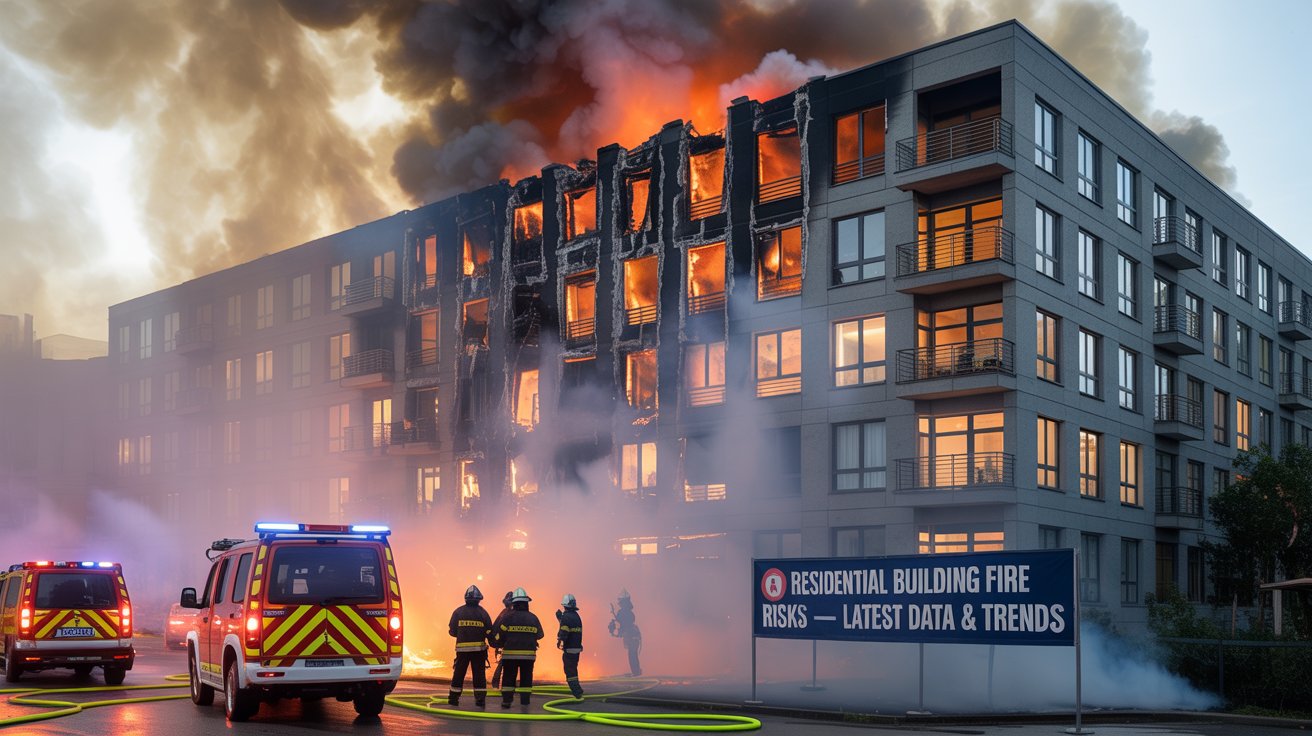
🔥 Residential Building Fire Risks – Latest Data & Trends
What needs attention
- The article topic must be linked to the actual occupancy and hazard
- Prevention and early warning provide more safety margin than last-second intervention
- Equipment is effective only when correctly selected, accessible and maintained
- People need short practised actions and a clear decision to stop and escape
- Children, visitors and people needing assistance require explicit planning
- Records, drills and inspections matter only when defects are corrected
Controls that reduce risk
- Complete a task- and site-specific hazard assessment
- Verify applicable Indian, state and local requirements
- Use competent inspection for installed systems and specialist hazards
- Keep alarms, exits, signs and emergency access usable
- Train intended users and practise evacuation
- Record defects with an owner and completion date
- Review the plan after changes, incidents or near misses
Understand and apply the guidance
🔴 Truth Drop
Home is where we feel safest.
But residential buildings account for nearly 60% of fire deaths in India every year (NCRB 2023).
👉 Most victims die not in malls, factories, or offices — but in their own bedrooms, kitchens, and apartments.
📖 Why This Matters
Every Indian family thinks:
“Fires happen elsewhere. My house is fine.”
But the deadliest fires in the last 5 years tell a different story:
- Delhi Anaj Mandi (2019) – Workers living inside unsafe factory building, 43 dead.
- Mumbai Dombivli Building Fire (2021) – Illegal wiring caused massive blaze in residential block.
- Noida & Gurugram Apartment Fires (2022–23) – Electrical short circuits + locked exits = residents trapped.
- Delhi Mundka Building Fire (2022) – Office-cum-residential space, 27 killed.
Residential buildings — from urban high-rises to village houses — are not built for fire safety.
⚠️ Common Fire Risks in Homes & Apartments
- Electrical Overload
– Overloaded sockets, old wiring, illegal connections.
– Most common cause of house fires. - Kitchen Fires
– Unattended gas stoves, leaking LPG cylinders.
– Women and children are most affected victims. - High-Rise Hazards
– Locked fire exits, non-functional hydrants, no sprinklers.
– Lift shafts acting as fire funnels. - Flammable Materials
– Foam mattresses, wooden interiors, cheap electrical goods.
– Fire spreads in seconds. - Negligence in Societies
– RWAs ignore fire safety audits.
– Parking areas block hydrants and exits.
📊 Data Box
- NCRB (2023): Residential fires = 59% of total fire deaths in India.
- Delhi Fire Service (2022): 90% of high-rises fail safety checks.
- NDMA: One fire-related death every 2 hours in Indian homes.
- Global comparison: In developed countries, residential fire deaths reduced by 50% due to alarms, sprinklers, and drills.
🛡 Survival Lessons for Families
✅ Install smoke detectors in bedrooms, kitchens, and hallways.
✅ Keep at least 1 fire extinguisher at home (ABC or CO₂).
✅ Don’t overload sockets — especially with heaters, ACs, irons.
✅ Conduct a family evacuation drill every 6 months.
✅ Keep important documents & medicines in a “grab-and-go” bag.
✅ Always know 2 exits from your flat or building.
📢 Systemic Lessons
India must:
- Enforce annual fire safety audits in all RWAs & housing societies.
- Make smoke detectors & extinguishers mandatory in residential construction codes.
- Digitize Fire NOC compliance of societies & towers.
- Penalize builders who hand over apartments without functional fire systems.
- Integrate citizen reporting apps for housing fire safety violations.
📣 Call to Action
🚨 Look around your home today.
👉 Do you see detectors, extinguishers, clear exits?
👉 Does your society conduct fire drills?
If the answer is no — then your “safe home” is already a risk.
Demand action from your RWA, builder, and city fire department.
🔚 Closing Line
A home should be a sanctuary, not a coffin.
But safety is not built by walls — it’s built by awareness, systems, and drills.
This is why we built HowToSurvive.in — to protect families where it matters most: at home.
Common unsafe practices
- Relying on equipment without a hazard assessment
- Blocking or compromising escape routes
- Delaying the alarm or emergency call
- Attempting a response beyond training or safe conditions
- Re-entering before authorised clearance
- Treating a checklist as a substitute for competent inspection