
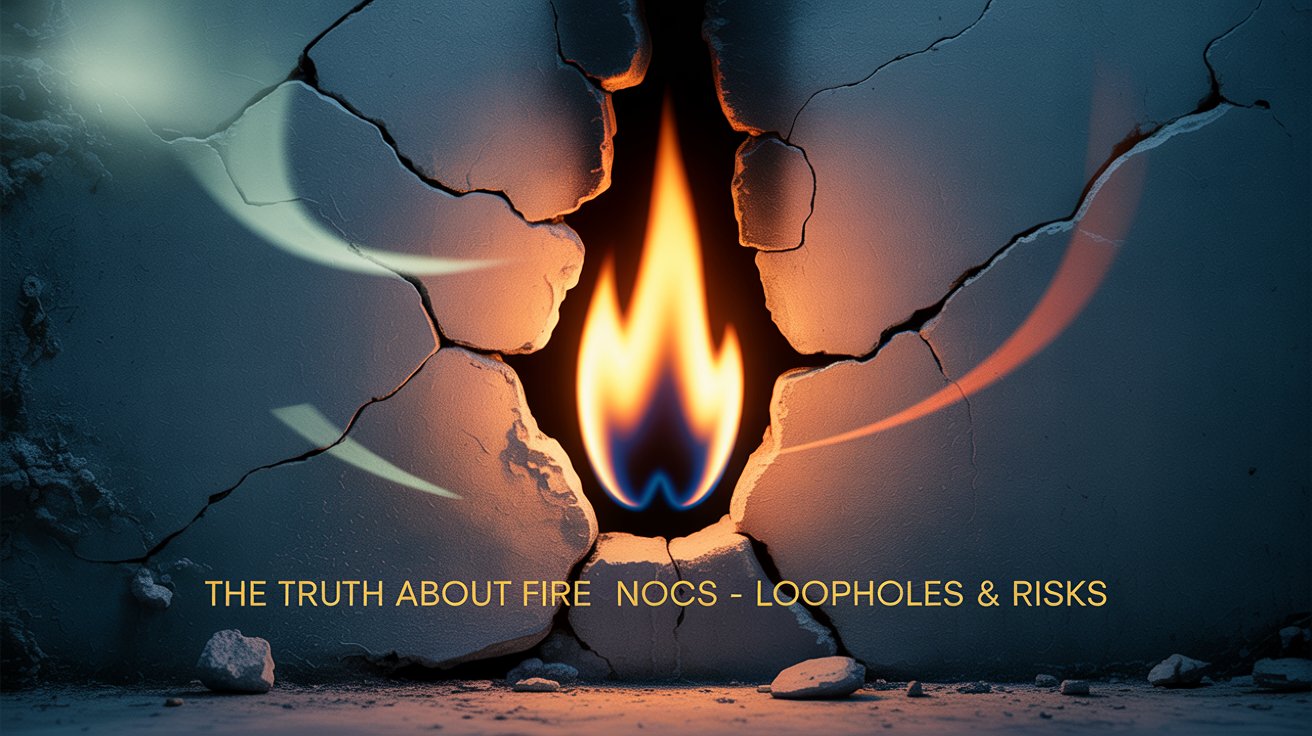
🔥 The Truth About Fire NOCs – Loopholes & Risks
What needs attention
- The article topic must be linked to the actual occupancy and hazard
- Prevention and early warning provide more safety margin than last-second intervention
- Equipment is effective only when correctly selected, accessible and maintained
- People need short practised actions and a clear decision to stop and escape
- Children, visitors and people needing assistance require explicit planning
- Records, drills and inspections matter only when defects are corrected
Controls that reduce risk
- Complete a task- and site-specific hazard assessment
- Verify applicable Indian, state and local requirements
- Use competent inspection for installed systems and specialist hazards
- Keep alarms, exits, signs and emergency access usable
- Train intended users and practise evacuation
- Record defects with an owner and completion date
- Review the plan after changes, incidents or near misses
Understand and apply the guidance
🔴 Truth Drop
Every building in India above a certain height or occupancy must have a Fire NOC (No Objection Certificate).
On paper, Fire NOC = “safe building.”
In reality, Fire NOC = paper shield.
👉 80%+ of fatal urban fires in the last 10 years occurred in buildings that either had fake/expired NOCs, or none at all.
👉 Most people trust the “certificate” — but when fire comes, it burns along with the paper.
📖 Why This Matters
Surat Takshashila Fire (2019) – 22 students died in a coaching center without valid fire safety clearance.
Rajkot Game Zone Fire (2024) – 33 people, mostly children, killed in a gaming zone that had no fire NOC.
Delhi Anaj Mandi Fire (2019) – 43 workers suffocated in a factory without fire safety permissions.
Every single time:
- Authorities claim: “We will investigate.”
- Builders claim: “We had NOC.”
- Families bury their children.
👉 Fire NOCs in India have become more about corruption than protection.
⚠️ How Fire NOCs Actually Work (and Fail)
On Paper:
- Building must have alarms, hydrants, sprinklers, detectors, exits.
- Fire dept inspects, certifies, and renews annually.
In Reality:
- NOCs issued without physical inspection.
- Systems installed only for inspection day, then disabled or removed.
- Bribes paid to “pass” files.
- Citizens never see or check validity.
Result: A locked exit with a valid NOC = coffin with certificate.
📊 Data Box
- CAG Audit (2022): 90% of Delhi schools lacked valid Fire NOCs.
- NDMA: 70% of hospitals in India non-compliant despite NOC requirements.
- NCRB: Over 1,000+ fire deaths annually in “certified” buildings.
- Transparency International India: Fire NOCs among top 5 most corrupt approval systems.
🛡 Survival Lessons for Citizens
✅ Don’t trust certificates — look for systems yourself.
- Are exits open?
- Are extinguishers serviced?
- Are alarms visible?
- Are hydrants charged?
✅ Before booking schools, hospitals, halls → ask for valid Fire NOC copy.
✅ Push RWAs to renew and display Fire NOCs publicly.
✅ Teach children: exit routes matter more than documents.
📢 Systemic Lessons
India must:
- Make Fire NOCs public & online, accessible to all citizens.
- Mandate quarterly surprise inspections instead of annual paperwork.
- Digitize safety compliance with photo/video proof + IoT monitoring.
- Hold officers personally liable for fake/forged NOCs.
- Cancel licenses of institutions running without valid fire clearance.
📣 Call to Action
🚨 Don’t be fooled by a certificate on the wall.
👉 Check. Question. Report.
If you see locked exits, capped sprinklers, missing hydrants — it doesn’t matter if there’s an NOC. It’s a lie.
Share evidence with authorities and with us at HowToSurvive.in.
One citizen’s voice can break the chain of corruption.
🔚 Closing Line
Fire doesn’t read certificates.
It only respects working systems and prepared people.
This is why we built HowToSurvive.in — to replace paper safety with real safety.
Common unsafe practices
- Relying on equipment without a hazard assessment
- Blocking or compromising escape routes
- Delaying the alarm or emergency call
- Attempting a response beyond training or safe conditions
- Re-entering before authorised clearance
- Treating a checklist as a substitute for competent inspection