
Quick answers
Must I always move left?
No. Make a safe passage according to road layout and traffic directions.
Is there a law?
Yes. Motor Vehicles Act section 194E addresses failure to allow free passage.
Can I follow the ambulance?
No. Resume normal traffic safely after it passes.
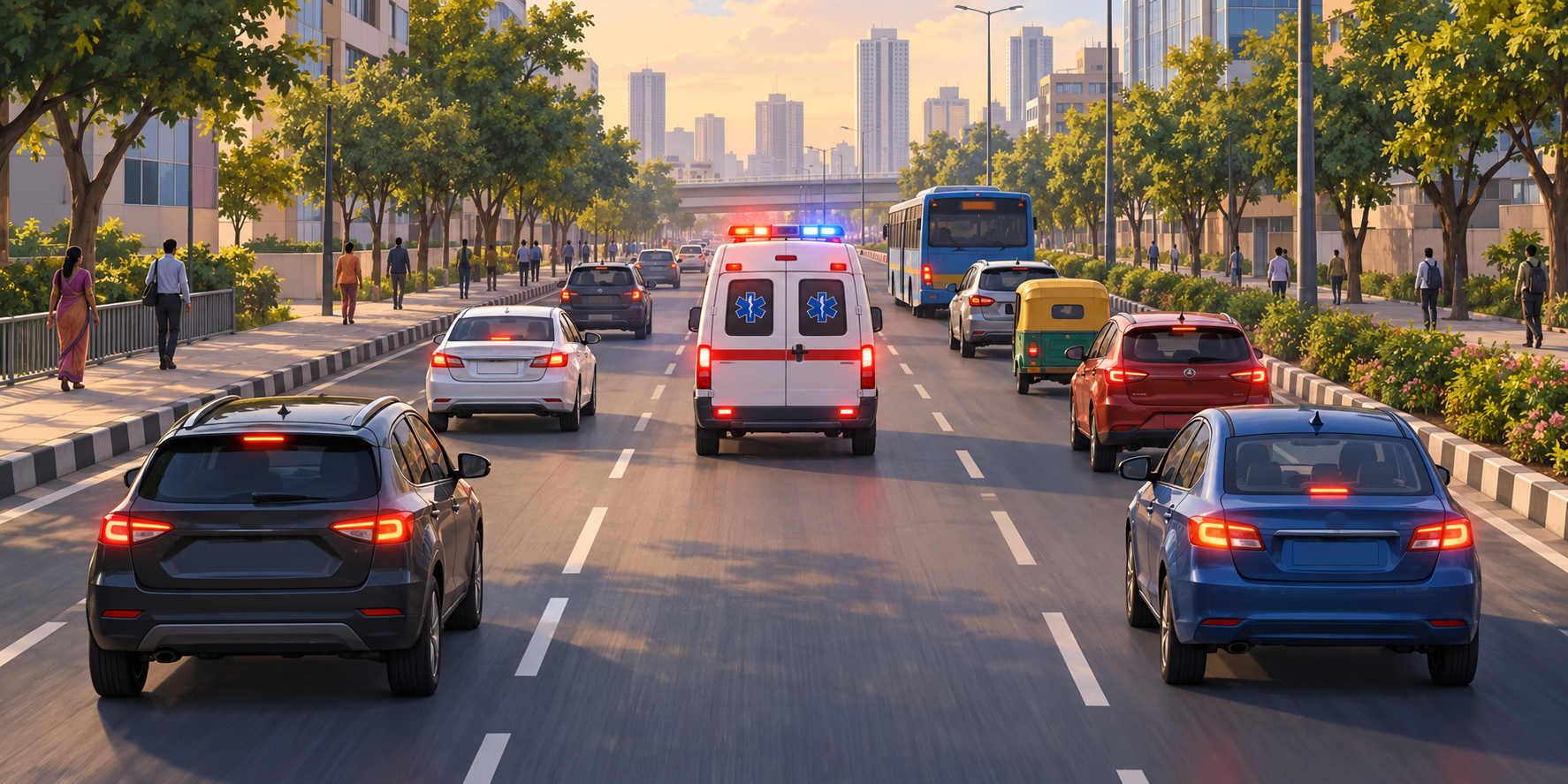
When an ambulance, fire-service vehicle or other authorised emergency vehicle approaches, drivers should make a safe passage without creating a second crash. There is no reliable national evidence behind the old article’s exact percentages for how many Indian drivers yield, annual deaths attributed to traffic delay, or country-by-country comparison table. Those figures and its unverified Delhi patient story have been removed.
What the law says
Section 194E of the Motor Vehicles Act, 1988 addresses a driver’s failure to draw to the side of the road on the approach of a fire-service vehicle, ambulance or other emergency vehicle specified by the State Government. It provides a penalty; the old claim that there was no applicable law was wrong. The exact facts and applicable local traffic directions matter. This is general legal information, not advice about a specific prosecution.
What to do while driving
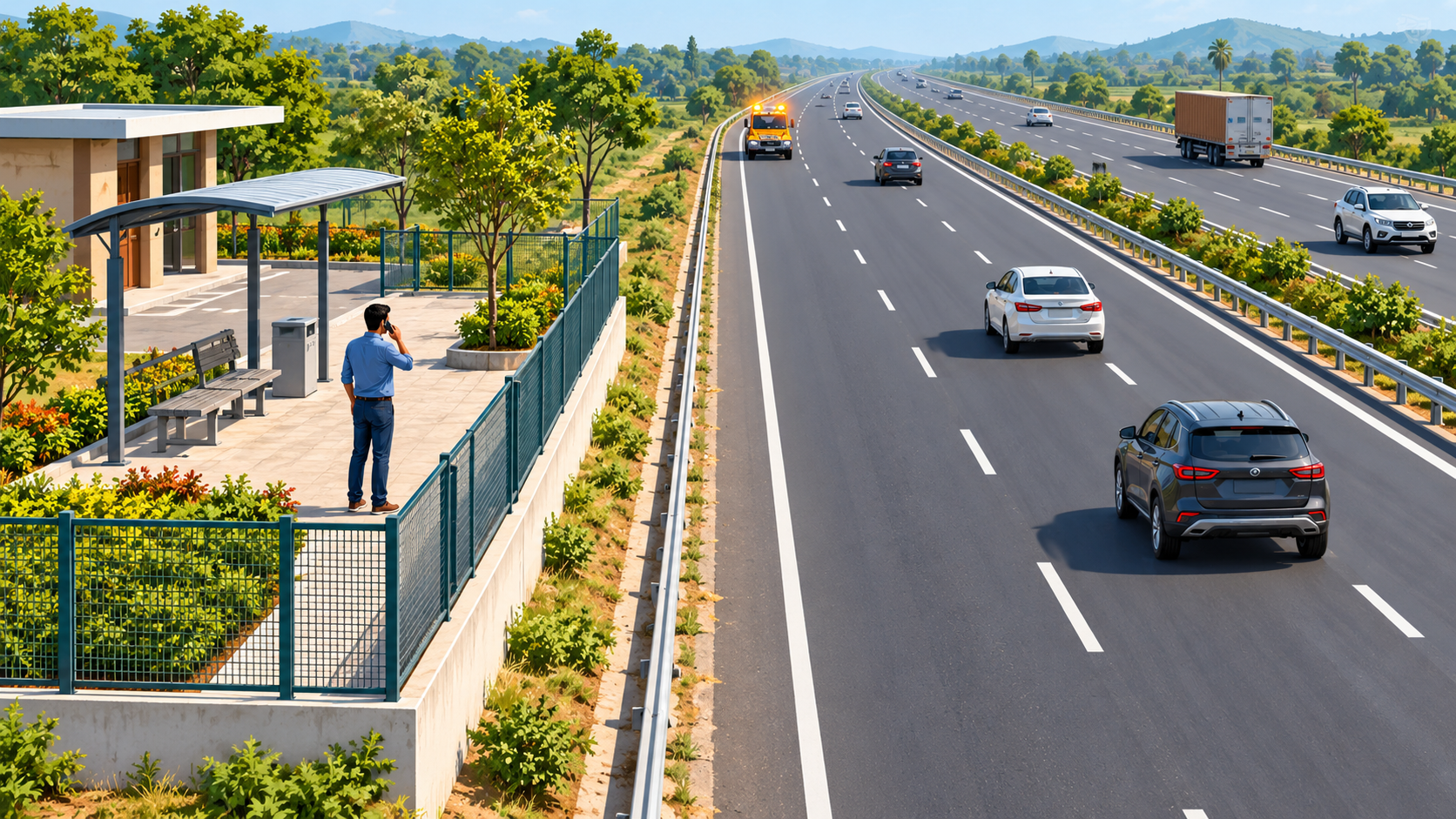
Notice the lights and siren early. Stay calm, check mirrors and the space around you, slow gradually, and make a clear path by drawing safely toward an available side when you can. Signal your movement and avoid abrupt braking or swerving into another vehicle, cyclist or pedestrian. Do not mount a footpath or block a crossing, junction or hospital entrance. If traffic is stationary, leave the gap in front and cooperate with other drivers so the emergency vehicle can pass. Follow a traffic officer’s directions. Once it passes, check carefully before returning to normal traffic; do not follow it through the opened gap.
Moving left at once is not a universal instruction. A median, one-way street, lane arrangement, barrier, bus stop or nearby pedestrian may make that movement unsafe. The safe action is to create free passage while obeying the road layout and lawful directions, not to drive into another hazard.
If you are at a traffic signal or in a queue
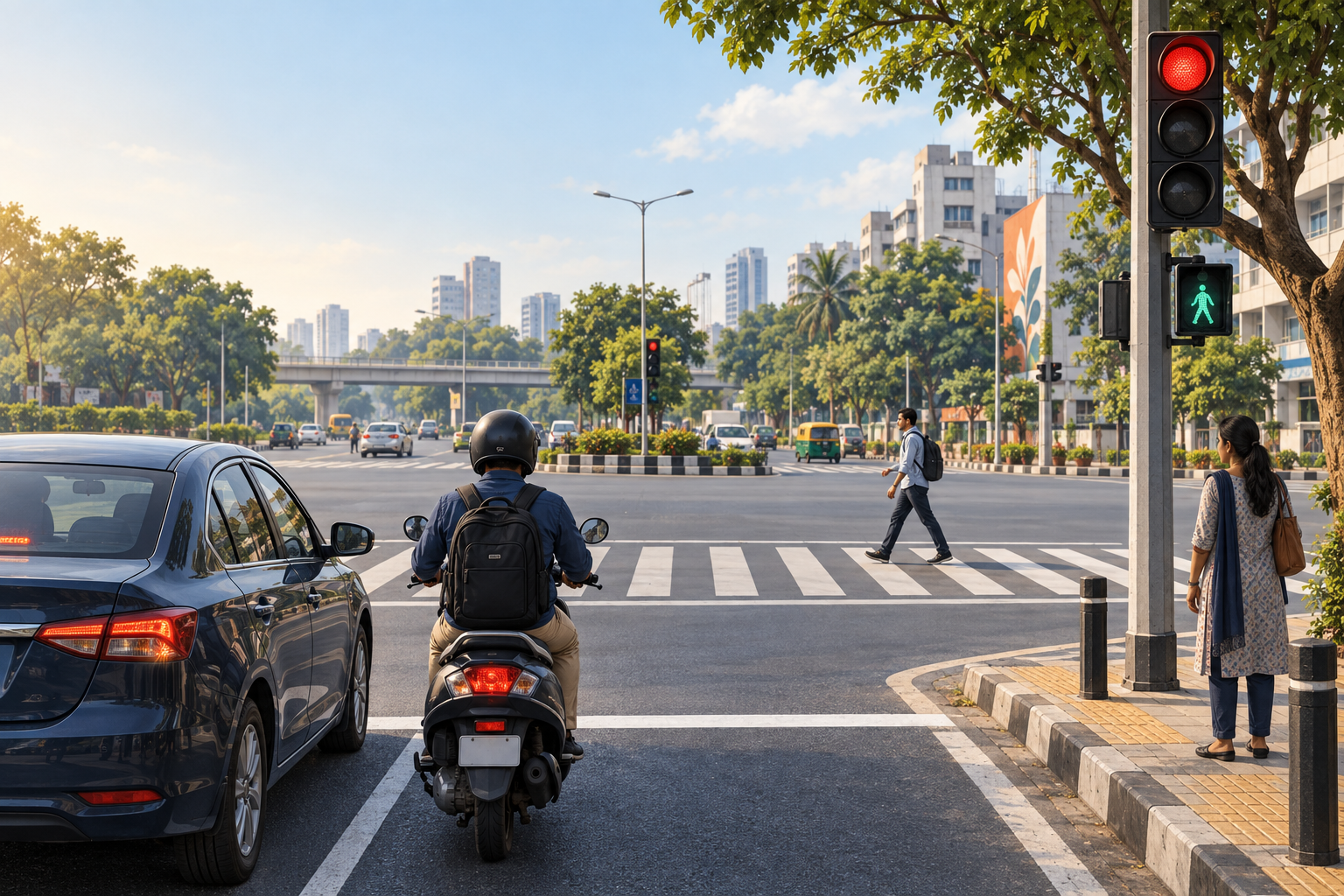
Do not rush through a red signal, enter an occupied junction or drive against traffic solely because you hear a siren. Make room within safe, lawful space and obey a traffic officer controlling the crossing. If you cannot move, keep your vehicle predictable, avoid closing a gap and let the ambulance driver and traffic police judge a safe route. Passengers should not shout contradictory instructions at the driver.
If you are a pedestrian or cyclist
Pause before crossing and look for the emergency vehicle’s actual path. Stay out of the carriageway and do not wave drivers into traffic. If you are cycling, slow and make space without swerving into a pedestrian or another lane.
A real example, not a national statistic
A 2020 TVNXT Telugu report shows Hyderabad Traffic Police clearing traffic ahead of an ambulance. It illustrates coordination by a traffic officer in one setting; it does not prove a national response-time figure or prescribe the same manoeuvre at every junction. The video is offered as external context, not as footage of the unverified Delhi story removed from this article.
Practical reminders
Keep music at a level that lets you hear emergency vehicles, leave a sensible gap in traffic, and never use an ambulance’s passage to overtake other drivers. If you witness a collision or a person in immediate danger, call 112 in India and give the exact location. Emergency access depends on drivers, road design, dispatch and traffic management together; no one national “yielding rate” is established here.
Reviewed 6 October 2026. Sources: Motor Vehicles Act section 194E (India Code); India Ministry of Home Affairs Emergency Response Support System; Delhi Traffic Police traffic-violations table. State and local directions may vary. This article is general road-safety and legal information, not a substitute for a traffic officer’s directions or case-specific legal advice.
What needs attention
- The old 2019–2025 response-time and death table lacked a verified dataset.
- Its claim that no law penalises failure to yield was wrong.
- Moving left immediately is not safe in every road layout.
- A historical Hyderabad video is not a national statistic or universal instruction.
Controls that reduce risk
- Keep a usable gap ahead in traffic.
- Listen and watch for emergency vehicles.
- Check mirrors before gradually making room.
- Follow traffic police at a controlled junction.
- Do not follow an ambulance through its gap.
Common unsafe practices
- Abrupt braking or swerving.
- Entering an occupied junction or mounting a footpath.
- Assuming left is always safe.
- Following the ambulance to overtake traffic.
- Repeating an unverified patient story or invented percentage.

Leave a comment