
🚗 India’s Road Deaths 2024: One Every 3 Minutes – Why?
What needs attention
- The article topic must be linked to the actual occupancy and hazard
- Prevention and early warning provide more safety margin than last-second intervention
- Equipment is effective only when correctly selected, accessible and maintained
- People need short practised actions and a clear decision to stop and escape
- Children, visitors and people needing assistance require explicit planning
- Records, drills and inspections matter only when defects are corrected
Controls that reduce risk
- Complete a task- and site-specific hazard assessment
- Verify applicable Indian, state and local requirements
- Use competent inspection for installed systems and specialist hazards
- Keep alarms, exits, signs and emergency access usable
- Train intended users and practise evacuation
- Record defects with an owner and completion date
- Review the plan after changes, incidents or near misses
Understand and apply the guidance
🔴 Truth Drop
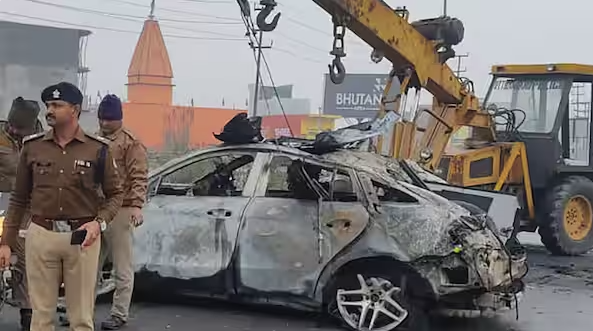
In 2024, India recorded over 1.6 lakh road accident deaths (MoRTH report, NCRB).
That’s one death every 3 minutes.
👉 India accounts for 11% of global road deaths — despite having just 1% of the world’s vehicles.
This isn’t an “accident epidemic.”
It’s a systemic failure.
📖 Why This Matters
Every journey — to school, to work, to the market — comes with silent risk.
The victims aren’t just reckless drivers. They are:
- Children walking to school
- Families in cars
- Commuters on two-wheelers
- Pedestrians at crossings
Behind every statistic is a face, a family, a story cut short.
Road accidents don’t just kill. They:
- Leave survivors permanently disabled
- Push families into debt due to medical bills
- Drain 3% of India’s GDP in economic losses annually
And the tragedy?
👉 Most of these deaths are preventable.
⚠️ Why So Many Deaths? (Root Causes)
- Overspeeding
– Accounts for 65% of road deaths in India (MoRTH, 2023).
– Poor enforcement + bad road design. - Drunk Driving & Substance Abuse
– Still a major killer, especially in youth demographics. - Helmet & Seatbelt Non-Usage
– 43% of two-wheeler deaths = no helmet.
– 70% of car accident deaths = no seatbelt. - Poor Emergency Response
– Golden Hour lost due to late ambulances, traffic jams, or bystander inaction. - Road Engineering Faults
– Potholes, blind turns, missing signage, unlit highways. - Vehicle Safety Standards
– Cheap vehicles, no airbags, poor crash resistance.
📊 Data Box
- 1.6 lakh+ deaths in 2024 = 440 daily = 18 every hour.
- 65% deaths due to overspeeding (MoRTH 2023).
- 43% two-wheeler deaths = no helmets.
- 70% car accident deaths = no seatbelts.
- India loses 3% of GDP (~₹4 lakh crore annually) to road crashes.
🛡 Survival Lessons for Citizens
✅ Always wear helmets & seatbelts — no excuses, no short distances.
✅ Never drive after alcohol, even “just one drink.”
✅ Slow down — better late than never.
✅ Use pedestrian crossings & follow signals.
✅ Save emergency numbers: 108 (ambulance), 112 (helpline).
✅ Learn basic first aid & CPR — you may be the first responder.
📢 Systemic Lessons
India must:
- Enforce helmet & seatbelt laws with zero tolerance.
- Fix killer roads with proper signage, lighting, and barriers.
- Upgrade vehicle safety norms (airbags, ABS, crash ratings).
- Improve 108 ambulance response times with digital tracking.
- Implement road safety education in schools & colleges.
📣 Call to Action
🚨 Every 3 minutes, one Indian dies.
But road accidents are not fate.
They are preventable — with awareness, discipline, and systemic change.
👉 Slow down.
👉 Buckle up.
👉 Report unsafe roads.
Your decision today can save your life — or someone else’s tomorrow.
🔚 Closing Line
India doesn’t need to lose 1.6 lakh lives every year.
We need awareness before arrival, action before ambulance, and responsibility before regret.
This is why we built HowToSurvive.in — to make sure roads connect lives, not end them.
Common unsafe practices
- Relying on equipment without a hazard assessment
- Blocking or compromising escape routes
- Delaying the alarm or emergency call
- Attempting a response beyond training or safe conditions
- Re-entering before authorised clearance
- Treating a checklist as a substitute for competent inspection