
🧑🚒 National Disaster Response Force (NDRF) – Current Capacity & Challenges (2019–2025)
What needs attention
- The article topic must be linked to the actual occupancy and hazard
- Prevention and early warning provide more safety margin than last-second intervention
- Equipment is effective only when correctly selected, accessible and maintained
- People need short practised actions and a clear decision to stop and escape
- Children, visitors and people needing assistance require explicit planning
- Records, drills and inspections matter only when defects are corrected
Controls that reduce risk
- Complete a task- and site-specific hazard assessment
- Verify applicable Indian, state and local requirements
- Use competent inspection for installed systems and specialist hazards
- Keep alarms, exits, signs and emergency access usable
- Train intended users and practise evacuation
- Record defects with an owner and completion date
- Review the plan after changes, incidents or near misses
Understand and apply the guidance
🔴 Truth Drop
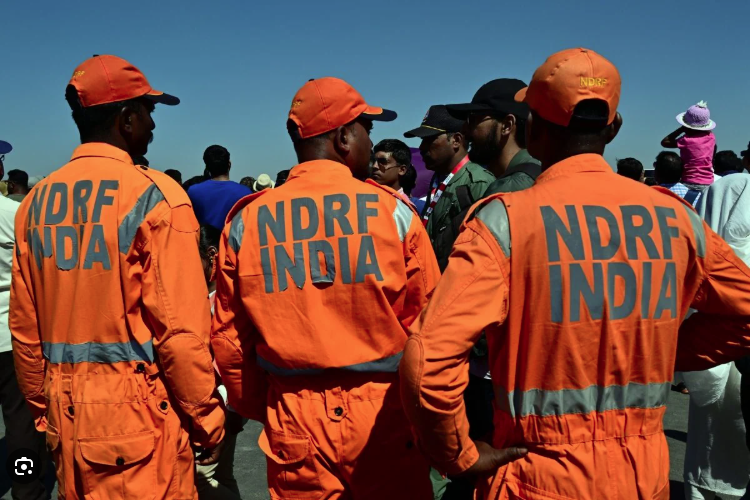
India’s National Disaster Response Force (NDRF) has saved over 1.8 million lives since its formation in 2006.
Yet, despite its global reputation, it still operates at only 65% of required capacity.
(Source: NDMA & MHA Annual Reports 2025)
“The NDRF reaches where others can’t — but even they can’t reach everywhere.”
📖 Why This Matters
India faces 20+ types of natural and man-made disasters every year — floods, earthquakes, industrial fires, building collapses, and chemical leaks.
The NDRF is our national shield — but growing risks demand faster expansion, better training, and deeper local integration.
A disaster doesn’t wait — and neither can disaster response.
📊 NDRF Strength & Deployment Data (2025)
| Parameter | Sanctioned | Operational | Deficiency (%) |
|---|---|---|---|
| Total Battalions | 16 | 14 | 12.5% |
| Trained Personnel | 16,000 | 12,200 | 23.7% |
| Regional Response Centers | 32 | 23 | 28.1% |
| Specialized Units (CBRN, Mountain, Flood) | 9 | 6 | 33.3% |
| State Disaster Response Forces (SDRF) – Functional | 28 | 18 | 35.7% |
(Sources: NDMA Disaster Response Status Report, 2025)
📈 Key Stats:
- Average NDRF deployment per year: 130+ operations.
- Flood response: 60% of total missions.
- Man-made disasters: 25% (fires, collapses, gas leaks).
- International deployments: 8 (Nepal, Turkey, Japan, Sri Lanka, etc.).
🌊 Major Operations (2019–2025)
| Year | Major Mission | States / Countries | Lives Rescued |
|---|---|---|---|
| 2019 | Bihar & Assam Floods | India | 42,000 |
| 2020 | Vizag Gas Leak | Andhra Pradesh | 2,000 evacuated |
| 2021 | Chamoli Glacier Burst | Uttarakhand | 204 recovered |
| 2022 | Cyclone Yaas | Odisha, WB | 1,20,000 relocated |
| 2023 | Turkey Earthquake Relief | International | 85 rescued |
| 2024 | Sikkim Flash Floods | India | 12,000 saved |
| 2025 (till Aug) | North India Floods | Multiple States | 55,000+ evacuated |
(Sources: NDRF Annual Reports, PIB Updates)
⚙️ Operational Challenges
1️⃣ Limited manpower for simultaneous multi-state operations.
2️⃣ Equipment fatigue – outdated boats, communication kits, and UAVs.
3️⃣ Training centers overloaded – need 3 new regional academies.
4️⃣ State SDRFs underutilized due to poor coordination.
5️⃣ Delayed mobilization in hilly and remote regions (NE & J&K).
🧠 Case Study: Chamoli Disaster (2021)
- Incident: Glacier burst triggered flash flood and dam collapse.
- Response: NDRF arrived in 6 hours, rescued 200+ workers.
- Obstacle: Communication failure delayed coordination by 3 hours.
- Lesson: Early warning systems and regional units are key to reducing response lag.
💡 Emerging Strengths
✅ Introduction of Drones & GIS mapping for locating stranded victims.
✅ Women’s NDRF units trained for health & community outreach.
✅ Integration with Indian Air Force for rapid airlift operations.
✅ Partnerships with UNDRR & INSARAG for global disaster protocols.
🧭 Reforms Needed
✅ Expand battalions from 16 → 25 by 2030.
✅ Set up Zonal NDRF Centers in North-East, Central, and South India.
✅ Integrate NDRF with SDRFs under unified command platform.
✅ Introduce AI-based disaster forecasting linked to deployment planning.
✅ Increase annual budget allocation from ₹2,000 Cr → ₹5,000 Cr.
📢 Systemic Lessons
India must invest in capacity, coordination, and continuity.
The NDRF has proven its courage — now the system must match it with commitment.
Disasters don’t announce themselves. Response shouldn’t wait for orders.
📣 Call to Action
🚨 Respect your first responders.
👉 Follow evacuation orders during disasters — don’t argue, act.
💬 Support volunteer drives and disaster awareness programs in your state.
📎 References
- NDMA “Disaster Response Status Report,” 2025
- Ministry of Home Affairs “NDRF Annual Review,” 2024
- UNDRR “Asia-Pacific Disaster Readiness Report,” 2023
- INSARAG “Operational Best Practices Manual,” 2024
🔚 Closing Line
The NDRF embodies India’s courage — but courage must never fight alone.
This is why we built HowToSurvive.in — to build a nation that stands ready before the storm, not after it.
Common unsafe practices
- Relying on equipment without a hazard assessment
- Blocking or compromising escape routes
- Delaying the alarm or emergency call
- Attempting a response beyond training or safe conditions
- Re-entering before authorised clearance
- Treating a checklist as a substitute for competent inspection