
🧠 Survival Rate of Stroke Patients with Timely Action
What needs attention
- The article topic must be linked to the actual occupancy and hazard
- Prevention and early warning provide more safety margin than last-second intervention
- Equipment is effective only when correctly selected, accessible and maintained
- People need short practised actions and a clear decision to stop and escape
- Children, visitors and people needing assistance require explicit planning
- Records, drills and inspections matter only when defects are corrected
Controls that reduce risk
- Complete a task- and site-specific hazard assessment
- Verify applicable Indian, state and local requirements
- Use competent inspection for installed systems and specialist hazards
- Keep alarms, exits, signs and emergency access usable
- Train intended users and practise evacuation
- Record defects with an owner and completion date
- Review the plan after changes, incidents or near misses
Understand and apply the guidance
🔴 Truth Drop
Every 20 seconds, one Indian suffers a stroke.
Every 2 minutes, one dies.
(Source: ICMR Stroke Registry 2024, WHO-SEARO Report)
👉 The difference between survival and disability often depends on 30 minutes of timely action.
With quick medical response, up to 70% of stroke patients can recover.
Without it, 70% live with permanent disability or die.
Time isn’t just money — in a stroke, time is brain.
📖 Why This Matters
A stroke can strike anyone — not just the elderly.
Rising hypertension, diabetes, stress, and air pollution have made strokes common even among people in their 30s and 40s.
The tragedy?
👉 Most victims reach the hospital after 3–6 hours, missing the crucial “Golden Window” of treatment.
If recognized early, brain damage can be prevented with clot-busting injections or procedures — but only if given within 4.5 hours of symptom onset.
⚠️ Key Data (India vs World)
| Country | Average Time to Hospital | Survival Rate with Timely Action | Long-Term Disability (within 1 yr) |
|---|---|---|---|
| 🇮🇳 India | 4–6 hours | 35–40% | 65% |
| 🇺🇸 USA | 1–2 hours | 70–75% | 35% |
| 🇯🇵 Japan | 1 hour | 72% | 30% |
| 🇸🇬 Singapore | 2 hours | 68% | 32% |
| 🇸🇪 Sweden | <1 hour | 80% | 25% |
(Source: WHO Global Stroke Report 2024, ICMR-NIN Stroke Registry 2023)
👉 India’s survival rate can double if patients reach hospitals in under 2 hours.
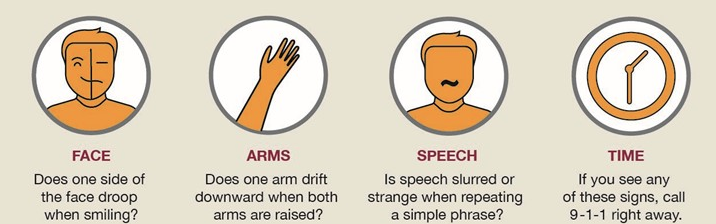
🧩 Recognizing a Stroke – FAST Rule
🚨 F.A.S.T. = Face, Arms, Speech, Time
| Sign | What to Check | What It Means |
|---|---|---|
| F – Face | Ask to smile | One side droops |
| A – Arms | Ask to raise both arms | One drifts down |
| S – Speech | Ask to repeat a phrase | Slurred or strange speech |
| T – Time | Act immediately | Call 108 / 112 right now |
👉 Every minute wasted = 1.9 million brain cells lost.
📊 Data Highlights
- Annual cases in India: 18–20 lakh (ICMR, 2024)
- Deaths: ~4.5 lakh annually
- Urban vs Rural: Rural India records 60% of cases but only 20% reach hospital in time.
- Economic impact: ₹30,000 crore lost annually to treatment and productivity.
- Recovery window:
– 0–4.5 hours = full recovery possible
– 4.5–6 hours = partial recovery
– >6 hours = irreversible damage
🧠 Why Timely Action Saves Lives
- Thrombolysis (clot-dissolving injection) – Works only if given within 4.5 hrs.
- Thrombectomy (clot removal) – Works within 6 hrs.
- Brain protection & oxygen – Prevents further cell death.
- Early rehab – Helps regain movement and speech.
👉 A 2-hour response = walking out of hospital.
👉 A 6-hour delay = lifelong paralysis or loss of speech.
🛡 Survival Lessons for Citizens
✅ Learn the FAST test.
✅ Call 108 / 112 immediately if symptoms appear.
✅ Do not wait for symptoms to “go away.”
✅ Note the exact time of onset — it guides treatment.
✅ Avoid giving food or water to an unconscious person.
✅ Keep medical records handy — especially if patient has BP/diabetes.
📢 Systemic Lessons
India must:
- Train ambulance staff in stroke triage and pre-hospital notification.
- Launch “National Stroke Response Network” integrated with 108 systems.
- Mandate stroke-ready hospitals in every district.
- Include stroke awareness in workplace and school health programs.
- Promote public CPR and FAST workshops through NDMA & VFF India volunteers.
📣 Call to Action
🚨 A stroke doesn’t give second chances.
But awareness gives first response.
👉 Share the FAST rule.
👉 Save the Golden Hour.
👉 Teach your family what a stroke looks like — before it’s too late.
Your awareness could bring someone back from the edge of disability or death.
📎 References
- ICMR Stroke Registry Report 2024
- AIIMS Neurology Department Annual Data 2023
- WHO Global Stroke Report 2024
- Indian Stroke Association – FAST India Initiative
- National Health Profile (MoHFW) 2025
🔚 Closing Line
In a heart attack, minutes matter.
In a stroke, seconds matter.
This is why we built HowToSurvive.in — to help India act fast, save time, and save lives.
Common unsafe practices
- Relying on equipment without a hazard assessment
- Blocking or compromising escape routes
- Delaying the alarm or emergency call
- Attempting a response beyond training or safe conditions
- Re-entering before authorised clearance
- Treating a checklist as a substitute for competent inspection