
🧰 How to Make a Home Emergency Kit – Latest Recommendations (India 2025)
What needs attention
- The article topic must be linked to the actual occupancy and hazard
- Prevention and early warning provide more safety margin than last-second intervention
- Equipment is effective only when correctly selected, accessible and maintained
- People need short practised actions and a clear decision to stop and escape
- Children, visitors and people needing assistance require explicit planning
- Records, drills and inspections matter only when defects are corrected
Controls that reduce risk
- Complete a task- and site-specific hazard assessment
- Verify applicable Indian, state and local requirements
- Use competent inspection for installed systems and specialist hazards
- Keep alarms, exits, signs and emergency access usable
- Train intended users and practise evacuation
- Record defects with an owner and completion date
- Review the plan after changes, incidents or near misses
Understand and apply the guidance
🔴 Truth Drop
When disaster strikes — flood, earthquake, fire, or blackout — you have 90 seconds to think, and 3 minutes to act.
Yet, less than 5% of Indian households keep a ready emergency kit.
(Source: NDMA Preparedness Survey, 2024)
“Survival is not luck — it’s preparation.”
A properly packed Home Emergency Kit can help your family survive the first 72 hours — the critical window before outside help arrives.
📖 Why You Need One
Emergencies don’t give warnings.
A single kit can help you:
✅ Stay alive during floods, earthquakes, or fires.
✅ Handle injuries until help comes.
✅ Keep family safe if you must evacuate.
✅ Communicate when power, phones, and roads are down.
🧩 The 72-Hour Survival Rule
Disaster-response studies show:
⏱️ First 24 hours = self-survival
⏱️ Next 48 hours = family coordination & community aid
Your emergency kit bridges that gap — it gives time, strength, and clarity when chaos hits.
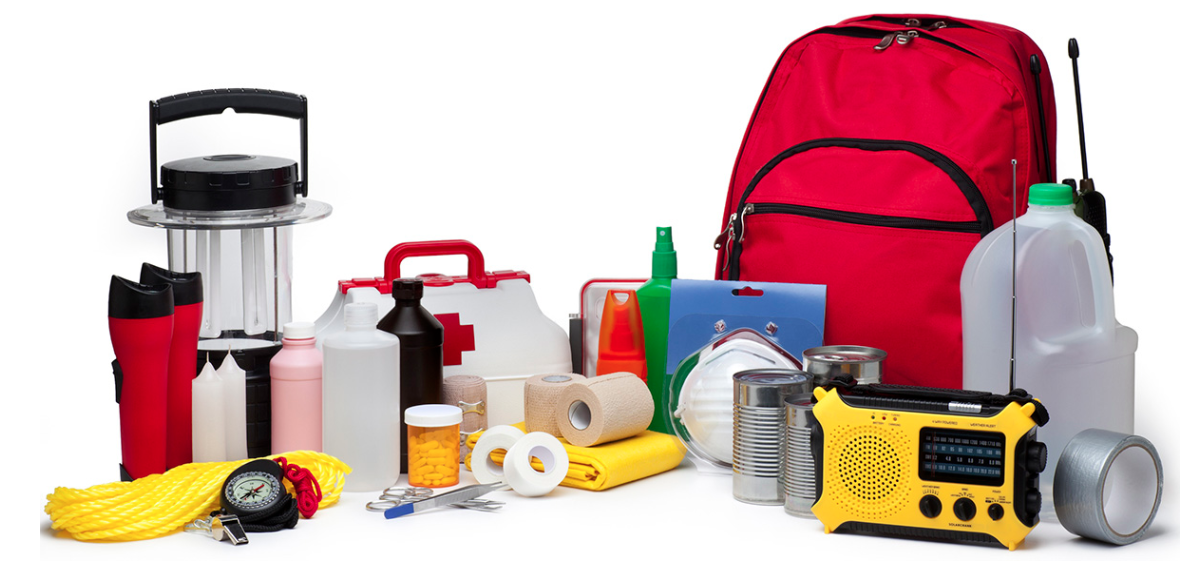
📦 The Complete Home Emergency Kit (2025 Update)
🔹 1. Essentials for Life (Survival Basics)
| Item | Quantity | Purpose |
|---|---|---|
| Drinking water | 3 litres per person per day | Hydration |
| Non-perishable food | 72-hour supply | Energy |
| Manual can opener | 1 | For packed food |
| Portable water filter / purification tablets | 1 pack | Clean water source |
| Torchlight + extra batteries | 1 | Night navigation |
| Whistle | 1 | Signal for help |
| Multipurpose knife | 1 | Cutting, safety, tool use |
🔹 2. Medical & Hygiene
| Item | Quantity | Purpose |
|---|---|---|
| First-aid kit | 1 complete set | Minor wounds, burns, cuts |
| Personal medications | 7-day stock | Regular treatment |
| Hand sanitizer / soap | 2 bottles | Hygiene |
| Masks (N95 preferred) | 5 per person | Dust, smoke, infection |
| Sanitary pads / baby needs | As per family | Hygiene, comfort |
| Thermometer + gloves | 1 each | Medical safety |
🔹 3. Safety & Communication
| Item | Quantity | Purpose |
|---|---|---|
| Portable fire extinguisher | 1 | Early-stage fire control |
| Battery radio | 1 | News updates |
| Spare keys (home & vehicle) | 1 set | Quick evacuation |
| Rope (10–15 m) | 1 | Rescue or climbing aid |
| Power bank (charged) | 1 | Phone communication |
🔹 4. Identity & Cash
| Item | Quantity | Purpose |
|---|---|---|
| ID photocopies (Aadhaar, license, bank cards) | Waterproof pouch | Proof of identity |
| Cash (₹2,000–₹5,000) | Mixed denominations | For emergency purchase |
| Family emergency contact list | Printed copy | Communication |
| Passport-sized photos | 2–3 per member | For identification |
🔹 5. Special Family Items
| Family Type | Add These |
|---|---|
| Children | Baby food, formula, small toy for comfort |
| Elderly | Spare glasses, dentures, walking aid |
| Pet owners | Pet food, leash, vaccination record |
| Medical patients | Doctor’s note, medicines, glucose gel |
🏠 Where to Keep the Kit
✅ Store near main exit or family gathering area
✅ Keep in a waterproof backpack or plastic box
✅ Add one small version in car or workplace
✅ Label clearly: “Emergency Kit – Do Not Move”
🔁 Maintenance Checklist (Every 3 Months)
1️⃣ Replace expired medicines, food, batteries.
2️⃣ Refill water bottles.
3️⃣ Update contact list and ID photocopies.
4️⃣ Recheck torch, extinguisher, and power bank charge.
5️⃣ Conduct a family practice drill — who grabs what, who calls, where to meet.
🧭 5-Minute Family Drill (Recommended by HowToSurvive.in)
1️⃣ Sound alarm — simulate fire or earthquake.
2️⃣ Everyone picks their assigned item.
3️⃣ Exit together to safe point.
4️⃣ Check attendance & kit completeness.
5️⃣ Review time taken and correct mistakes.
Practice this once every 3 months — it creates reflex, not panic.
🧠 Common Mistakes to Avoid
❌ Keeping kit buried under clutter.
❌ Not checking expiry dates.
❌ Forgetting pet or baby essentials.
❌ Using heavy metal boxes (hard to carry).
❌ Storing torch or phone with dead batteries.
📢 Systemic Lessons
India must:
- Include home emergency kit awareness in NDMA & school curricula.
- Encourage housing societies & RWAs to conduct mock kit drills.
- Mandate fire & disaster preparedness boards in apartment lobbies.
- Promote local manufacturing of affordable emergency gear in every district.
📣 Call to Action
🚨 Every home can be its own rescue centre.
👉 Make your emergency kit today — and teach your neighbour to do the same.
Prepared families build a prepared nation.
📎 References
- NDMA “Family Disaster Preparedness Manual,” 2024
- WHO “Household Emergency Supply List,” 2023
- VFF India “Community Readiness Report,” 2024
- Red Cross “72-Hour Survival Standards,” 2023
🔚 Closing Line
Hope is good — preparation is better.
This is why we built HowToSurvive.in — to make every home a fortress of readiness, not a victim of helplessness.
Common unsafe practices
- Relying on equipment without a hazard assessment
- Blocking or compromising escape routes
- Delaying the alarm or emergency call
- Attempting a response beyond training or safe conditions
- Re-entering before authorised clearance
- Treating a checklist as a substitute for competent inspection