
🪖 Why Helmets Don’t Always Save – And How They Do
What needs attention
- The article topic must be linked to the actual occupancy and hazard
- Prevention and early warning provide more safety margin than last-second intervention
- Equipment is effective only when correctly selected, accessible and maintained
- People need short practised actions and a clear decision to stop and escape
- Children, visitors and people needing assistance require explicit planning
- Records, drills and inspections matter only when defects are corrected
Controls that reduce risk
- Complete a task- and site-specific hazard assessment
- Verify applicable Indian, state and local requirements
- Use competent inspection for installed systems and specialist hazards
- Keep alarms, exits, signs and emergency access usable
- Train intended users and practise evacuation
- Record defects with an owner and completion date
- Review the plan after changes, incidents or near misses
Understand and apply the guidance
⚠️ The Myth
“Accident mein marna likha ho toh helmet kya karega?”
“Even people wearing helmets die — so what’s the point?”
These are the excuses that keep India’s roads among the world’s deadliest.
Every year, thousands die not because they weren’t wearing helmets — but because they wore them wrong, cheap, or fake.
“A helmet isn’t magic — it’s physics. And physics doesn’t forgive carelessness.”
✅ The Fact
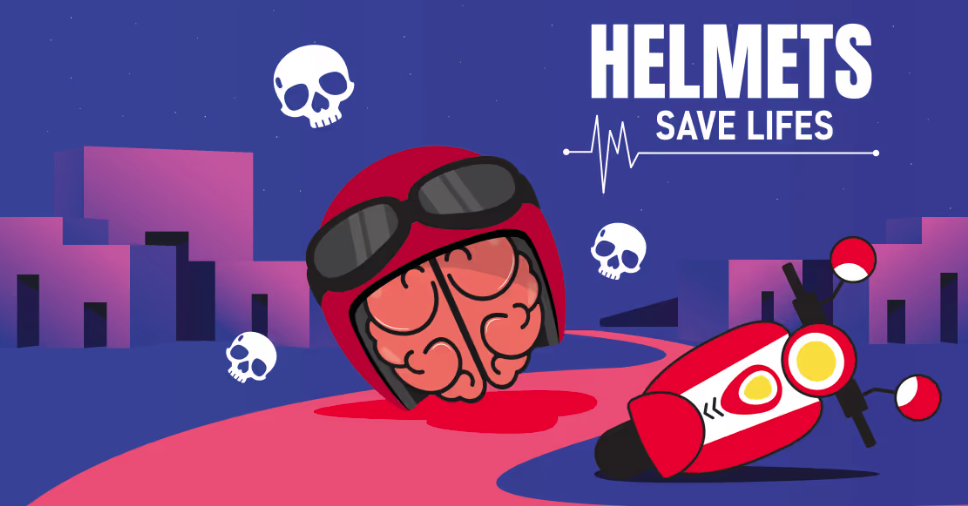
A quality, BIS-certified helmet reduces fatal head injury risk by 70% and brain injury risk by 65%.
But wearing it loosely, unbuckled, or using fake models reduces protection to near zero.
📊 Helmet & Road Death Data (India 2019–2025)
| Year | Two-Wheeler Deaths | Victims Without Helmet | % Deaths Preventable |
|---|---|---|---|
| 2019 | 56,136 | 44,666 | 80% |
| 2020 | 53,372 | 42,060 | 79% |
| 2021 | 58,607 | 46,464 | 79% |
| 2022 | 63,119 | 49,091 | 78% |
| 2023 | 66,885 | 50,722 | 76% |
| 2024 | 68,442 | 52,217 | 76% |
| 2025 (till Aug) | 37,400 | 28,800 | 77% |
(Sources: MoRTH Road Accident Report 2025; NCRB “Accidental Deaths in India”)
📈 Over 50,000 Indians die every year due to not wearing or misusing helmets.
🧠 Why Helmets “Don’t Work” (But Actually Do)
1️⃣ Loose straps: 45% of riders don’t fasten the chin strap.
2️⃣ Fake helmets: Lightweight plastic copies collapse on impact.
3️⃣ Open-face design: Exposes jaw and skull to direct trauma.
4️⃣ Old helmets: Cracks invisible after 3–5 years reduce protection.
5️⃣ Shared helmets: Poor fit means reduced stability and hygiene.
🧩 Case Study: Pune, 2023
- 23-year-old delivery rider hit divider at 60 km/h.
- Helmet flew off — strap not fastened.
- Severe skull fracture; declared dead on arrival.
- Police found sticker “ISI mark” was fake.
Lesson: The strap saves you, not the sticker.
🧭 How to Choose & Use Helmets Correctly
✅ Buy only BIS IS 4151-certified helmets (check hologram).
✅ Ensure snug fit — it shouldn’t move when you shake your head.
✅ Always buckle the chin strap tightly.
✅ Replace after 5 years or one major impact.
✅ Avoid decorative “half-shell” or “novelty” helmets — unsafe.
✅ For pillion riders — helmets are legally and scientifically mandatory.
💡 Global Comparison
| Country | Helmet Use Compliance | Head Injury Fatality Drop | Enforcement Strength |
|---|---|---|---|
| India | 38% | 65% (if used properly) | Weak |
| Vietnam | 90% | 78% | Strong |
| Japan | 96% | 80% | Very Strong |
| UK | 98% | 82% | Strong |
| Thailand | 85% | 70% | Moderate |
(Sources: WHO Road Safety Report 2024)
India’s low enforcement and high fake helmet market (₹1,200 crore/year) continue to cost lives.
📢 Systemic Lessons
Helmets don’t fail — behaviour does.
The tragedy is not in the accident, but in the excuses we make after it.
📣 Call to Action
🚨 Before you start your ride — check your strap, not your speed.
👉 Replace fake or old helmets immediately.
🪖 Teach children and pillion riders — safety is not optional.
📎 References
- MoRTH “Road Accident in India 2025”
- WHO “Global Helmet Safety Study,” 2024
- BIS “IS 4151 Helmet Standards,” 2023
- SaveLIFE Foundation “Helmet Use in India Report,” 2024
🔚 Closing Line
Helmets don’t guarantee survival — they guarantee a chance to survive.
This is why we built HowToSurvive.in — to remind India that real safety starts with responsibility.
Common unsafe practices
- Relying on equipment without a hazard assessment
- Blocking or compromising escape routes
- Delaying the alarm or emergency call
- Attempting a response beyond training or safe conditions
- Re-entering before authorised clearance
- Treating a checklist as a substitute for competent inspection