
Quick answers
What are the warning signs of an electrical fire risk at home?
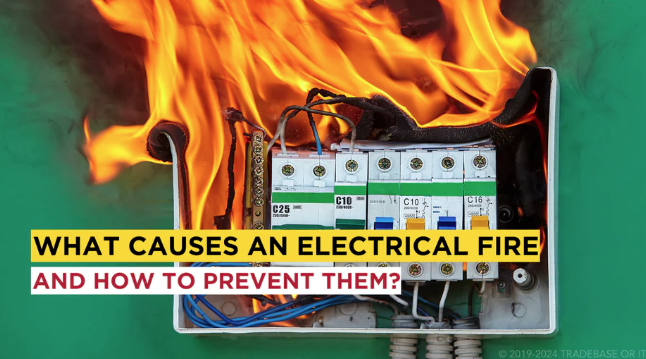
A spark when you plug something in, one socket running many appliances, an extension board that gets warm, a burning smell, or loose and hanging wires. Do not ignore any of them.
What commonly causes electrical fires?
Short circuits from poor wiring and loose joints, overloaded sockets and extension boards, cheap or fake appliances and chargers, exposed wires and illegal connections, and ordinary cable that burns and spreads the fire.
How can I reduce the risk of an electrical fire?
Do not overload sockets or use cheap extension boards. Switch off heaters, geysers and irons at night. Replace old wiring with ISI-marked cable through a licensed electrician, and fit MCBs and an RCCB.
Can I use water on an electrical fire?
No. Switch off the supply first if you can, then use a CO2 or dry powder extinguisher marked for electrical equipment. Tackle only a small fire, and only if you have a clear way out.
According to NCRB’s Accidental Deaths and Suicides in India 2024, electrical short circuits caused 1,042 fire accidents and 1,012 deaths in 2024, about one in six of all fire deaths that year. In 2023 the toll was higher: 1,673 deaths from 1,780 short-circuit fires.
The hidden danger is that most electrical fires do not start big. They start small, unnoticed and ignored.
Why this matters
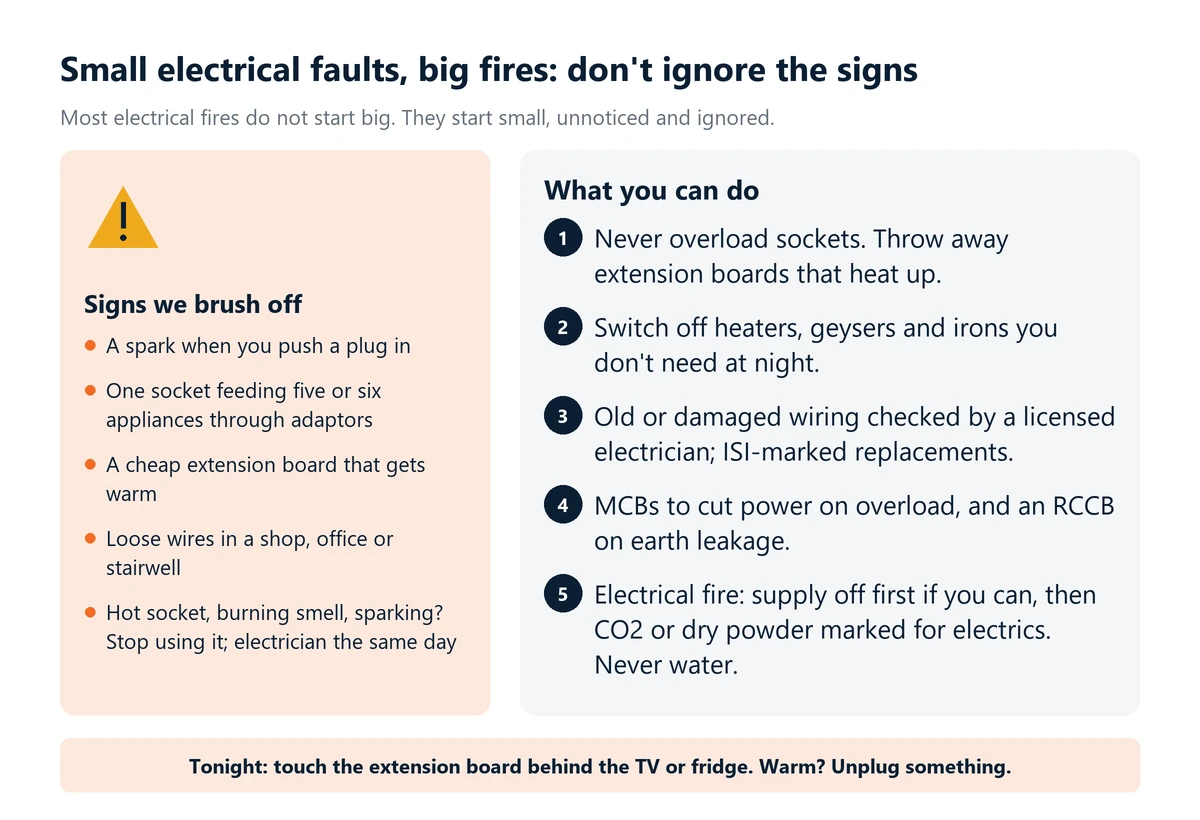
We have all seen these signs, and most of us have ignored them:
- a spark when you push a plug into the socket;
- one socket feeding five or six appliances through a chain of adaptors;
- a cheap extension board that gets warm;
- loose wires hanging in a shop, an office or the stairwell of a building.
We laugh it off, wrap it with tape, or put off calling the electrician. But a small spark can turn into a tragedy within minutes:
- a fire at the Takshashila coaching centre in Surat (2019) that killed 22 people, almost all of them students;
- an ICU fire in Rajkot (2020) that killed five COVID patients, blamed in a preliminary probe on a short circuit in a ventilator;
- a fire in a crowded workshop building in Delhi’s Anaj Mandi (2019) that killed at least 43 people, many of them workers sleeping inside, with a short circuit reported as the cause.
What we brush off as “small” can kill the fastest.
Common causes of electrical fires
- Short circuits: poor-quality wire, old installations and loose joints. In NCRB’s data, short circuits are one of the two biggest named causes of fire deaths, after cooking gas cylinder or stove bursts.
- Overloaded circuits: too many devices on one socket or extension board. Heaters, geysers, ACs and irons draw heavy current and can overheat a thin wire or a loose plug.
- Faulty appliances: cheap or fake chargers, adaptors and appliances that spark and overheat.
- Poor maintenance: exposed wires, broken switches, illegal connections and meter boards stuffed with junk, common in markets, schools and apartment buildings.
- Wrong cable: ordinary PVC insulation burns and gives off thick smoke. Flame-retardant (FR or FRLS) cables are slower to catch fire and to spread it.
Key numbers
- 1,012 deaths from electrical short-circuit fires in 2024 (NCRB)
- 1,673 deaths from electrical short-circuit fires in 2023 (NCRB)
- Electrocution, which NCRB counts separately from fire, killed 15,861 people in 2024
What you can do
- Never overload sockets, and throw away cheap extension boards that heat up.
- Switch off appliances you don’t need at night, especially heaters, geysers and irons.
- Get old or damaged wiring checked by a licensed electrician, and use ISI-marked cables, switches and plugs when you replace them.
- Make sure your home or office has MCBs to cut power on overload, and an RCCB to cut it on earth leakage.
- Learn to use a fire extinguisher. For an electrical fire, switch off the supply first if you can, then use a CO2 or dry powder extinguisher marked for electrical equipment. Never use water on live electrics.
- If a socket or switch is hot, smells of burning or keeps sparking, stop using it and call an electrician the same day.
What needs to change
- Regular electrical safety checks for schools, hospitals, markets and apartment buildings
- Strict action against fake appliances and uncertified extension boards
- Flame-retardant wiring as standard in new buildings
- Training for RWAs, building managers and electricians in fire-safe practice
- An easy way for citizens to report dangerous wiring in markets and public places
Don’t say “chalta hai”
Next time you see sparks, loose wiring or an overloaded socket, don’t ignore it and don’t put it off. A two-minute fix today can prevent a tragedy tomorrow.
Tonight, before you sleep, put your hand on the extension board behind the TV or the fridge. If it is warm, unplug something. Small sparks only need silence to grow into big fires. That is why we built HowToSurvive.in.
What needs attention
- Electrical short circuits caused about one in six fire deaths in India in 2024
- Most electrical fires start with warning signs that people ignore: sparks, heat, burning smells
- Overloaded sockets and cheap extension boards are common starting points
- Old wiring, loose joints and illegal connections are widespread in markets and older buildings
- Several of India's deadliest recent fires were linked to electrical faults
- Short-circuit fire deaths fell from 2023 to 2024 but still exceeded a thousand
Controls that reduce risk
- Get home and shop wiring checked by a licensed electrician
- Replace damaged or very old wiring with ISI-marked, flame-retardant cable
- Fit MCBs and an RCCB in the distribution board
- Remove extension boards that heat up and stop chaining adaptors
- Keep a CO2 or dry powder extinguisher near the main switchboard
- Ask your RWA or market association for a common-area electrical check
Common unsafe practices
- Running many appliances from one socket or extension board
- Fixing sparking wires with tape instead of calling an electrician
- Buying cheap, uncertified chargers, adaptors and extension boards
- Leaving heaters, geysers and irons on unattended
- Throwing water on an electrical fire
- Homes and shops without MCBs or an RCCB

Leave a comment