
Before a group trip: confirm seats, restraints and an itinerary that allows breaks

What needs attention
- An operator’s answer should match the vehicle that actually arrives.
- A useful itinerary leaves room for breaks and changed conditions.
Controls that reduce risk
- Ask about seating and restraints before booking.
- Repeat the check if the vehicle changes.
- Agree stops and an operator contact.
- Keep luggage clear of exits and use fitted restraints correctly.
Understand and apply the guidance
Ask before you book, check before you leave
India’s Ministry of Road Transport and Highways identifies several road risk factors, including speeding, distraction, impairment, vehicle condition and non-use of protective devices. MoRTH statement via PIB, 7 December 2023. A trip organiser cannot control every road hazard, but can make basic arrangements explicit before passengers board.
Confirm the passenger arrangement
Ask the operator which vehicle will arrive, how many passenger seats it has and what restraints are provided. Match the passenger list to actual seats. Do not treat a cargo area, aisle or shared seat as an acceptable substitute for a passenger place. If the vehicle changes, repeat the check rather than relying on the earlier answer.
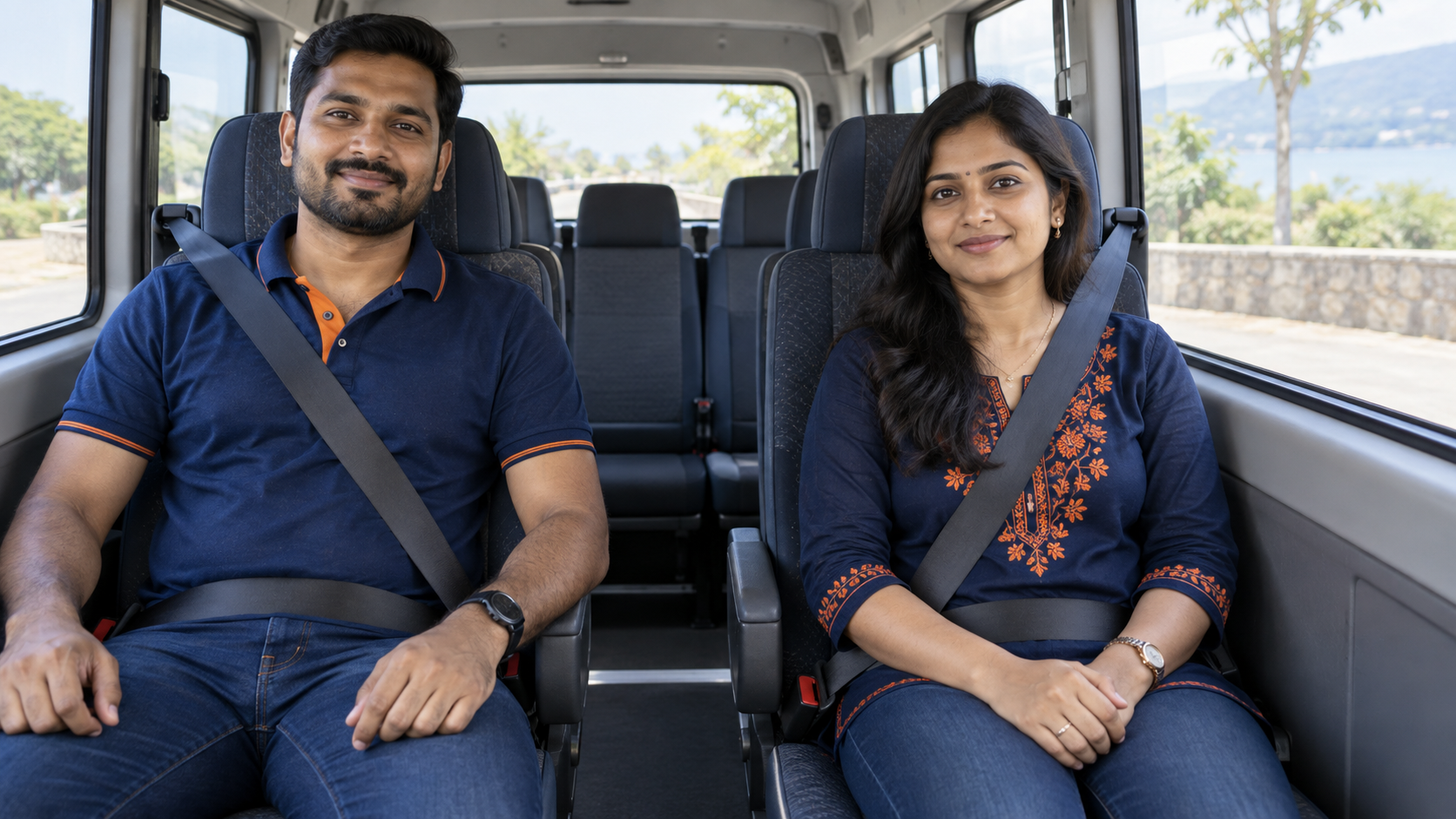
Use the fitted restraints correctly and arrange suitable child restraints according to the vehicle and restraint instructions. NHTSA’s technical guidance places the adult shoulder belt across the chest and the lap belt across the hips; this is supplementary US technical guidance, not a statement of Indian vehicle law. Seat-belt guidance.
Make the itinerary workable
Agree planned breaks, pickup points and an operator contact. Do not make arrival commitments that encourage rushing. If the group’s plans change, discuss a revised schedule while stopped rather than distracting the driver. Keep passenger questions and phone coordination with a designated organiser where possible.
Do a short boarding check
- Compare the arriving vehicle and seating with the booking.
- Confirm each person has their own appropriate passenger place.
- Check that luggage is secured and does not obstruct the aisle or exits.
- Locate the exits and ask the operator about the vehicle’s emergency arrangements.
- Confirm the next stop and a contact for anyone separated from the group.
This checklist is an editorial planning aid. It does not certify vehicle fitness, validate documents or replace a driver’s responsibilities. If an arrangement appears unsafe, resolve it before departure rather than treating a paid booking as a reason to proceed.
Keep incident lessons honest
The nearby KMP case study is a reason to discuss travel preparation. It is not evidence that any listed omission caused that crash. Avoid assigning blame through a generic safety checklist. The supplied images depict fictional planning and seated adults, not the people or vehicles in the incident.
Common unsafe practices
- Assuming a booking confirms every safety arrangement.
- Adding passengers without revisiting the seat plan.
- Pressuring the driver to recover a late schedule.