
A Blaze Unchecked: Unpacking Fire Statistics in India
What needs attention
- The article topic must be linked to the actual occupancy and hazard
- Prevention and early warning provide more safety margin than last-second intervention
- Equipment is effective only when correctly selected, accessible and maintained
- People need short practised actions and a clear decision to stop and escape
- Children, visitors and people needing assistance require explicit planning
- Records, drills and inspections matter only when defects are corrected
Controls that reduce risk
- Complete a task- and site-specific hazard assessment
- Verify applicable Indian, state and local requirements
- Use competent inspection for installed systems and specialist hazards
- Keep alarms, exits, signs and emergency access usable
- Train intended users and practise evacuation
- Record defects with an owner and completion date
- Review the plan after changes, incidents or near misses
Understand and apply the guidance
According to a recent study by Study Desk (May 14, 2024), fire-related incidents continue to pose a significant threat to public safety in India. The statistics reveal alarming figures, shedding light on the magnitude of the problem and the need for urgent action to address fire safety concerns.
Magnitude of Fire Incidents:
- Daily Deaths: The National Crime Records Bureau’s data indicates that over 60 people lose their lives every day in India due to fire-related incidents. This equates to approximately 25,000 deaths annually attributed to fires and related causes.
- Gender Disparity: Women bear a disproportionate burden, accounting for about 66% of the fatalities in fire accidents. This underscores the importance of gender-sensitive approaches in fire safety initiatives.
- Contribution to Total Deaths: Fire incidents contribute significantly to the overall mortality rate, constituting about 6% of the total deaths reported due to natural and unnatural causes.
Trends Over Time:
- Case Reports: Between 2001 and 2014, India witnessed a total of 3.16 lakh fire accident cases. The number of reported cases varied annually, with a peak of 26,343 cases in 2011. However, the trend exhibited fluctuations, with periods of increase and decrease over the years.
2. Fatalities: The corresponding fatalities mirrored the trend in reported cases, with an average of 59 deaths per day during the 14-year period. The highest number of deaths occurred in 2011, totaling 24,576 fatalities.
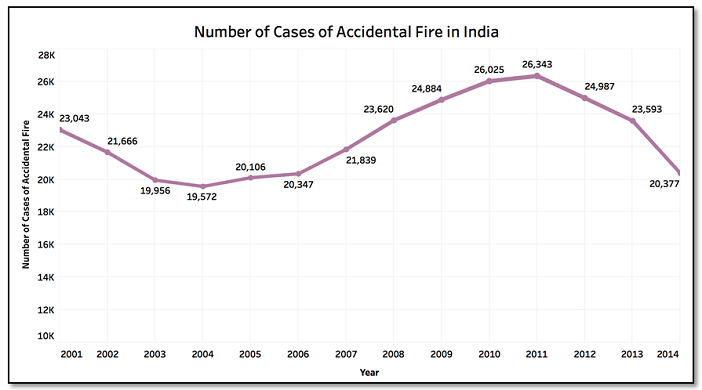
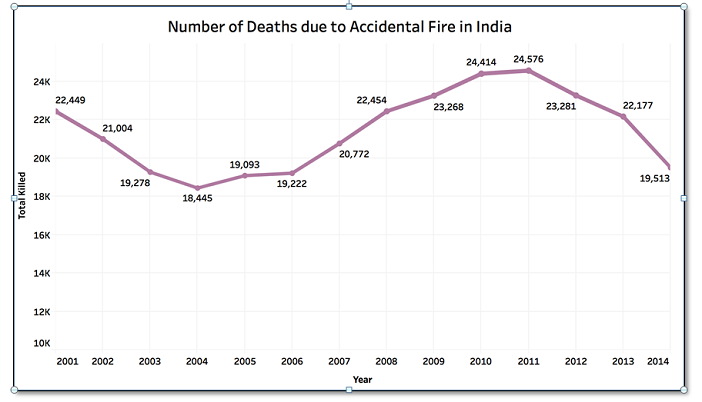
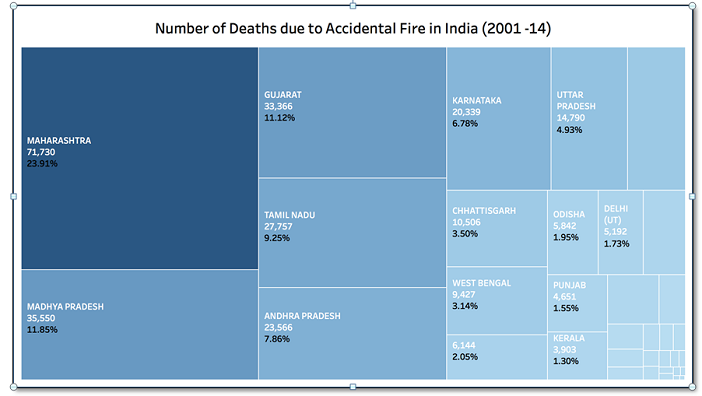
3. Regional Disparities: Maharashtra emerged as the state with the highest number of fire-related cases and deaths, accounting for 24% of all deaths reported in the country between 2001 and 2014. Other states like Madhya Pradesh also reported substantial numbers, indicating a nationwide challenge.
Economic Impact:
- Insurance Claims: While the economic losses due to fires have not been precisely quantified, estimates suggest a significant impact. Indian Insurance Companies report that approximately 45% of major losses claims are attributed to fire-related losses.
- Annual Losses: According to independent studies, India suffers losses of about Rs. 1000 crores annually due to fire incidents. This underscores the financial ramifications of inadequate fire safety measures.
Addressing the Challenge:
- Enhanced Fire Safety Measures: There is an urgent need to strengthen fire safety infrastructure, including improved detection systems, access to firefighting equipment, and adherence to building codes and regulations.
- Public Awareness Campaigns: Educating the public about fire prevention strategies, safe evacuation practices, and the responsible use of flammable materials is crucial in reducing fire incidents and casualties.
- Government Intervention: Government agencies must play a proactive role in enforcing fire safety standards, conducting regular inspections, and investing in training for firefighters and emergency responders.
- Regional Collaboration: Given the regional disparities highlighted in the data, collaborative efforts among states and union territories are essential to address the diverse challenges posed by fire incidents across the country.
In conclusion, the statistics on fire incidents in India underscore the urgent need for comprehensive measures to mitigate risks, enhance preparedness, and protect lives and property from the devastating impact of fires. Collaborative efforts involving government, communities, and stakeholders are paramount in building a safer and resilient nation against fire hazards.
Common unsafe practices
- Relying on equipment without a hazard assessment
- Blocking or compromising escape routes
- Delaying the alarm or emergency call
- Attempting a response beyond training or safe conditions
- Re-entering before authorised clearance
- Treating a checklist as a substitute for competent inspection