
How To SurviveLife-Safety Intelligence for IndiaEmergency Guide
Home / Safety Blogs / Fire Protection for Government Buildings
Safety Blog · Ready For Review

Fire Protection for Government Buildings

Government facilities combine life-safety responsibilities with public access, critical records, digital services, sensitive rooms and operational continuity. An office may carry a large paper and furnishing fire load; a library or archive adds dense stored material; a server room adds electrical and battery hazards; a laboratory can add chemicals; and a public counter may hold visitors unfamiliar with the exits. The correct approach starts with occupancy and risk assessment, then uses prevention, compartmentation, protected egress, detection and communication, suitable suppression, reliable water and power, trained staff and a tested continuity plan. Security must support emergency release and responder access rather than trapping occupants.

TopicDisaster Preparedness · Fire SafetyUpdated2026-08-31
01
The guide

Fire Protection for Government Buildings
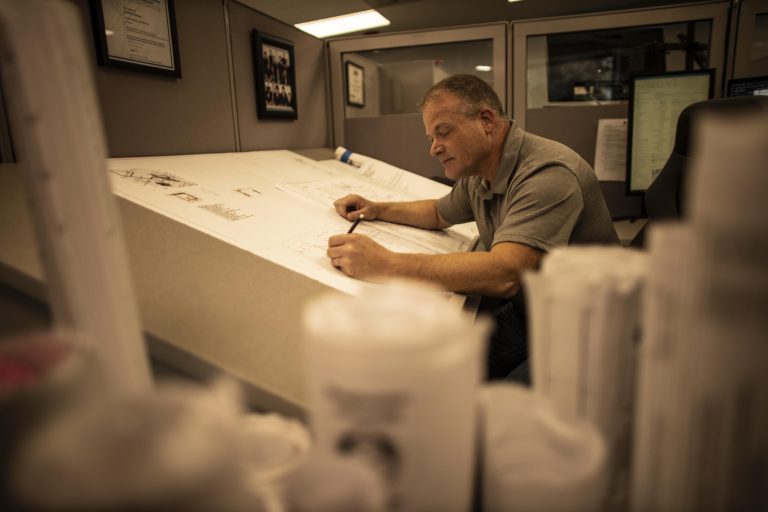
Fire Protection for Government Buildings

What needs attention

  • The legacy list treated sprinklers, clean agent, foam, alarms, signs and extinguishers as interchangeable products; each protects a different hazard and must be part of one engineered strategy
  • Sprinklers generally control or suppress suitable fires; they do not make blocked exits, failed alarms or open fire doors acceptable
  • Clean-agent protection can reduce residue in a suitable enclosed special-hazard room, but it requires a specific hazard analysis, enclosure integrity, alarms, interlocks, safe exposure design and post-discharge procedure
  • CO2 total-flooding systems create a life-safety hazard and are not a generic clean solution for normally occupied archives or server rooms
  • Aircraft hangars do not automatically require one universal foam system; fuel, aircraft, drainage, environmental constraints and the adopted design standard determine protection
  • Paper archives need prevention, compartmentation, detection, suppression and salvage planning—not simply removal of water-based protection
  • Digitisation improves continuity only when backups are separated, tested and protected from the same fire or cyber event
  • Access-control turnstiles, locked record rooms and secure zones must release or be managed according to the approved emergency strategy

Controls that reduce risk

  1. Classify every area by actual use rather than the building's administrative name
  2. Map public counters, waiting areas, secure zones, record rooms, server and UPS rooms, kitchens, laboratories and workshops
  3. Confirm exit doors release safely during alarm and emergency-power loss
  4. Remove portable heaters, multi-plug adapters and unnecessary sockets from record storage
  5. Inspect fire doors, service penetrations, electrical panels, alarm faults, hydrant valves, pumps and water levels
  6. Review whether clean-agent, water-mist, sprinkler or other systems have current design documentation and maintenance records
  7. Keep duplicate digital and vital-record backups in a separate protected location and test restoration
  8. Prepare salvage priorities for irreplaceable records without asking staff to enter a fire area
  9. Give responders current floor plans, hazardous-material information, shut-off locations, access credentials and a liaison officer
  10. Run a drill during public hours and another scenario for reduced after-hours staffing

Understand and apply the guidance

People and things need fire protection in government buildings to keep them safe. Whether it’s a library, a courthouse, a military base, or a post office, a government building should have the right systems in place and in good shape. Having a fire protection system that works well can help keep things running smoothly and protect important property.

What fire protection systems are used in government buildings?

Depending on the type of government building, different fire safety systems may be needed. Some of the ways that government buildings protect themselves from fire are:

  • Sprinkler systems:- are one of the best ways to stop a fire from spreading in your building. They are very good at putting out fires.
  • Clean agent fire suppression:- Government buildings with historical archives, computer rooms, or other valuable assets may need clean agent fire suppression systems to protect against fires without risking fire damage.
  • Foam fire suppression:- Foam fire suppression systems are needed in government aircraft hangars to protect against dangerous fuel.
  • Fire alarm systems:- Alarms are needed in government buildings to warn people of fires so they can get out safely.
  • Exit signs and emergency lighting:- When there is a fire, people can safely leave a building with the help of emergency lighting and exit signs.
  • Fire extinguishers:- Fire extinguishers should be placed all over government buildings so that small fires can be put out before they get too big.

Common unsafe practices

  • Choosing suppression from the value of the asset while ignoring occupant exposure and escape
  • Assuming every government building follows the same protection schedule
  • Locking public or staff exits for security without an approved emergency-release arrangement
  • Using record rooms as overflow stores for furniture, packaging, cleaning chemicals or electrical appliances
  • Adding sockets, heaters, chargers or extension boards inside dense paper storage
  • Leaving cable and pipe penetrations unsealed after IT or renovation work
  • Disabling detection or suppression during maintenance without a permit, compensating measures and restoration test
  • Failing to include visitors and outsourced security, cleaning or maintenance staff in accountability
  • Locating the only backup data or records in the same fire compartment
  • Treating a fire NOC or certificate as a substitute for daily management and periodic maintenance
02
Watch & learn

Related Videos

Captions
Verified news footage

Fire at Rajasthan Electricity Regulatory Commission Office

First India News · Hindi · Verified

Shows smoke spread, evacuation and emergency response at a government office in Jaipur in April 2026

03
Facts & action

Evidence, Cases & Next Steps

8Broad NBC occupancy groups listed in CPWD's specificationResidential, educational, institutional, assembly, business, mercantile, industrial and hazardous
3NBC Part 4 safety areasFire prevention, life safety and fire protection
1Integrated protection strategySystems must interact with evacuation, security, utilities and operations
Occupants, visitors, accessibility, crowd movement and accountabilityPeople and public access
Dense fuel, irreplaceable assets, compartmentation and salvagePaper, archives and heritage
Servers, UPS, batteries, cable paths, detection and continuityDigital and electrical services
Laboratories, kitchens, workshops, fuel and hazardous storesSpecial hazards
Fire resistance, doors, alarm, suppression, hydrants, smoke control and powerBuilding protection
Approval, maintenance, impairments, drills, backups and recoveryGovernance and continuity

What the evidence supports

  • Design basis | Actual occupancy, use, height, area and hazards
  • Life safety | Protected exits, fire and smoke containment, alarm, lighting and accessible evacuation
  • Public visitors | Clear instructions and staff assistance for people unfamiliar with the building
  • Record rooms | Controlled ignition sources, compartmentation, housekeeping and a recovery plan
  • Digital systems | Detection and suppression selected for the equipment, enclosure and life-safety constraints
  • Security | Emergency egress must not depend on a failed access-control system
  • Emergency number | 112 in India

Immediate prevention actions

  1. Walk from the busiest public counter to two exits and identify security barriers
  2. Check whether the visitor log can produce a reliable count during an evacuation
  3. Open the fire panel log and record unresolved faults or disabled zones
  4. Inspect one record room for appliances, overloaded sockets, combustible waste and unsealed penetrations
  5. Confirm server, UPS and battery rooms match the approved fire strategy and ventilation assumptions
  6. Ask where vital records and service backups are stored and when restoration was last tested
  7. Verify emergency keys, access cards and responder routes work outside normal office hours
  8. Assign owners and dates to defects rather than recording them as observations only

Emergency survival steps

  1. Activate the alarm, warn nearby people and call 112 from a safe location
  2. State the government department, building name, gate, floor or room, visible conditions and anyone missing or trapped
  3. Follow the alarm, public-address message and trained wardens; help visitors understand the route
  4. Use the nearest safe protected exit and do not use an ordinary lift
  5. Close doors behind you where safe and never delay for files, computers or classified material
  6. Do not enter a record, server or electrical room to fight a developing fire
  7. Use an extinguisher only if trained and authorised, the correct agent is available, the fire is small and escape remains clear
  8. Report to the assembly point and ensure visitors and contractors are included in accountability
  9. Give responders hazardous-room, security-access and last-known-person information; do not re-enter
  10. Resume public services or records recovery only after authorised clearance and a documented safety assessment

Limitations

  • No public national database was identified that inventories every Indian government building, its occupancy, fire systems, inspection status and incident outcome
  • NBC is a model code; adopted legal requirements and fire-service procedures vary by jurisdiction
  • CPWD documents apply to their stated projects and administrative scope and do not replace local approval
  • System requirements cannot be inferred from the label government office or from asset value alone
  • Clean-agent and foam choices require specialist design; the legacy post's categorical claims were removed
  • News footage cannot establish cause, compliance or system performance without official findings
  • The Hindi gas-suppression video is educational and not a design or discharge authorisation
Sources and further readingBureau of Indian Standards: National Building Code of India 2016 overview ↗CPWD: Guide for Using National Building Code of India 2016 ↗CPWD: Wet Riser System Specification 2020, Chapter 2 fire-safety basis ↗CPWD: Internal Electrical Installation maintenance manual, Chapter 11 Fire Hazards ↗Directorate General Fire Services, Civil Defence and Home Guards: NBC fire and life-safety implementation context ↗Ministry of Home Affairs: Lok Sabha reply on state and local implementation of fire safety, 19 December 2023 ↗NIDM / National Fire Service College: Fire Safety and Prevention Measures in Public Buildings workshop report ↗Government of India ERSS: Emergency number 112 ↗First India News: Rajasthan Electricity Regulatory Commission office fire ↗NDTV: Satpura Bhawan government-building fire in Bhopal ↗Last reviewed 2026-08-31