
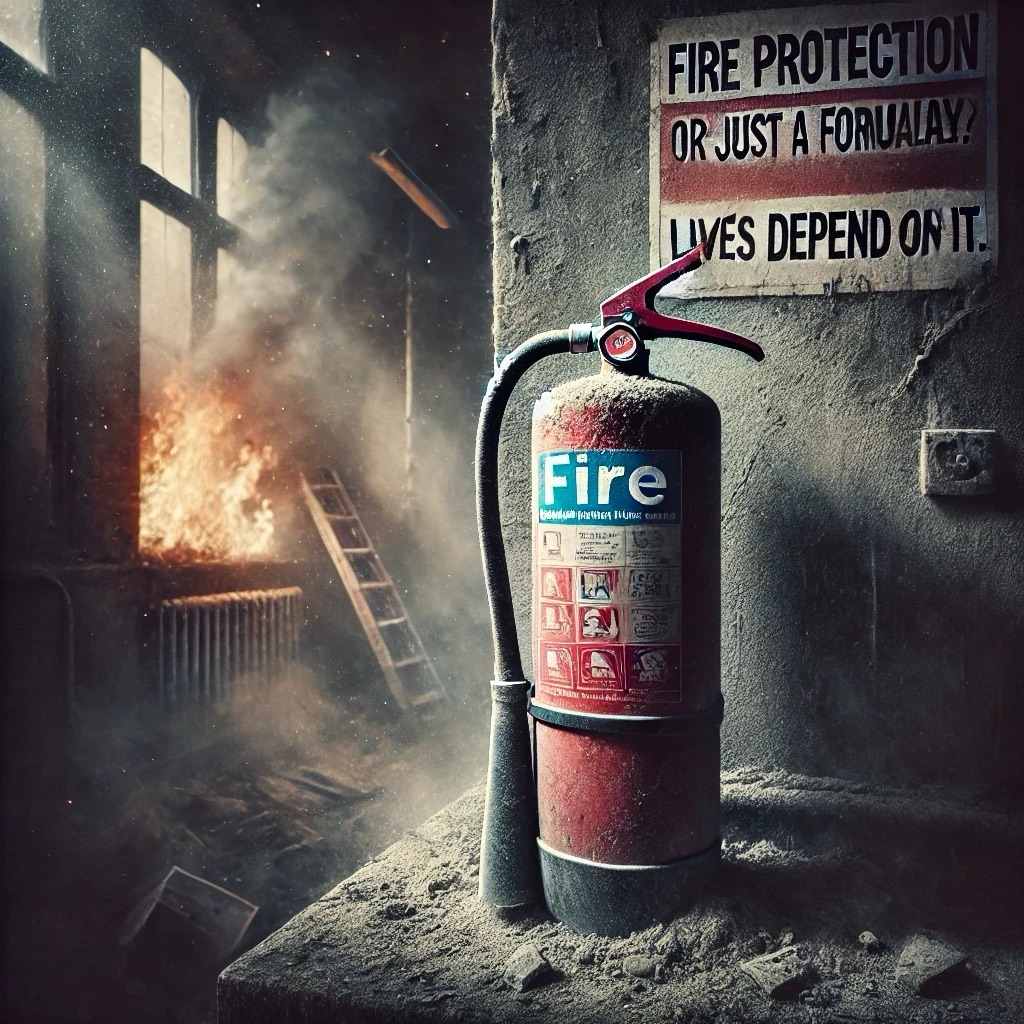
Fire Protection or Just a Formality? The Harsh Reality
What needs attention
- The article topic must be linked to the actual occupancy and hazard
- Prevention and early warning provide more safety margin than last-second intervention
- Equipment is effective only when correctly selected, accessible and maintained
- People need short practised actions and a clear decision to stop and escape
- Children, visitors and people needing assistance require explicit planning
- Records, drills and inspections matter only when defects are corrected
Controls that reduce risk
- Complete a task- and site-specific hazard assessment
- Verify applicable Indian, state and local requirements
- Use competent inspection for installed systems and specialist hazards
- Keep alarms, exits, signs and emergency access usable
- Train intended users and practise evacuation
- Record defects with an owner and completion date
- Review the plan after changes, incidents or near misses
Understand and apply the guidance
In India, and many countries around the world, fire protection has become nothing more than a formality. The systems we see around us—fire extinguishers, alarms, sprinklers—are often just showpieces, like a picture on the wall. They look good, they seem like they’ll protect us, but when we need them the most, they fail.
Let’s be real for a moment. The purpose of fire protection systems is not just to hang on the wall or stand in a corner. Their sole purpose is to save lives in an emergency. Yet, how many times have we seen fires break out, and these systems are nowhere to be found, or worse, they don’t work?
Why are we ignoring this?
The truth is harsh: In most cases, fire systems are just installed to meet compliance requirements, to tick a box, and forget about them. They are rarely checked, barely maintained, and often found in terrible condition when they’re actually needed. Either they’re turned off, not powered on, jammed, or simply never tested. And when a real emergency happens, that’s when we realize the system we thought would save us is as good as dead.
Imagine this: You’re in a building, a fire breaks out, and you run to the nearest fire extinguisher. You pull the pin, aim at the fire, and… nothing. The extinguisher is jammed. The sprinklers don’t activate because they haven’t been tested in years. The alarms are silent because they’re not even connected to the power supply. Now, ask yourself—what’s the point of having these systems if they fail in the only moment they’re supposed to work?
A System That’s Failing Us All
We’ve seen fire tragedies happen again and again, yet nothing changes. We’ve lost lives, we’ve seen families devastated, and still, we continue to ignore the real issue. Fire protection systems are supposed to be our safety net, but they’ve become nothing more than decorations. We’ve accepted this broken system like it’s normal.
But it’s not normal. It’s unacceptable.
Let’s not forget the government buildings where fire systems are either non-existent or dysfunctional. The very places where the highest standards should be maintained are the ones cutting corners. If the systems aren’t working in those buildings, what hope do we have for our homes, schools, hospitals, and offices?
Why Is This Happening?
The reason is simple: We’ve turned fire protection into a business. The focus isn’t on saving lives—it’s on selling products, meeting regulations, and avoiding penalties. The heart and soul of fire safety—protecting people—has been lost. No one cares until a tragedy happens. And when it does, we blame the system, we blame each other, but no one takes responsibility.
The Fire NOC, which is supposed to be a guarantee of safety, has become just another piece of paper. You install a few fire extinguishers, make sure the inspector gets a good look, and you get the NOC. But does anyone care whether those systems actually work when it matters? Rarely. It’s all for show.
Wake Up Before It’s Too Late
It’s time to wake up. We can’t wait for another tragedy to remind us why fire protection is important. We need to hold people accountable. Building owners, developers, fire departments—everyone needs to take responsibility. Fire safety isn’t just about ticking boxes. It’s about real, functioning systems that will save lives when they’re needed.
We need to stop treating fire protection like a formality. These systems should be maintained, tested regularly, and powered on at all times. If the system isn’t working, it’s as good as not having one at all.
Your Life Depends On It.
Next time you walk past a fire extinguisher or a fire alarm, ask yourself: “If there’s a fire right now, will this system save me?” If the answer is no, it’s time to act. Demand better from the people responsible for your safety. Don’t wait until it’s too late.
We’ve forgotten the real purpose of fire protection. It’s not about compliance. It’s about saving lives. Let’s bring that purpose back before more lives are lost.
It’s time for a change.
Common unsafe practices
- Relying on equipment without a hazard assessment
- Blocking or compromising escape routes
- Delaying the alarm or emergency call
- Attempting a response beyond training or safe conditions
- Re-entering before authorised clearance
- Treating a checklist as a substitute for competent inspection