
FM-200 vs. CO2 Fire Protection Systems
What needs attention
- Zero ozone-depletion potential does not mean zero climate impact: EPA lists HFC-227ea at GWP 3,220
- India ratified the Kigali Amendment in September 2021 and its HFC production and consumption schedule starts with a 2028 freeze and reductions from 2032, so long-term HFC-227ea supply and recovery deserve planning
- The EPA reports that the minimum CO₂ total-flooding design concentration of 34 percent is lethal
- EPA's historical review located 62 CO₂-system incidents involving 119 deaths and 152 injuries, while warning that records were incomplete and heavily influenced by marine and maintenance events
- Maintenance or work around CO₂ systems was the largest identified cause of accidental injury or death in the EPA review
- Calling FM-200 'safe for occupied rooms' is incomplete; safe design depends on concentration, exposure time, egress, alarms, decomposition products and standard limits
- Calling CO₂ 'environmentally friendly' is incomplete; its GWP is the reference value 1, but the primary comparison cannot ignore immediate lethal exposure risk
- HFC-227ea exposed to flame or hot surfaces can form hazardous decomposition products, including hydrogen fluoride, especially if discharge or extinguishment is delayed
- Cylinder footprint and installed cost are not universal: room volume, concentration, storage pressure, reserve, pipe run and local supply must be calculated
- Neither gaseous system automatically replaces required sprinklers or protects a battery thermal-runaway or deep-seated fire from re-ignition
Controls that reduce risk
- Read the system nameplate and confirm whether the agent is HFC-227ea or CO₂—not just a brand label
- Verify the design concentration, net enclosure volume, cylinder quantity and most recent room-integrity or distribution evidence
- Mark normal occupancy, maintenance access and all spaces where leaked or discharged agent can collect
- For CO₂, audit supervised lockout, pre-discharge alarms, escape delay, warning signs, rescue policy and atmospheric re-entry testing
- For HFC-227ea, record agent mass, leakage history, recovery route, recharge availability and phasedown transition plan
- Test detection voting, manual release, abort where approved, alarms, HVAC shutdown, dampers, doors and remote signalling
- Check pressure-relief openings and new penetrations, raised floors or suspended ceilings
- Train contractors before they work on protected equipment or near release hardware
- Keep agent safety data, piping drawings, cause-and-effect matrix and emergency contacts at the control point
- Require engineered approval before substituting any lower-GWP agent or changing enclosure conditions
Understand and apply the guidance
Fire suppression systems that use FM-200 or CO2 can be used instead of systems that use Halon. When it comes to putting out fires, these systems have some similarities, but there are also some important differences.
What is FM-200?
HFC-227ea is used to put out fires in FM-200 systems. These systems work quickly, don’t hurt the ozone layer, and don’t conduct electricity. FM-200 is a clean agent that can put out Class A, Class B, and Class C fires. It is a clear, odorless substance that doesn’t leave any residue and cuts down on downtime. This system can be used in places where people are.

Applications where FM-200 systems are found:
- Data centers
- Telecommunication facilities
- Military applications
- Computer rooms
- Control rooms
- Museums
- Historical archive storage
- Art galleries
- Pharmaceutical and medical facilities
- Record storage facilities
What is CO2 Fire Suppression?
CO2 is a system for putting out fires that uses carbon dioxide to reduce the amount of oxygen in space to a point where fires can no longer happen. A CO2 fire suppression system is good for the environment, works quickly, and doesn’t conduct electricity. CO2 systems leave behind no residue, cause no damage to sensitive equipment and require no clean-up. These systems can be used to fight Class A, B, and C fires, but they are not safe to use in areas where people are present.
Applications where CO2 systems are used:
- Power Plants
- Metal Production and Processing
- Printing Facilities
- Automotive Plants
- Electronics Operations
- Electronics/Computer Production
- Research Facilities
- Storage Facilities
Factors to Consider When Choosing
Is the Area Occupied?
If your space is used most of the time, an FM-200 system might be safer. CO2 fire suppression should not be used in places where people are, because high levels of CO2 can make people lose consciousness and even kill them. CO2 fire suppression may be a good choice if the area that needs fire protection is usually empty.
How Much Space is Available?
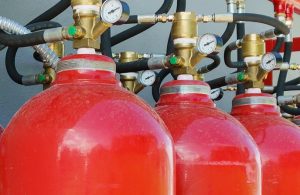
Most of the time, the cylinders for a CO2 fire suppression system take up more space than the cylinders for an FM-200 system. If there isn’t much space where you live, FM-200 might be a better choice.
What is the Cost of Each System?
A CO2 system and an FM-200 system may have different prices. Talk to a fire protection contractor to find out which system will work best for your needs and save you the most money.
Common unsafe practices
- Selecting CO₂ for a normally occupied room because it is inexpensive and residue-free
- Describing FM-200 as harmless because it is used in occupied spaces
- Equating zero ODP with low GWP
- Ignoring India's Kigali phasedown when planning a system expected to operate for decades
- Comparing cylinder count without engineered concentration and hydraulic or flow calculations
- Using the same detector, release delay and abort philosophy for every hazard
- Leaving CO₂ systems active during maintenance without the approved supervised lockout and isolation procedure
- Relying on odour, oxygen deficiency symptoms or a handheld alarm as the primary escape warning
- Skipping enclosure-integrity and pressure-relief assessment
- Opening doors or starting ventilation before responders assess extinguishment, toxic products and re-ignition
- Assuming no residue means no post-fire contamination or corrosion
- Changing agent, cylinders or nozzles without complete redesign and approval