
Guarding Against Fire: 5 Common Causes and Prevention Strategies
What needs attention
- The article topic must be linked to the actual occupancy and hazard
- Prevention and early warning provide more safety margin than last-second intervention
- Equipment is effective only when correctly selected, accessible and maintained
- People need short practised actions and a clear decision to stop and escape
- Children, visitors and people needing assistance require explicit planning
- Records, drills and inspections matter only when defects are corrected
Controls that reduce risk
- Complete a task- and site-specific hazard assessment
- Verify applicable Indian, state and local requirements
- Use competent inspection for installed systems and specialist hazards
- Keep alarms, exits, signs and emergency access usable
- Train intended users and practise evacuation
- Record defects with an owner and completion date
- Review the plan after changes, incidents or near misses
Understand and apply the guidance
Introduction
Fire safety is a critical aspect of maintaining a secure and comfortable environment, whether at home, work, or any public space. Understanding the most common causes of fires and implementing preventive measures is essential for safeguarding lives and property. In this article, we’ll delve into the five most common causes of fires and provide practical prevention strategies to help you mitigate the risks and ensure a fire-safe environment.
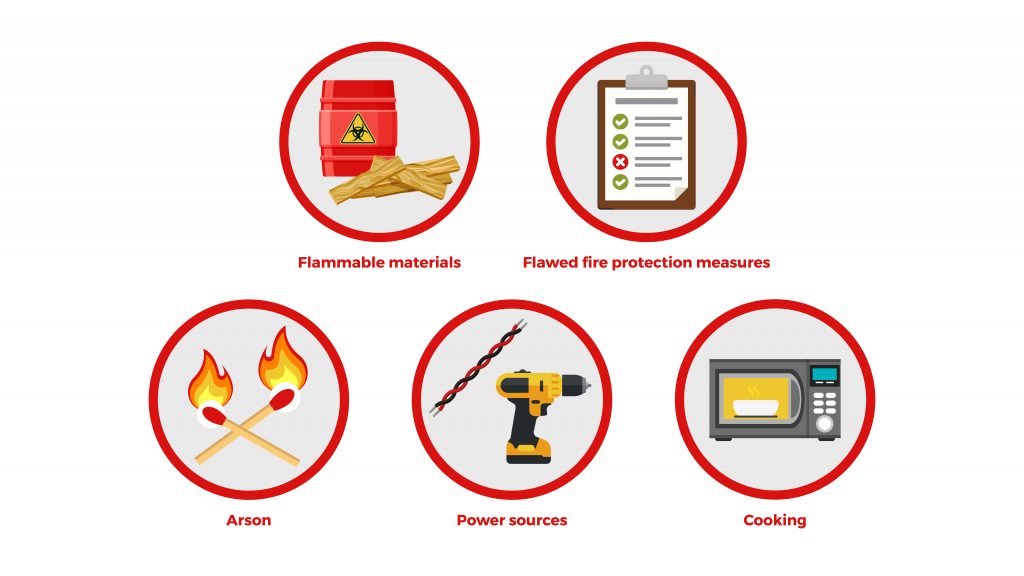
- Cooking Incidents
- Cooking is a daily activity, but it’s also a leading cause of home fires. Unattended cooking, grease fires, and overheating appliances can quickly escalate into dangerous situations. To prevent cooking-related fires:
- Never leave cooking unattended, especially when using high heat or open flames.
- Keep flammable materials like towels and paper products away from the cooking area.
- Use a timer to remind you of cooking times and regularly check on your food.
- Heating Equipment
Heating equipment, including space heaters, fireplaces, and wood-burning stoves, is another common fire cause, particularly during colder months. To prevent heating-related fires:- Keep flammable materials at a safe distance from heating equipment.
- Ensure proper ventilation for gas and kerosene heaters to prevent carbon monoxide buildup.
- Clean and inspect chimneys and vents regularly to prevent the buildup of creosote and other combustible materials.
- Electrical Malfunctions
Electrical malfunctions can result from faulty wiring, overloaded circuits, or damaged electrical cords. To prevent electrical fires:- Avoid overloading outlets and power strips. Plug only one high-wattage appliance into each outlet.
- Replace damaged or frayed cords immediately.
- Hire a qualified electrician for any electrical repairs or installations.
- Candles
Candles can create a cozy atmosphere, but they can also be fire hazards if not used safely. To prevent candle-related fires:- Keep candles at least one foot away from flammable materials.
- Never leave candles unattended, and extinguish them before leaving a room.
- Use candle holders that are sturdy and won’t tip over easily.
- Smoking Materials
Improperly discarded cigarette butts, cigars, and matches can ignite fires, especially in dry conditions. To prevent smoking-related fires:- Designate smoking areas away from flammable materials and vegetation.
- Use deep, sturdy ashtrays that won’t tip over easily.
- Ensure smoking materials are completely extinguished before disposal.
General Fire Prevention Tips
In addition to addressing specific causes, there are several general fire prevention tips you should always keep in mind:
- Install smoke alarms on every level of your home and test them monthly.
- Create a fire escape plan with clear evacuation routes and a designated meeting point.
- Educate your family or employees about fire safety practices, including how to use fire extinguishers and when to call emergency services.
- Regularly inspect fire safety equipment, such as smoke alarms and fire extinguishers, to ensure they’re functioning properly.
- Keep flammable materials like paper, cloth, and chemicals in well-ventilated areas and away from heat sources.
- Store propane tanks and other highly flammable materials in a safe location, away from direct sunlight and heat.
Conclusion
Being aware of the common causes of fires and taking proactive steps to prevent them is an investment in safety and peace of mind. By following the prevention strategies outlined above and integrating fire safety practices into your daily routine, you significantly reduce the risk of fires and their potential consequences. Fire prevention is not just a matter of chance; it’s a deliberate choice that protects lives, property, and the well-being of your loved ones. Remember, the best defense against fires is a well-informed offense.
Common unsafe practices
- Relying on equipment without a hazard assessment
- Blocking or compromising escape routes
- Delaying the alarm or emergency call
- Attempting a response beyond training or safe conditions
- Re-entering before authorised clearance
- Treating a checklist as a substitute for competent inspection