
How to Escape a Smoke-Filled Room
What needs attention
- The article topic must be linked to the actual occupancy and hazard
- Prevention and early warning provide more safety margin than last-second intervention
- Equipment is effective only when correctly selected, accessible and maintained
- People need short practised actions and a clear decision to stop and escape
- Children, visitors and people needing assistance require explicit planning
- Records, drills and inspections matter only when defects are corrected
Controls that reduce risk
- Complete a task- and site-specific hazard assessment
- Verify applicable Indian, state and local requirements
- Use competent inspection for installed systems and specialist hazards
- Keep alarms, exits, signs and emergency access usable
- Train intended users and practise evacuation
- Record defects with an owner and completion date
- Review the plan after changes, incidents or near misses
Understand and apply the guidance
1. Why You Must Know This
Did you know? 80% of fire deaths are caused by smoke, not flames. When fire breaks out, smoke fills rooms within 2–3 minutes, carrying toxic gases like carbon monoxide and hydrogen cyanide. Just 2–3 breaths of thick smoke can knock a person unconscious. This is why most victims are found lying far from the fire source — collapsed because they didn’t know how to move or breathe.
2. Step-by-Step Survival Guide
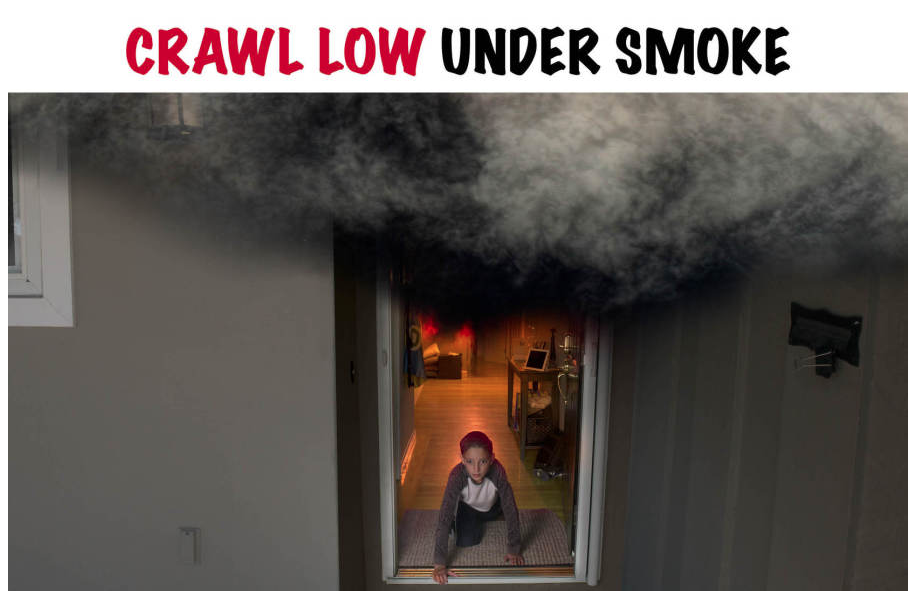
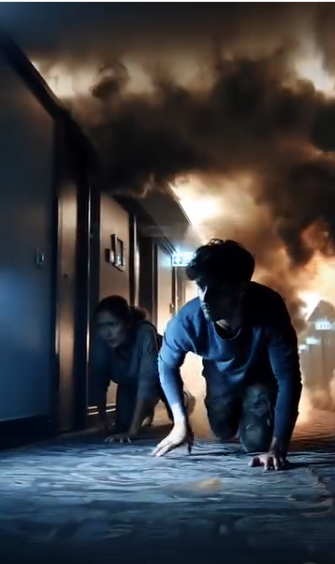
- Stay low: Heat and smoke rise, leaving cleaner air near the floor. Crawling under smoke is your best chance.
- Cover your mouth & nose: Use a wet cloth, towel, or even your sleeve to reduce smoke inhalation.
- Check doors before opening: Touch with the back of your hand. If it’s hot, flames may be behind it. Find another exit.
- Use staircases, not lifts: Lifts become death traps during fire — power can fail, trapping you inside.
- If trapped: Seal gaps under doors with wet cloth, open windows for fresh air, and signal rescuers with a flashlight, cloth, or whistle.
3. Diagram
4. Common Mistakes to Avoid
❌ Standing upright and running — you’ll collapse within minutes from smoke.
❌ Breaking windows unnecessarily — this feeds the fire with oxygen.
❌ Going back to collect belongings — every second counts.
5. Where Should This Be Practiced?
During fire drills in schools, hotels, and offices, include smoke simulation drills where people practice crawling low to safety.
6. What You Can Do Today
✔ Memorize at least 2 escape routes in your building.
✔ Keep a whistle in your room to signal if trapped.
✔ Teach children: “In fire, don’t stand up, go down.”
7. Related Case
“In the Rajkot TRP Game Zone fire (2024), most victims died not from fire but from inhaling smoke. Many were found near exits, but collapsed before reaching safety.”
8. Final Words
“Smoke kills silently. The floor is your friend. Crawl to life.”
Common unsafe practices
- Relying on equipment without a hazard assessment
- Blocking or compromising escape routes
- Delaying the alarm or emergency call
- Attempting a response beyond training or safe conditions
- Re-entering before authorised clearance
- Treating a checklist as a substitute for competent inspection