
How To SurviveLife-Safety Intelligence for IndiaEmergency Guide
Home / Safety Blogs / How to Survive a Lift Fire or Power Failure
Safety Blog · Ready For Review

How to Survive a Lift Fire or Power Failure
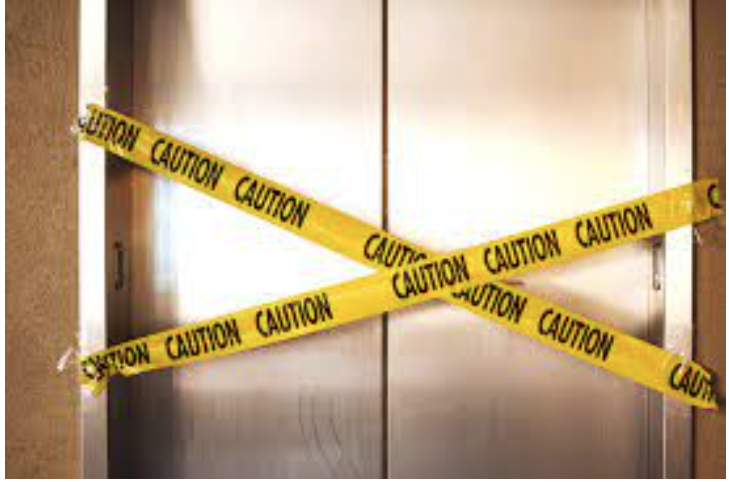
How to Survive a Lift Fire or Power Failure is rebuilt as practical India-facing guidance connecting prevention, correct equipment, early warning, clear escape, 112 activation and documented follow-up.

TopicFire SafetyUpdated2026-09-02
01
The guide

How to Survive a Lift Fire or Power Failure

How to Survive a Lift Fire or Power Failure

What needs attention

  • The article topic must be linked to the actual occupancy and hazard
  • Prevention and early warning provide more safety margin than last-second intervention
  • Equipment is effective only when correctly selected, accessible and maintained
  • People need short practised actions and a clear decision to stop and escape
  • Children, visitors and people needing assistance require explicit planning
  • Records, drills and inspections matter only when defects are corrected

Controls that reduce risk

  1. Complete a task- and site-specific hazard assessment
  2. Verify applicable Indian, state and local requirements
  3. Use competent inspection for installed systems and specialist hazards
  4. Keep alarms, exits, signs and emergency access usable
  5. Train intended users and practise evacuation
  6. Record defects with an owner and completion date
  7. Review the plan after changes, incidents or near misses

Understand and apply the guidance

1. Why You Must Know This
High-rises are India’s urban future — but lifts are often used even during fires. In the Delhi Anaj Mandi fire (2019), victims died trapped in lifts filled with smoke. Lifts fail during fires because power cuts, smoke infiltration, and heat expansion turn them into death chambers.

2. Step-by-Step Survival During Lift Fire/Failure

  • If fire breaks out in building:
    • Never use lifts. Always take stairs.
    • Lifts may lose power or stop at fire-affected floors.
  • If stuck in lift due to failure:
    • Stay calm. Panic increases suffocation.
    • Press emergency button, call security using intercom/phone.
    • Signal by banging doors or shouting at intervals.
    • Sit down to conserve oxygen.
    • Do not try to force doors open between floors.

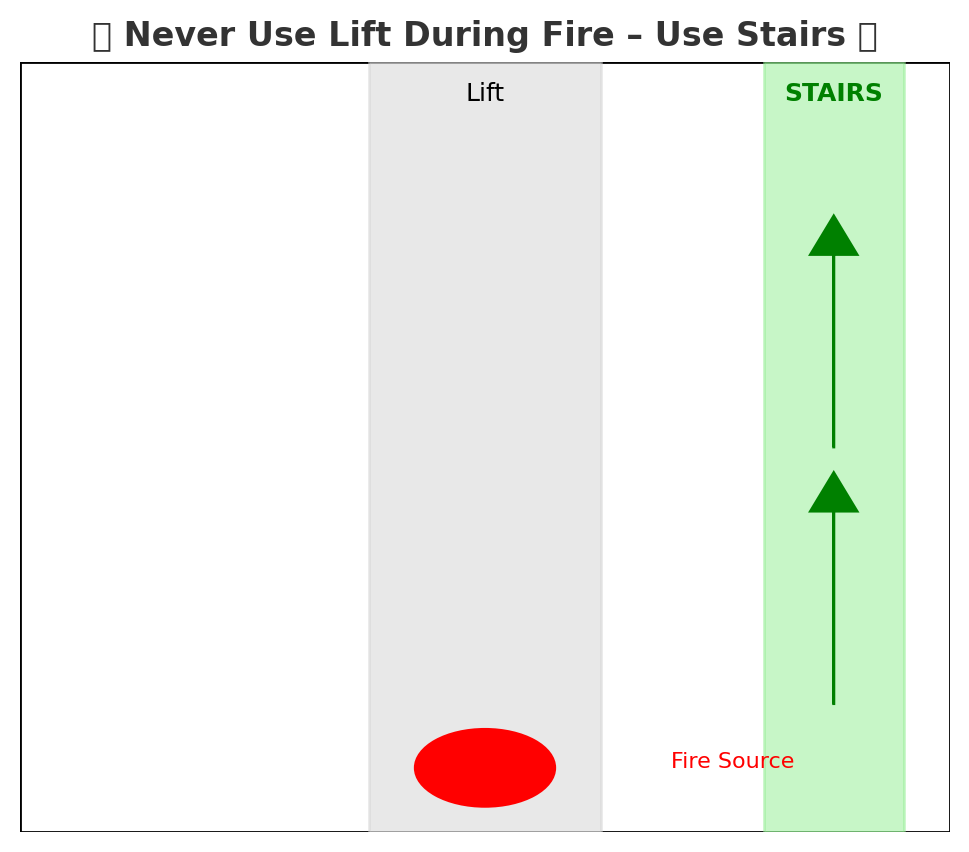
3. Visual Diagram Suggestion
❌ Lift, ✅ stairs as escape.
4. Common Mistakes to Avoid
❌ Using lift as shortcut during fire evacuation.
❌ Forcing open doors between floors — fatal falls happen.
❌ Panicking — it speeds up oxygen loss.

5. Where Should This Be Practiced?
Every high-rise RWA should conduct evacuation drills highlighting “Stairs Only During Fire.”

6. What You Can Do Today
✔ Learn location of staircases in your building.
✔ Carry a torch and whistle on keychains.
✔ Ask management if lifts have fire-rated doors and emergency power.

7. Related Case
“Delhi Anaj Mandi fire (2019) killed 43 people — several were found trapped in lifts, overcome by smoke.”

8. Final Words
“Lifts are convenience machines, not escape routes. In a fire — trust your legs, not the lift.”

Common unsafe practices

  • Relying on equipment without a hazard assessment
  • Blocking or compromising escape routes
  • Delaying the alarm or emergency call
  • Attempting a response beyond training or safe conditions
  • Re-entering before authorised clearance
  • Treating a checklist as a substitute for competent inspection
02
Watch & learn

Related Videos

Captions
Official Indian fire-safety guidance

Fire Safety

Bureau of Indian Standards · Hindi/English · Verified

Verified source

03
Facts & action

Evidence, Cases & Next Steps

Pan-India emergency number112
Portable extinguisher decisionSmall incipient fire, trained user and clear exit only
Escape routesKeep unobstructed and available
112Pan-India emergency number
Small incipient fire, trained user and clear exit onlyPortable extinguisher decision
Keep unobstructed and availableEscape routes
Do not use unless designed and officially directedLift use during ordinary building fire
NBC is a model code; adopted local rules and approvals governEvidence boundary

What the evidence supports

  • Pan-India emergency number | 112
  • Portable extinguisher decision | Small incipient fire, trained user and clear exit only
  • Escape routes | Keep unobstructed and available
  • Lift use during ordinary building fire | Do not use unless designed and officially directed
  • Evidence boundary | NBC is a model code; adopted local rules and approvals govern

Immediate prevention actions

  1. Save 112 and display the full address
  2. Identify two usable escape routes where possible
  3. Remove one obstruction or unsafe condition
  4. Check the relevant alarm, PPE or safety equipment
  5. Assign assistance for children, older people and people with disabilities
  6. Schedule the next drill, service or competent inspection

Emergency survival steps

  1. Raise the alarm and warn others
  2. Move away from smoke, fire, traffic, electricity or another immediate hazard
  3. Use the safest available exit and do not use lifts during an ordinary building fire
  4. Call 112 from a safe place with the full address and hazard details
  5. Assist others only within your capability and without losing your own escape
  6. Do not re-enter until the responsible authority gives clearance

Limitations

  • Requirements vary by occupancy, state, local authority, equipment, hazard and user capability. Existing article images are retained as editorial assets but their original reuse rights and captions require confirmation. Videos supplement—not replace—hands-on training or competent advice.
Sources and further readingDirectorate General Fire Services: National Building Code of India—Fire and Life Safety ↗Bureau of Indian Standards: National Building Code of India 2016 ↗Bureau of Indian Standards: Fire Extinguisher Consumer Guide ↗Emergency Response Support System ↗NCRB: Accidental Deaths and Suicides in India ↗Last reviewed 2026-09-02