
How to Use a Fire Extinguisher – The PASS Method
What needs attention
- The article topic must be linked to the actual occupancy and hazard
- Prevention and early warning provide more safety margin than last-second intervention
- Equipment is effective only when correctly selected, accessible and maintained
- People need short practised actions and a clear decision to stop and escape
- Children, visitors and people needing assistance require explicit planning
- Records, drills and inspections matter only when defects are corrected
Controls that reduce risk
- Complete a task- and site-specific hazard assessment
- Verify applicable Indian, state and local requirements
- Use competent inspection for installed systems and specialist hazards
- Keep alarms, exits, signs and emergency access usable
- Train intended users and practise evacuation
- Record defects with an owner and completion date
- Review the plan after changes, incidents or near misses
Understand and apply the guidance
1. Why You Must Know This
A fire extinguisher is one of the simplest life-saving tools, yet in India, 70% of people don’t know how to use one. Extinguishers are often treated like decorative red cylinders in corners of schools, offices, and malls. When a fire breaks out, panic freezes people — and by the time they figure out how to operate it, the fire has already spread.
👉 Remember: fires double in size every minute. Knowing the extinguisher in those first 60 seconds can mean the difference between a small incident and a deadly inferno.
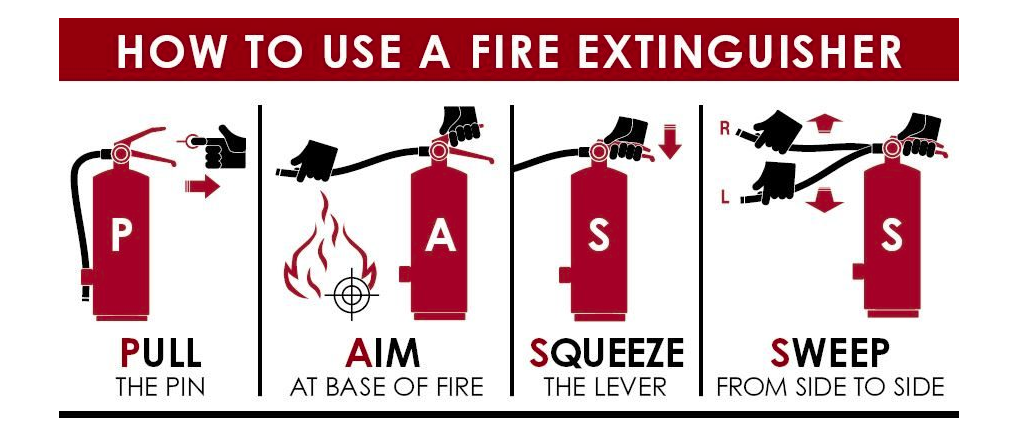
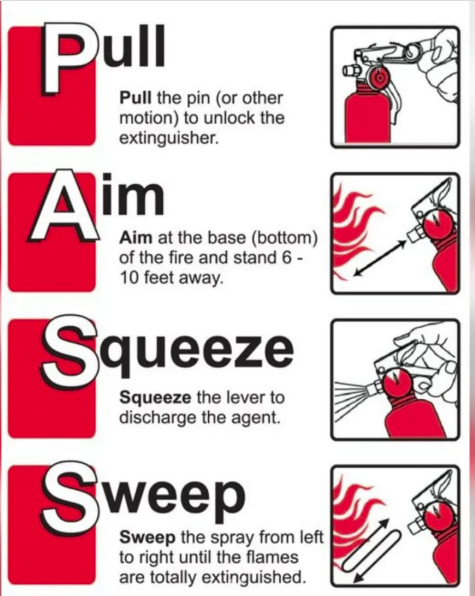
2. Step-by-Step Guide – The PASS Method
- P – Pull the pin: This unlocks the extinguisher. Without pulling the pin, the handle won’t release the agent.
- A – Aim low: Point the nozzle at the base of the fire — where the flames start. Spraying at the flames does nothing.
- S – Squeeze the handle: This discharges the extinguishing agent. Keep it pressed firmly.
- S – Sweep side to side: Move the spray across the base until the fire is completely out. Small, controlled sweeps are most effective.
3. Visual Infographic
4. Common Mistakes to Avoid
❌ Aiming at the flames — fire will keep burning.
❌ Standing too close — you risk burns. Maintain 6–8 feet distance.
❌ Wrong extinguisher type — using water on electrical or oil fires can make things worse.
5. Where Should This Be Practiced?
Every school, office, housing society, and hospital must conduct live extinguisher training once a year. Extinguishers should never just hang on walls — people must be taught to use them.
6. What You Can Do Today
✔ Locate the nearest extinguisher in your home/office today.
✔ Check its expiry date and servicing tag.
✔ Spend 2 minutes teaching your kids or colleagues how to read the label.
✔ Watch a demo video or join a short fire safety training session.
7. Related Case
“In the Hyderabad Gulzar House fire (2023), extinguishers were present, but no one used them. People panicked and fled, while four lives were lost unnecessarily. This is not a lack of equipment — it’s a lack of awareness.”
8. Final Words
“A fire extinguisher is not just a red cylinder. It is a tool that can save dozens of lives — if only someone knows how to use it. Knowledge is the trigger.”
Common unsafe practices
- Relying on equipment without a hazard assessment
- Blocking or compromising escape routes
- Delaying the alarm or emergency call
- Attempting a response beyond training or safe conditions
- Re-entering before authorised clearance
- Treating a checklist as a substitute for competent inspection