
How To SurviveLife-Safety Intelligence for IndiaEmergency Guide
Home / Safety Blogs / Hydrostatic Testing of Fire Extinguishers
Safety Blog · Ready For Review

Hydrostatic Testing of Fire Extinguishers
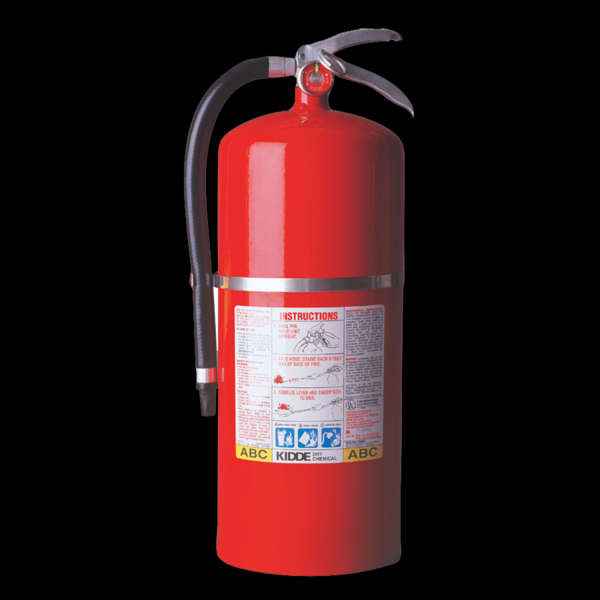
An extinguisher is a pressure vessel that may corrode, dent, crack, lose wall thickness or suffer heat damage even while it appears unused. Hydrostatic pressure testing removes the extinguishing medium and pressure, examines the body and components, fills the test item with a suitable liquid, raises it to the specified proof pressure for the specified time, and checks for leakage, distortion or unacceptable expansion. The exact method, test pressure and acceptance criteria depend on the cylinder or shell and applicable standard. A test is not a repair: badly corroded, fire-exposed, illegally welded, damaged, obsolete or failed extinguishers must be condemned and replaced. After a pass, the unit still needs correct drying, agent, seals, pressurisation, leakage checks, marking and restoration by a competent service provider.

TopicFire Safety · WorkplaceUpdated2026-08-31
01
The guide

Hydrostatic Testing of Fire Extinguishers

Hydrostatic Testing of Fire Extinguishers

What needs attention

  • IS 2190:2024 replaced the legacy assumption that an ABC extinguisher is universally tested every twelve years in India
  • Annex F gives three-year intervals for water and foam and five-year intervals for dry powder, CO₂ and clean-agent extinguishers
  • The Annex F minimum schedule shown in the published standard is 35 kg/cm² for 150 seconds for water, foam, dry powder and clean agent, and 225 kg/cm² for 30 seconds for CO₂; the service provider must still verify the extinguisher's factory test pressure and applicable cylinder specification
  • IS 2190:2024 requires trained persons with suitable pressure-testing equipment, safeguards and service manuals
  • High-pressure expellant cylinders for wheeled extinguishers have an interval not exceeding five years, with the standard's limited small-cartridge exemption
  • CO₂ hydrostatic testing is mandatory before refilling as required by IS 2190:2024 and the Gas Cylinder Rules framework
  • Non-rechargeable units are not handled like rechargeable cylinders; the standard directs discard or clean-agent recovery routes rather than routine hydrostatic testing
  • Hydrostatic testing does not prove discharge performance, correct extinguishing agent, hose flow, valve operation, fire rating or accessibility
  • A current test stamp cannot make a corroded, damaged, discharged, obstructed or wrong-type extinguisher acceptable
  • Taking multiple extinguishers away for testing without replacement coverage creates a separate fire-safety impairment

Controls that reduce risk

  1. Inventory every extinguisher by unique ID, type, size, manufacture date, last HPT and next due date
  2. Use IS 2190:2024—not an overseas table—as the starting schedule for Indian premises
  3. Verify CO₂ cylinders against PESO Gas Cylinder Rules and the accepted cylinder code before refilling
  4. Remove visibly damaged, corroded, leaking, fire-exposed or illegally repaired units from service immediately
  5. Use a competent service organisation with trained personnel, guarded equipment, calibrated gauges and agent-recovery capability
  6. Issue a work order that states the exact standard, test pressure, duration, acceptance criteria, marking and certificate
  7. Keep equivalent extinguishers in place while units are away
  8. Match returned serial numbers to certificates and verify agent, mass, pressure, seals, hose, gauge and instructions
  9. Record failures and physically ensure condemned shells cannot re-enter service
  10. Audit due dates at least every quarter and after any discharge, damage, heat exposure or questionable service

Understand and apply the guidance

Fire extinguishers need to be checked and tested regularly, just like any other part of a fire protection system, to make sure there are no problems and that the extinguisher will work well when it is used.

What is Hydrostatic Testing?

Every twelve years, a fire extinguisher is put through a hydrostatic test to see if it has any weak spots or other problems. During a hydrostatic test, the fire extinguisher is filled with water and put under a higher-than-normal amount of pressure. The fire extinguisher stays at this high pressure for a certain amount of time, during which it is checked for leaks and other problems.
Hydrostatic tests are done on ABC extinguishers that can be used more than once, but not on ones that can only be used once. On the label of the fire extinguisher, it will say whether it can be used more than once or only once.

Steps of a Hydrostatic Test

  • Visual inspection
  • Hose removal
  • Discharge
  • Valve removal
  • Pressure testing
  • Drain, Clean and Dry the Cylinder
  • Reassemble the Extinguisher

How Often Should My Extinguisher Be Inspected?

Fire extinguishers need to be checked, tested, and fixed on a regular basis to make sure they are ready to use. Building owners should look at fire extinguishers once a month to make sure they still meet NFPA standards. Visual inspections are done once a month to look for damage and make sure things are easy to get to.
A technician also needs to check on fire extinguishers once a year. During an annual check, the fire extinguisher is looked at and the tamper seal is taken off. Then, the pull pin is checked. After the pull pin has been checked, a new tamper seal is put on.
In addition to annual and monthly checks, hydrostatic tests are done once every 2 years.

Common unsafe practices

  • Applying a US twelve-year dry-chemical interval to extinguishers maintained under current Indian requirements
  • Testing every extinguisher at the same pressure and hold time
  • Using compressed air, nitrogen or CO₂ instead of the approved hydrostatic method
  • Pressurising before a full visual and internal examination
  • Testing a shell with illegal weld, patch, severe corrosion, damaged threads, fire exposure or obsolete construction instead of condemning it
  • Hydrotesting a non-rechargeable extinguisher as though it were serviceable
  • Releasing clean agent to atmosphere instead of using a recovery process
  • Leaving water inside a dry-powder or high-pressure cylinder after testing
  • Refilling with a different agent, mixing powder or using unapproved replacement components
  • Sending every unit in an area away together without temporary equivalent extinguishers
  • Accepting a sticker without a cylinder-specific test record and traceable service provider
  • Treating HPT as a substitute for routine inspection, annual maintenance and user training
02
Watch & learn

Related Videos

Captions
Maintenance demonstration

Fire Extinguisher Maintenance and Inspection

FIRE SAFETY PATHSHALA · Hindi · Verified

Verified with YouTube oEmbed; supplement with current IS 2190:2024 intervals in this article

03
Facts & action

Evidence, Cases & Next Steps

3 yearsWater and foam HPT intervalIS 2190:2024 Annex F
5 yearsDry powder, CO₂ and clean-agent HPT intervalCO₂ also before refilling as applicable
35 kg/cm²Annex F minimum test pressureWater, foam, dry powder and clean agent; hold 150 seconds
35 kg/cm² for 150 seconds under IS 2190:2024 Annex FWater
35 kg/cm² for 150 secondsFoam
35 kg/cm² for 150 secondsDry powder
225 kg/cm² for 30 seconds and before refilling as applicableCarbon dioxide
35 kg/cm² for 150 seconds with agent recoveryClean agent
Interval not exceeding five years, subject to the stated small-cartridge exemptionWheeled-unit high-pressure expellant cylinder

What the evidence supports

  • Water extinguisher | HPT every 3 years under IS 2190:2024 Annex F
  • Foam extinguisher | HPT every 3 years
  • Dry powder extinguisher | HPT every 5 years
  • Carbon dioxide extinguisher | HPT every 5 years and before refilling as applicable
  • Clean-agent extinguisher | HPT every 5 years with agent recovery, not atmospheric release
  • Proof medium | Liquid is used because compressed gas stores far more hazardous energy
  • Inspection before test | Threads, interior, exterior, dents, corrosion, repairs, heat exposure and obsolescence are screened first
  • Failed unit | Leakage or visible distortion means replacement; unsafe shells are destroyed, not returned to service

Immediate prevention actions

  1. Read the manufacture, last-test and next-due markings on every extinguisher
  2. Separate water, foam, dry powder, CO₂, clean agent, rechargeable and non-rechargeable units in the asset register
  3. Flag any unit using a blanket twelve-year HPT date for Indian compliance review
  4. Look for corrosion, dents, cuts, leakage, damaged threads or fittings, broken seals and off-range gauges
  5. Quarantine any extinguisher exposed to fire or excessive heat
  6. Check that service certificates match the physical serial numbers
  7. Verify competent-provider credentials, calibrated-equipment records and clean-agent recovery method
  8. Ensure temporary replacement coverage exists before the test batch leaves site
  9. Brief staff that extinguishers are only for small fires when there is a safe escape route

Emergency survival steps

  1. Do not touch, move or attempt to discharge an extinguisher that is bulging, badly corroded, leaking or heat damaged
  2. Keep people away and notify the responsible safety team or emergency service if a pressurised unit appears unstable
  3. Never loosen a valve, gauge, hose or fitting on a pressurised extinguisher
  4. Never perform a pressure test with compressed air or gas
  5. If a fire starts, raise the alarm, call 112 and keep an exit behind you
  6. Use an extinguisher only if trained, the fire is small and the correct unit is immediately available
  7. Stop and evacuate if one extinguisher does not control the fire, smoke worsens or the escape route is threatened
  8. Do not return a tested unit to service until it is correctly recharged, sealed, leak-checked, marked and installed
  9. Replace condemned units with the same suitable type and fire rating before restoring normal operations
  10. Give responders details of missing, discharged, isolated or suspect extinguishers and any affected area

Limitations

  • The publicly indexed BIS PDF link may be temporary; organisations should obtain the controlled current standard through BIS
  • The summary table does not replace the extinguisher nameplate, factory test pressure, manufacturer service manual, cylinder specification or PESO requirements
  • Specialised, obsolete, imported, composite, marine, aviation or mining extinguishers may have additional requirements
  • Hydrostatic proof testing is different from hydrostatic stretch testing and from discharge or performance testing
  • The listed pressures are Annex F minimum schedule values; applying them safely requires the exact test method and calibrated equipment
  • A passing HPT result does not predict the extinguisher's future condition or guarantee successful fire control
  • Embedded videos include older or overseas schedules and are labelled so viewers do not copy them into Indian compliance records
Sources and further readingBureau of Indian Standards: IS 2190:2024, Selection, Installation and Maintenance of First-Aid Fire Extinguishers—Portable and Mobile ↗Bureau of Indian Standards: Compendium on Fire Extinguishers, 2025 ↗Bureau of Indian Standards: Know Your Standard portal ↗Petroleum and Explosives Safety Organisation: Gas Cylinder Rules 2016 ↗PESO: Gas Cylinder Rules 2016 bilingual text—Rules 24, 26 and 27 ↗Oil Industry Safety Directorate: OISD-STD-142 February 2026 update applying revised IS 2190 HPT schedules ↗Gujarat Institute of Disaster Management: Codes and Standards Related to Fire Safety ↗OSHA: Portable Fire Extinguisher Hydrostatic Testing—mechanics and pneumatic-test hazard ↗Last reviewed 2026-08-31