
Understanding Fire Behavior: Key Factors and Stages
What needs attention
- The article topic must be linked to the actual occupancy and hazard
- Prevention and early warning provide more safety margin than last-second intervention
- Equipment is effective only when correctly selected, accessible and maintained
- People need short practised actions and a clear decision to stop and escape
- Children, visitors and people needing assistance require explicit planning
- Records, drills and inspections matter only when defects are corrected
Controls that reduce risk
- Complete a task- and site-specific hazard assessment
- Verify applicable Indian, state and local requirements
- Use competent inspection for installed systems and specialist hazards
- Keep alarms, exits, signs and emergency access usable
- Train intended users and practise evacuation
- Record defects with an owner and completion date
- Review the plan after changes, incidents or near misses
Understand and apply the guidance
Fire behavior refers to the manner in which fire reacts to the environment, including fuel, weather, and topography. Understanding fire behavior is crucial for effective fire prevention, firefighting strategies, and safety measures. This blog explores the key factors influencing fire behavior, the stages of fire development, and the implications for fire safety.
Key Factors Influencing Fire Behavior
- Fuel
- Type of Fuel: Different materials burn at different rates. Common fuel types include wood, paper, plastics, and flammable liquids.
- Fuel Load: The amount of combustible material present. A higher fuel load means more potential energy for the fire.
- Fuel Moisture Content: Moisture in the fuel can slow down the combustion process. Dry fuels ignite and burn more easily.
- Weather
- Temperature: Higher temperatures can increase the rate of combustion.
- Humidity: Low humidity levels dry out fuels, making them more flammable.
- Wind: Wind can supply additional oxygen to the fire, increase its intensity, and spread embers to new areas.
- Topography
- Slope: Fires burn more rapidly uphill than downhill due to the preheating of fuels upslope.
- Aspect: The direction a slope faces can influence fuel dryness. South-facing slopes in the Northern Hemisphere tend to be drier and more prone to fire.
- Barriers: Natural or man-made barriers can influence fire spread. Rivers, roads, and firebreaks can help contain fires.
Stages of Fire Development
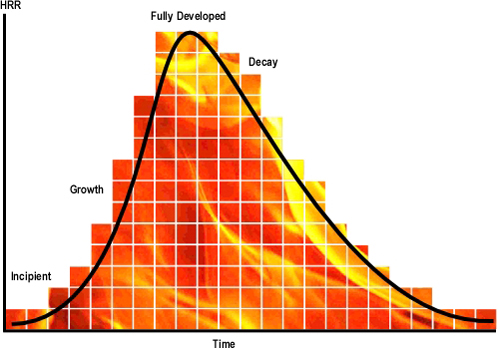
- Incipient Stage
- The initial stage where heat, oxygen, and a fuel source combine and start the combustion process. The fire is small and may be extinguished easily if detected early.
- Growth Stage
- The fire begins to spread as it consumes available fuel and oxygen. The heat generated preheats adjacent fuels, leading to increased combustion. Smoke production increases, and visibility can be significantly reduced.
- Fully Developed Stage
- The fire reaches its peak intensity. All available fuel is burning, and the fire is spreading rapidly. The heat generated is at its maximum, and the environment may become untenable for human survival.
- Decay Stage
- The fire begins to diminish as the fuel is consumed. Heat production decreases, and the fire becomes less intense. This stage continues until the fire is extinguished or burns out completely.
Implications for Fire Safety
- Early Detection and Intervention
- Detecting fires in the incipient stage allows for early intervention and can prevent the fire from spreading. Smoke alarms, heat detectors, and fire suppression systems are critical tools for early detection.
- Fire Prevention
- Understanding fuel sources and managing them can reduce fire risk. This includes proper storage of flammable materials, maintaining clearances around buildings, and removing dry vegetation.
- Firefighting Strategies
- Knowledge of fire behavior informs firefighting strategies. For example, understanding how wind affects fire spread can help in positioning firefighting resources effectively.
- Evacuation Planning
- Knowing how a fire might spread helps in planning safe evacuation routes. This is particularly important in residential areas near forests or in high-rise buildings.
- Building Design and Codes
- Fire-resistant building materials, proper ventilation systems, and adherence to fire codes can mitigate the impact of fires. Fire doors, sprinkler systems, and emergency exits are essential components of fire-safe buildings.
Conclusion
Understanding fire behavior is essential for effective fire prevention, firefighting, and safety planning. By considering factors such as fuel, weather, and topography, and recognizing the stages of fire development, we can better prepare for and respond to fire emergencies. Implementing comprehensive fire safety measures can save lives, protect property, and reduce the devastating impact of fires.
Common unsafe practices
- Relying on equipment without a hazard assessment
- Blocking or compromising escape routes
- Delaying the alarm or emergency call
- Attempting a response beyond training or safe conditions
- Re-entering before authorised clearance
- Treating a checklist as a substitute for competent inspection