
Understanding The Fire Triangle
What needs attention
- The article topic must be linked to the actual occupancy and hazard
- Prevention and early warning provide more safety margin than last-second intervention
- Equipment is effective only when correctly selected, accessible and maintained
- People need short practised actions and a clear decision to stop and escape
- Children, visitors and people needing assistance require explicit planning
- Records, drills and inspections matter only when defects are corrected
Controls that reduce risk
- Complete a task- and site-specific hazard assessment
- Verify applicable Indian, state and local requirements
- Use competent inspection for installed systems and specialist hazards
- Keep alarms, exits, signs and emergency access usable
- Train intended users and practise evacuation
- Record defects with an owner and completion date
- Review the plan after changes, incidents or near misses
Understand and apply the guidance
Fire safety education often starts with understanding the fundamental principles of fire behaviour, notably encapsulated in what’s known as the Fire Triangle. This simple yet crucial concept sheds light on how fires ignite, propagate, and what measures can be taken to prevent their occurrence or control their spread. In this comprehensive guide, we’ll delve into the intricacies of the Fire Triangle and its significance in fire safety protocols.
What is the Fire Triangle?
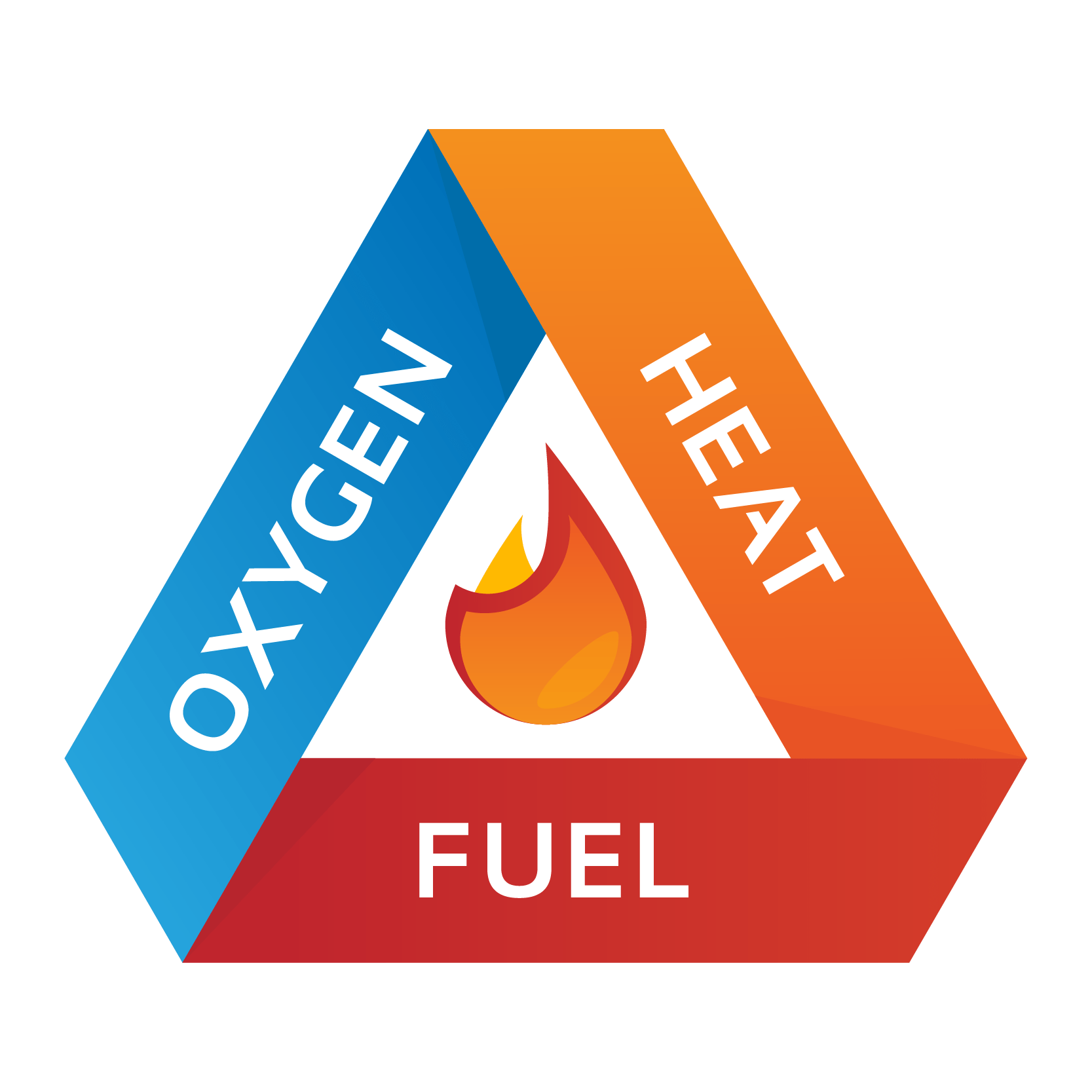
The Fire Triangle, also referred to as the Combustion Triangle, represents the three essential elements required for a fire to ignite and sustain:
- Fuel: Any material capable of burning, including wood, paper, oils, and fabrics.
- Heat: The energy necessary to initiate and continue the combustion process.
- Oxygen: The oxidizing agent that supports the chemical reaction of combustion.
These elements must coexist in specific proportions for a fire to occur. Disrupting any of these elements can help prevent or extinguish a fire.
The Evolution: Fire Triangle vs. Fire Tetrahedron
While the Fire Triangle serves as a foundational model, further research led to the development of the Fire Tetrahedron. This expanded concept includes a fourth element, chemical chain reaction, acknowledging the intricate chemistry involved in fire dynamics. The Fire Tetrahedron reinforces the understanding that fires result from a complex interplay of fuel, heat, oxygen, and a sustaining chemical reaction.
Safely Managing Fire Elements
- Removing Fuel: Utilize fire-resistant materials in construction and furnishings to minimize the availability of combustible materials.
- Reducing Heat: Employ methods like water application or fast-moving air to dissipate heat from a fire. Choose appropriate fire extinguishers, such as water mist extinguishers, for specific fire types.
- Limiting Oxygen: Use carbon dioxide or foam fire extinguishers to displace oxygen and suffocate the fire. Fire blankets can be effective for kitchen fires by smothering the oxygen supply.
Practical Applications in Fire Safety
Understanding the Fire Triangle/Tetrahedron is crucial in selecting the right fire extinguisher for different fire classes. It’s imperative to match the extinguisher type to the fire type to ensure effective suppression without exacerbating the situation. For instance, water extinguishers are unsuitable for electrical fires due to the risk of electrocution.
For more information on fire safety and compliance , visit HowToSurvive.in. Stay informed. Stay prepared. Together, let’s learn how to survive.
Common unsafe practices
- Relying on equipment without a hazard assessment
- Blocking or compromising escape routes
- Delaying the alarm or emergency call
- Attempting a response beyond training or safe conditions
- Re-entering before authorised clearance
- Treating a checklist as a substitute for competent inspection