
The guide
Early Suppression Fast Response Systems
What needs attention
- ESFR discharge is not a universal 100 gallons per minute; flow varies with K-factor and required pressure
- A 45-foot ceiling is not a universal ESFR limit; allowed height depends on a specific listed design table
- Large droplets and momentum help water penetrate a strong fire plume, but obstructions can redirect the pattern
- Ceiling-only ESFR often reduces in-rack piping, but some configurations still require in-rack sprinklers
- Solid shelves and blocked longitudinal or transverse flue spaces can defeat assumptions used in open-rack testing
- A fire pump is not automatically required if the verified water supply meets demand; it is required when pressure or flow is insufficient
- Fewer in-rack pipes may reduce impact exposure, but lifecycle cost must include water supply, pump, tank, structure and future storage restrictions
Controls that reduce risk
- Post the approved commodity, storage and ceiling-height limits at the warehouse control point
- Mark maximum storage height and required sprinkler clearance visibly
- Audit rack flue spaces and solid shelves on every storage walk
- Require fire-protection approval for new products, packaging, pallets, racks or automated storage equipment
- Compare the current sprinkler model and temperature rating with as-built drawings and listing data
- Repeat water-supply flow testing at the required interval and after network or pump changes
- Protect sprinkler pipe and valves from forklift impact and supervise all control valves
- Train warehouse staff that a layout change can be a fire-system design change
Understand and apply the guidance
Sprinkler systems with ESFR (Early Suppression Fast Response) are a type of fire protection that responds quickly and puts out fires by spraying a lot of water on them. Most of the time, ESFR systems are used in warehouses that store things in high stacks. They are often used instead of sprinkler systems that are built into the racks.

Benefits of ESFR Systems
- ESFR systems respond to fires faster than traditional sprinkler systems.
- Conventional sprinkler systems put out 25–30 gallons of water per minute, while ESFR systems put out around 100 gallons of water per minute, which is a lot of water on the fire.
- ESFR systems use bigger drops of water than traditional sprinkler systems, so they put out fires faster.
- Early Suppression Fast Response systems can be used in warehouses with ceilings up to 45 feet high.
- Accidental leaks are less likely to happen with these systems than with in-rack sprinkler systems, whose pipes could leak if they were hit by equipment used to move goods.
- Sprinkler systems are usually used to put out fires. ESFR systems are made to put out fires right where they start.
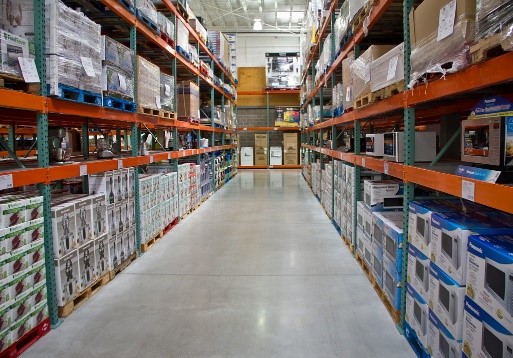
- ESFR systems protect high-piled storage, such as palletized, solid pile, shelf, bin box, and rack storage
- It costs less to install an Early Suppression Fast Response system than it does to put in sprinklers in the racks.
When deciding if an ESFR system is right for your building, you should talk to a fire protection contractor and think about the types of products being stored, how they are being stored, and the building’s height and type. Because ESFR systems need a lot of water, a fire pump is usually needed for this type of system.
Common unsafe practices
- Approving ESFR from warehouse height alone
- Using a generic 25-versus-100-gpm comparison without the sprinkler K-factor and design pressure
- Changing from cartons to exposed plastics or aerosols without fire-protection review
- Adding solid shelf decks, mesh with excessive blockage, banners, ducts or lights beneath sprinklers
- Stacking within the required clearance below the deflector
- Letting flue spaces close as loads lean, overhang or are shrink-wrapped
- Assuming ceiling-only protection always eliminates in-rack sprinklers
- Checking pump churn pressure but never proving the complete hydraulic demand at flow