
What happened here
 1 / 3
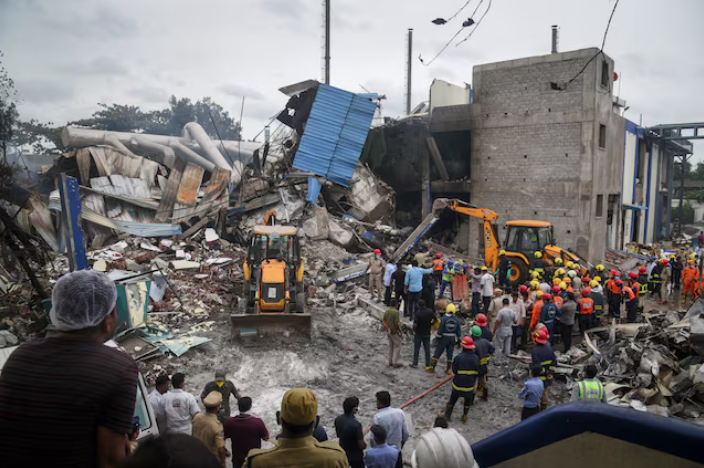
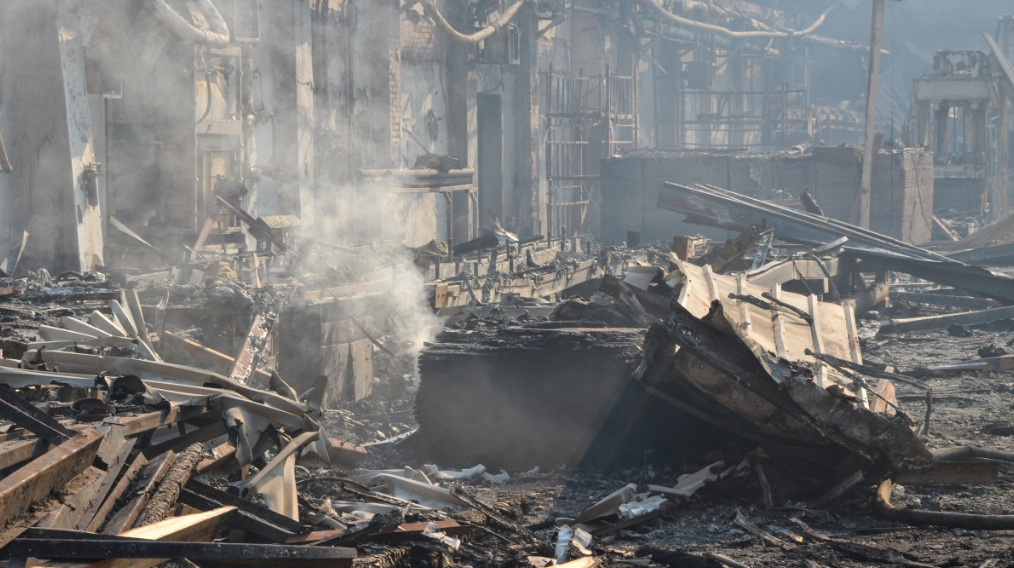
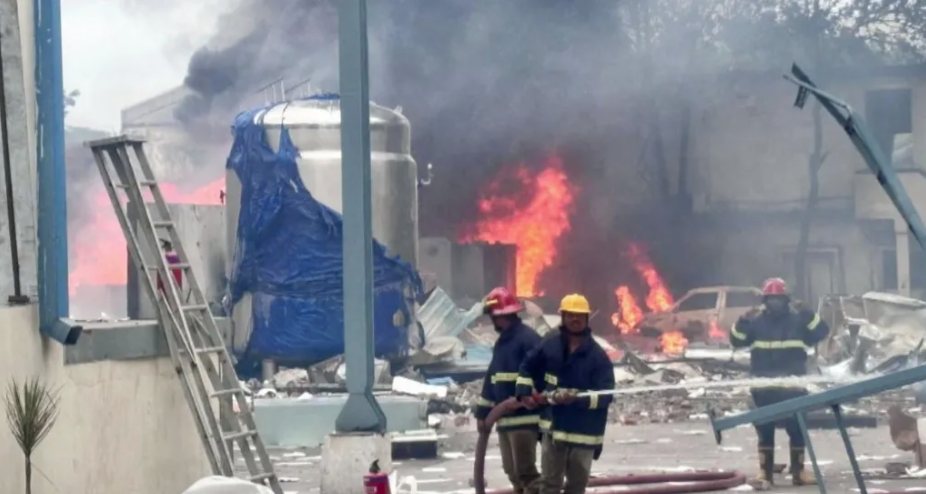
1 / 3 At about 9:25 AM on 30 June 2025, an explosion at Sigachi Industries' plant at Pashamylaram, Sangareddy district, Telangana, killed 54 people, including eight whose bodies were never found, and injured 28. A technical expert committee traced it to a cloud of microcrystalline cellulose powder ignited by burning bags at a sealing machine in the packing room, and found training, PPE, audits, firefighting and drills severely lacking. Fine powder in the air can explode; control dust and keep heat sources away from it.
Quick answers
What happened at Sigachi Industries in Telangana in June 2025?
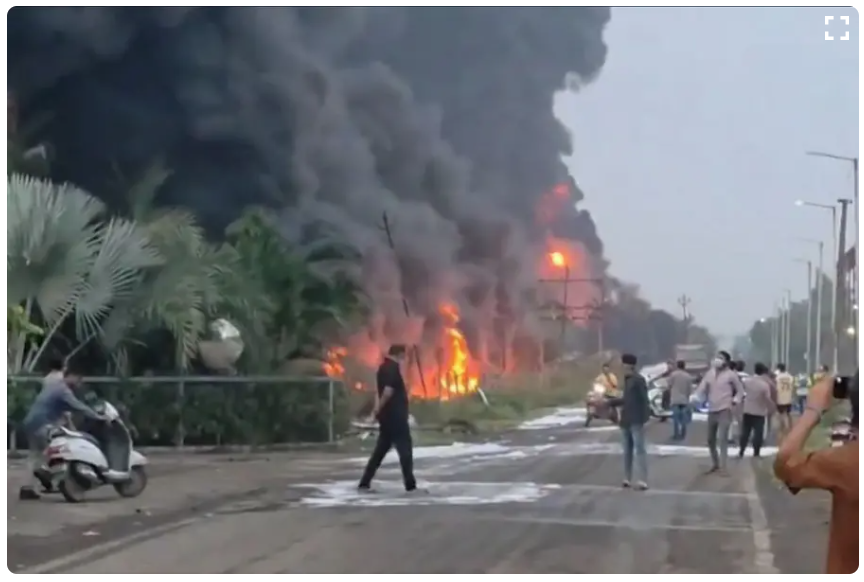
At about 9:25 am on 30 June 2025, a massive explosion followed by fire hit the Sigachi Industries plant in Pashamylaram, Sangareddy district, Telangana. Dozens of workers were killed, and several were trapped by flames and fumes.
What caused the Sigachi factory explosion?
A technical expert committee placed the epicentre in the packing room. It concluded that burning plastic bags at a heat-sealing machine ignited a cloud of fine microcrystalline cellulose powder. Early reports of a reactor or spray-dryer blast were not borne out by that report. Legal responsibility is still a matter for the courts.
Why can fine powder in factories explode?
Fine organic powder dispersed in air can explode. Temperature, airflow and pressure alarms with interlocks, good housekeeping and explosion isolation are critical safeguards, and any production increase needs a fresh safety review.
What should you do after an explosion at a chemical factory?
Move away from the source immediately, as secondary blasts are common, and stay upwind of smoke. Cover your nose and mouth, call 101, 108 or 112 and report the chemical if known, and never re-enter until authorities declare it safe.
On a Monday morning in June 2025, 143 workers and three security guards were on duty at a pharmaceutical ingredients plant near Hyderabad. At about 9:25 AM, fine white powder hanging in the air of the packing room exploded. Fifty-four people died. Eight of them were never found.
Date and place
- Date: 30 June 2025, Monday, at about 9:25 AM
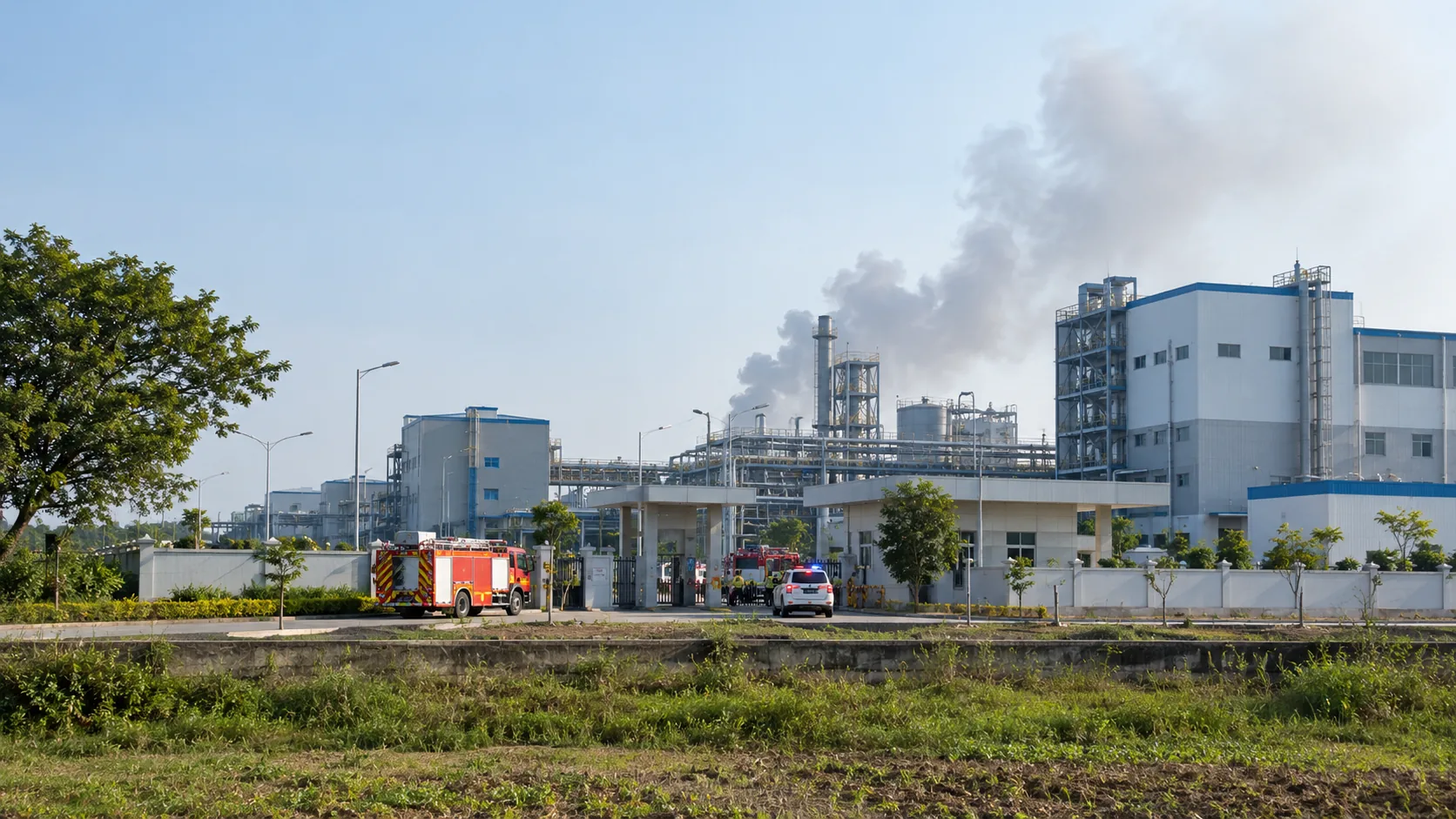
- Place: Sigachi Industries Limited, Pashamylaram, Sangareddy district (near Hyderabad), Telangana
What happened
- A huge explosion, followed by fire, tore through the production block of Sigachi Industries, which makes microcrystalline cellulose (MCC), a fine powder used in medicines.
- A technical expert committee later traced the blast to the packing room, near a bag-sealing machine. It concluded that burning plastic bags at the machine ignited a cloud of fine MCC powder: a dust explosion. The spray dryer collapsed two to three seconds after the blast.
- Early counts changed many times. On 1 July 2025 the state reported 44 dead as rescue work went on. In August 2025 the Telangana government told the High Court that 54 people had died, including eight whose bodies were never found, and that 28 were injured (11 seriously).
- Sigachi Industries reported a standalone net loss of ₹100.35 crore for April to June 2025, after exceptional losses of ₹121.01 crore linked to the incident.
What went wrong
The Technical Expert Committee’s report of 4 September 2025, filed before the National Green Tribunal, listed these failures:
- Fine combustible dust in a cramped room. MCC powder hung in the air of a confined, congested packing room, with more than 17 tonnes of powder close by.
- A heat source right next to the dust. Bags were heat-sealed in the same room, and burning bags at the sealing machine set off the dust cloud.
- A plant that outgrew its building. The structure was designed in 1994. Bigger and heavier machines were added over the years by altering the same structure, and workers reported vibration.
- Weak safety basics. The committee found training, PPE, safety audits, firefighting facilities and mock drills “severely lacking”.
- Helpers running machines. The packing operator said the production department gave him helpers each day to run the weighing, sealing and stitching machines.
Facts that are easy to miss
- 143 workers and 3 security staff were on site at the time, according to the committee.
- Eight workers were never found. In August 2025 their families were still waiting for death certificates.
- Of the 46 dead whose bodies were recovered, 20 were regular employees, 16 temporary and 10 contract workers. They came from at least nine states, mostly Bihar, Odisha and Andhra Pradesh.
- The Chief Minister announced ₹1 crore for each bereaved family. A year later, families told The New Indian Express they had received ₹25 lakh to ₹50 lakh, and the balance was disputed.
How it could have been prevented
- Flame-proof or explosion-proof electrical fittings wherever dust is present, as the committee recommends.
- Dust extraction at the source and approved vacuum cleaning wherever powder is produced, packed or released. Never sweep or blow dust with compressed air.
- Keep heat sources away from dust. Sealing machines, heaters and hot work should be separated from areas where powder hangs in the air.
- A yearly risk analysis by a competent person for Orange and Red category industries, with dust-explosion controls based on NFPA 660 (2025), the US combustible dust standard the committee referred to.
- A fresh structural and safety review whenever production or machinery is increased.
- Training, PPE and regular drills for everyone, including temporary and contract workers and daily helpers.
- Separate high-risk operations from offices, canteens and storage blocks.
- Third-party safety audits of hazardous process industries, followed up by the Factories Department.
If you are ever caught in a factory explosion or fire
- Move away from the source at once. A second explosion can follow, especially where dust has been thrown into the air.
- Cover your nose and mouth with a cloth to reduce the smoke and fumes you breathe.
- Head for open air, upwind of the smoke, and keep out of low pits and basements where gases can collect.
- Do not use lifts. Use the nearest safe stairs.
- Help others out only if you can do it without losing your own way out.
- If a chemical gets on your skin or in your eyes, rinse with plenty of clean running water for at least 15 minutes.
- Call 101, 108 or 112 and tell them which chemical or dust is involved if you know.
- Go to the assembly point so supervisors know you are safe, and never go back in until the authorities say so.
- Get a medical check-up even if you feel fine; breathing problems can show up later.
Key numbers
- Deaths: 54, including 8 workers whose bodies were never found (state affidavit, August 2025)
- Injured: 28, of whom 11 seriously (state affidavit, August 2025)
- Time of explosion: about 9:25 AM, 30 June 2025
- Type: combustible dust (MCC) explosion, followed by fire
- Cause (technical committee): burning bags at a heat-sealing machine ignited an MCC dust cloud in the packing room
- People on site: 143 workers and 3 security staff
- Financial impact: standalone net loss of ₹100.35 crore for April to June 2025, after ₹121.01 crore of exceptional losses



The human cost
- Most of the dead were workers who had come from other states to earn a living, many of them on temporary or contract terms.
- For the families of the eight missing workers, there was no body to cremate and, for months, no death certificate.
What needs to change
- Growing production without growing safety is a disaster waiting to happen.
- Every factory that handles fine powders must treat dust as an explosion hazard: extraction, housekeeping and no ignition sources nearby.
- Every hazardous factory must keep an on-site emergency plan and mutual-aid arrangements with neighbouring units.
- People living near industrial areas should know the emergency siren codes and assembly points.
- Accident reporting must be transparent, and compensation for contract workers’ families must be paid in full and on time.
What you can do today
- If you work with powders such as flour, sugar, cellulose, plastics or metal dust, ask your supervisor how dust is controlled and cleaned.
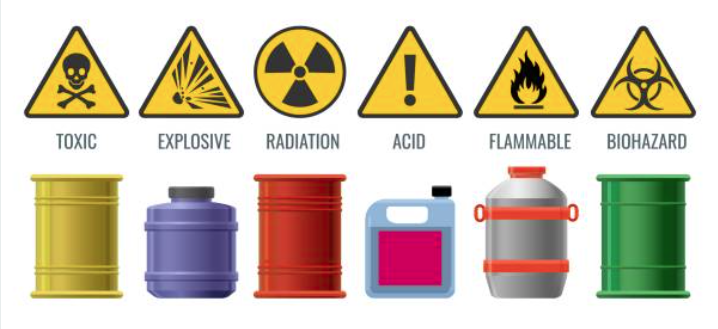
- Learn the GHS hazard symbols on chemical bags and drums.
- Report unsafe chemical storage or dust build-up to the Factories Department or the fire service.
- Support workers’ right to training and protective equipment, including contract workers.
- Share this story. Profit without safety is a loss we all pay for.
In a few seconds, a powder used to make medicines took 54 lives. When safety is ignored, any factory can become a time bomb.
Latest update (16 October 2026)
Police arrested Sigachi’s managing director and CEO, Amit Raj Sinha, on 27 December 2025 under BNS sections 105, 110 and 117, ETV Bharat reported. Two days later, death certificates were issued for the eight workers whose bodies were never found. On 3 February 2026 the Telangana High Court granted him conditional bail, noting that the investigation was complete and a chargesheet had been filed.
Compensation remained in dispute. In January 2026 Sigachi told the High Court its share was limited to Rs 42 lakh per family out of the Rs 1 crore announced, and the court asked the state to explain the gaps. We found no trial outcome by 16 October 2026.
More on Hyderabad: see our Hyderabad fire and emergency safety guide for fire brigade numbers, every fire station and the local risks to know.
- Explosion and fire in the production block at Pashamylaram
- State bulletin reports 44 dead as rescue continues
- State tells High Court 54 died, including eight still missing; 28 injured
- Technical committee places the epicentre at the packing-room sealing machine (MCC dust explosion)
- Families report compensation still only partly paid
- Police arrest Sigachi MD and CEO Amit Raj Sinha under BNS sections 105, 110 and 117; remanded to judicial custody (ETV Bharat)
- Death certificates issued for the eight workers whose bodies were never found (Deccan Herald)
- Sigachi tells the High Court its share of compensation is limited to Rs 42 lakh per family of the Rs 1 crore announced (Siasat)
- Telangana High Court grants the CEO conditional bail, noting the chargesheet has been filed (Telangana Today)
- No trial outcome found; compensation still disputed
Why consequences escalated
- Fine MCC powder hanging in the air of a cramped packing room turned into an explosive dust cloud
- Burning bags at a heat-sealing machine in the same room provided the ignition
- Over 17 tonnes of powder close by fed the explosion
- A 1994 structure had been altered repeatedly for heavier machines, and workers reported vibration
- Training, PPE, safety audits, firefighting facilities and mock drills were severely lacking
- Daily helpers were running machines, and many of the dead were temporary or contract workers
Failures and risk multipliers
- Letting fine powder hang in the air of an enclosed room
- Running a heat-sealing machine where dust was present
- Adding heavier machinery without a fresh structural review
- Using untrained helpers to operate machines
- Skipping training, PPE, audits and drills
- Not knowing at once who was missing after the blast
Actions that reduce risk
- Install dust extraction at every point where powder is produced, packed or released
- Use flame-proof or explosion-proof electrical fittings in dust areas
- Separate heat sources and hot work from dusty areas
- Carry out a yearly risk analysis by a competent person
- Review structure and safety whenever production is increased
- Train every worker, including contract staff and helpers, and hold regular drills
- Keep an up-to-date headcount system for the assembly point
Leave a comment