The guide
Fire Safety Tips for the Summer
What needs attention
- The old article's figure of 8,900 gas-grill fires was not the total annual grill-fire estimate; NFPA reported 10,600 grill-related fires, of which 8,900 involved gas-fuelled grills
- Indoor use of propane, charcoal or wood-pellet grills creates both fire and carbon-monoxide hazards
- Failure to clean, gas leaks or breaks, unattended cooking and proximity to combustibles were leading grill-fire factors in the cited NFPA study
- Air conditioners should not be periodically switched off merely to prevent fire; correct circuit capacity, condition, installation, cleaning and competent maintenance matter
- Fireworks can ignite clothing, roofs and dry vegetation; attending a professional public display avoids private ignition risk
- Wind-driven embers can reach a building before visible flames
Controls that reduce risk
- Test smoke alarms and check the household escape plan
- Inspect AC plugs, sockets and cables for heat, looseness, damage or discoloration
- Use a dedicated correctly rated circuit where required and arrange competent repair for faults
- Move grills away from walls, eaves, branches, stored fuel and escape routes
- Keep children and pets at least 3 feet from the grill
- Remove dry leaves and branches from roofs, gutters, balconies and the immediate area around the home
- Prepare a go-kit with medicines, documents, water, torch, chargers and protective masks
- Save 112 and follow local fire, forest and weather alerts
Understand and apply the guidance

During the summer, fires are common because it is hot and dry for a long time. When you enjoy your favorite summer activities, like grilling, campfires, and fireworks, it’s important to know how to stay safe around fire. Follow these fire safety tips this summer to keep yourself, your family, and your friends safe.
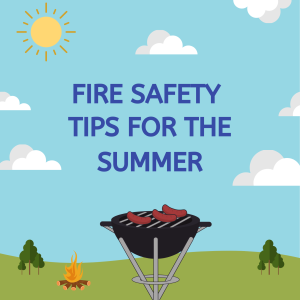
- Practice Safe Grilling:- An average of 8,900 house fires a year are caused by gas grills. To keep these fires from happening, it’s important to grill in a safe way. Propane and charcoal grills should never be brought inside the house to cook on.
Before grilling, it’s important to clean the grill to get rid of any grease or buildup that could catch fire. You should keep your grill away from your house, trees, and overhangs. Last but not least, you should never leave your grill alone.
- Use Campfire Safety:- Campfires are a common thing to do in the summer, but they should be used in the right way. Always make sure you know the rules and restrictions about campfires in your area. Some places don’t let people have campfires because the grass is too dry or there is a higher risk of wildfires. Always check your surroundings and get rid of anything that could catch fire, like dry brush or trees that hang over your head. A fire pit is the best way to keep the fire in one small area. Never leave the fire unattended, and make sure the flames are completely out before leaving the area. When you have people over, make sure everyone knows how to stop, drop, and roll if their clothes catch on fire.
- Execute HVAC Maintenance:- Most people don’t think to check HVAC (heating, ventilation, and air conditioning) maintenance as a way to prevent fires. During the hot summer months, most people run one or more air conditioners for a long time. Running these systems at the same time or for a long time can cause them to overheat, which can start a fire. Give your AC units a break every so often to keep them from getting too hot.
- Before the summer heat starts to rise, you should check your HVAC systems for dust buildup and make sure they are working properly.
- Proper use of Fireworks:- The best way to make sure fireworks don’t start fires is to go to public shows where fireworks are set off by experts. Fireworks are dangerous and only fun when they are used the right way. When you use fireworks, make sure to stay away from buildings, dry plants, liquids that can catch fire, and other people. Don’t try to light a firework again if it didn’t work the first time.
- Be Aware of Wildfires in Your Area:- Summer is also the time of year when wildfires happen in many parts of the country. If wildfires are common in your area, make sure you know what to do. Make a plan for how you and your family can get out of the house and the area safely. Also, make sure you have a fire safety pack in case wildfires force you to leave your home. You can also protect your home by clearing the area around it of trash and dead plants to make a natural safety zone. Lastly, make sure your house is clearly marked so that the fire department can find you quickly if there is an emergency.
- Be Prepared for Unexpected Fire Outbreaks:- If you follow these tips for fire safety, the chance of a fire is much lower, but not completely gone. Make sure you know where the closest fire extinguisher is in case your grill, campfire, home systems, or fireworks start a dangerous fire. Follow the NFPA’s rules and make sure that your summer activities are safe over the next few months.
Common unsafe practices
- Using a grill, charcoal brazier or generator indoors, in a garage or on an enclosed balcony
- Lighting a gas grill with the lid closed
- Leaving cooking, a fire pit or campfire unattended even briefly
- Pouring petrol, spirit or another volatile liquid onto a fire
- Placing warm charcoal or ash in plastic, paper or ordinary waste
- Running high-load cooling equipment through undersized extension leads or loose multi-plug adaptors
- Resetting a breaker repeatedly without investigating the fault
- Lighting fireworks near people, animals, buildings or vegetation, or relighting a failed device
- Waiting to see flames before obeying a wildfire evacuation direction