
What is an AED?
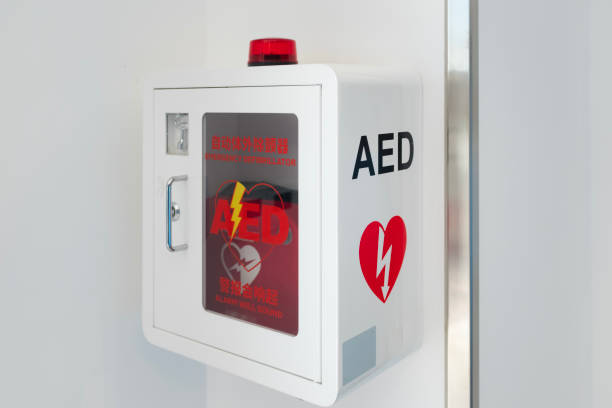
What needs attention
- Cardiac arrest is not the same as a heart attack, although a heart attack can lead to cardiac arrest
- CPR circulates some blood; an AED may correct ventricular fibrillation or pulseless ventricular tachycardia
- A 'no shock advised' message does not mean the person is safe—resume CPR and continue emergency care
- The AED's analysis and safety prompts are designed to guide lay rescuers
- Early CPR and AED use can substantially improve survival, but no individual outcome is guaranteed
- Placement should be based on response-time testing, population, site layout and risk—not an unsupported one-device-per-floor rule
- A visible cabinet is not an AED programme unless pads, battery, accessories, training and response procedures remain ready
Controls that reduce risk
- Build a cardiac-emergency response plan around immediate recognition, 112 activation, CPR and AED retrieval
- Time the round trip from occupied areas to the proposed AED location during normal and restricted access
- Use clear standard signage and keep the cabinet unobstructed
- Train responders across every shift and refresh practical skills at the interval required by the training provider
- Inspect the status indicator, battery, pads, seals and accessories at the manufacturer's interval and after every use
- Track pad and battery expiry dates before they lapse
- Keep gloves, scissors, a razor, towel and CPR barrier with the AED where recommended
- After use, transfer care to EMS, preserve the event record, replace consumables and conduct a supportive debrief
Understand and apply the guidance
AEDs, or Automated External Defibrillators, are used to help people in sudden cardiac arrest during CPR. When someone goes into cardiac arrest, AEDs are used to check the rhythm of their heart and deliver an electric shock (defibrillation) that can help the heart regain its rhythm. Some AEDs also help people give better CPR by giving real-time feedback and a timer.
Why Do You Need an AED?
Sudden cardiac arrest is one of the main reasons people die all over the world. AEDs are the only way to get a person whose heart has stopped beating back into rhythm after a cardiac arrest. When someone goes into cardiac arrest, you should always call emergency and ask for help from a professional. But it takes first responders an average of 8 to 12 minutes to get there, and for every minute that goes by without defibrillation, the chances of survival go down by 10%. It is very important to have an AED in your building and trained people who know how to use it.
Are AEDs Required by Law?
Different states have different rules about whether or not businesses, schools, and public places need AEDs. Private businesses are not required by common law to have AEDs, but you should find out what the rules are in your state. Some places, like fitness centers, where sudden cardiac arrest is more likely to happen may have stricter rules about AEDs.
Installation of AEDs
Within three minutes of a person passing out, an AED should be able to be found, turned on, and used to give a shock. If you want to put an AED in your building, you should think about the following:
- Have at least one AED on each floor of offices, schools, and other buildings with more than one level.
- Put AEDs in places where they are easy to reach.
- Put signs on the wall that are easy to read.
- An AED in a public place shouldn’t be more than 48 inches high.
- Put an AED near a phone where emergency can be called.
You should keep things like a CPR mask, gloves, a safety razor, blunt scissors or shears, absorbent towels, and a biohazard bag near your AED. These things make it easier to do CPR.
If you want to put AEDs in your building but don’t know where to start, you should hire a professional who knows where to put them and how to do it according to the manufacturer, OSHA, and other rules.
AED Training
If your staff doesn’t know how to use an AED, it won’t help anyone. Get a certified instructor to teach your employees how to perform CPR and how to use an AED. Having people in your business who know how to do resuscitation can help save lives.
AED Inspections
According to OSHA rules, AEDs must be checked, tested, and kept up to date in the way that the manufacturer says. You can pay a professional to look at your AEDs and make sure they are working correctly. Checking the battery, the status of the indicator light, any cracks or damage, and making sure the AED pads are sealed and not past their expiration date are all common parts of an inspection.
Installing and checking AEDs is an important part of making sure your building is safe for people. Installing AEDs like the Zoll AED 3, which give real-time feedback to help guide rescuers as they do CPR, can save lives.
Common unsafe practices
- Waiting for a doctor before starting CPR or switching on the AED
- Treating occasional gasps as normal breathing
- Stopping CPR for a long time while the AED is unpacked or pads are prepared
- Touching the person during rhythm analysis or shock delivery
- Removing the pads after a 'no shock advised' message instead of resuming CPR
- Believing an AED can accidentally shock a normal rhythm when used as directed
- Hiding or locking the AED where rescuers cannot retrieve it quickly
- Copying US legal, mounting-height or inspection claims into an Indian programme without local review