
What happened here
 1 / 5
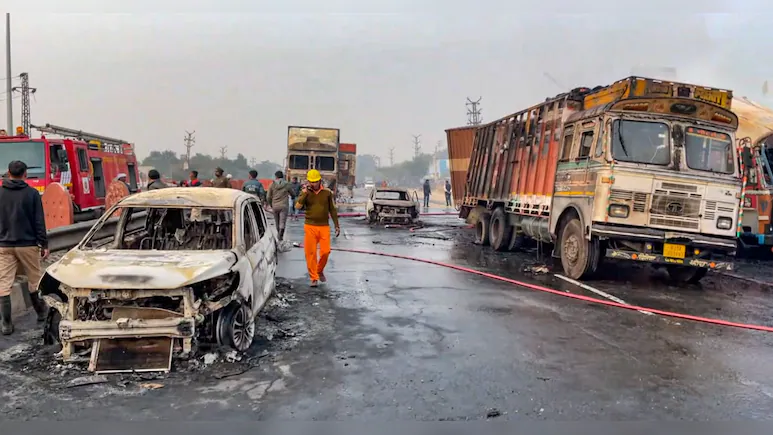
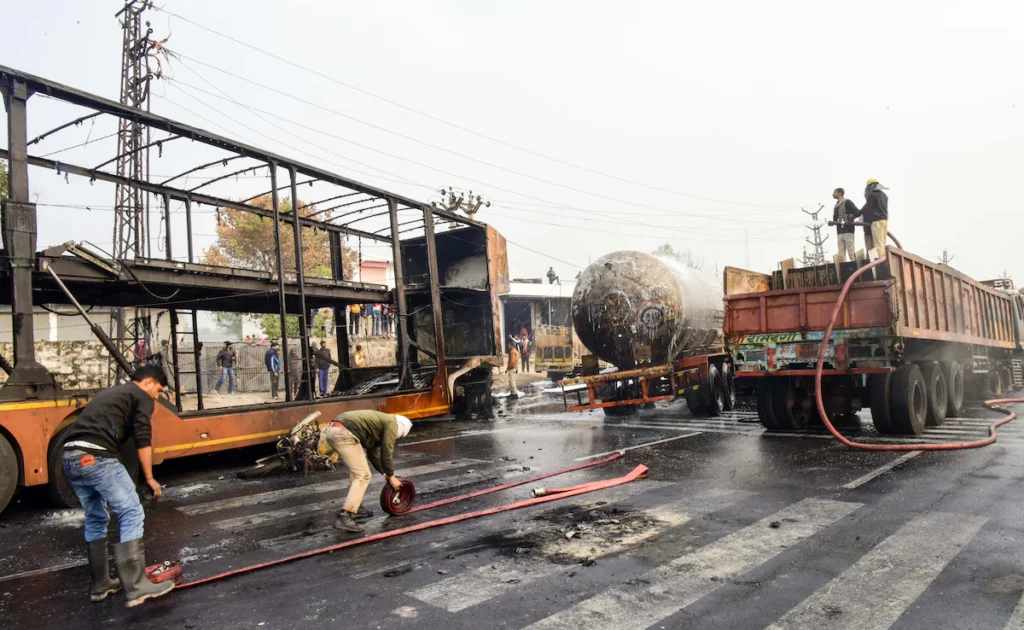
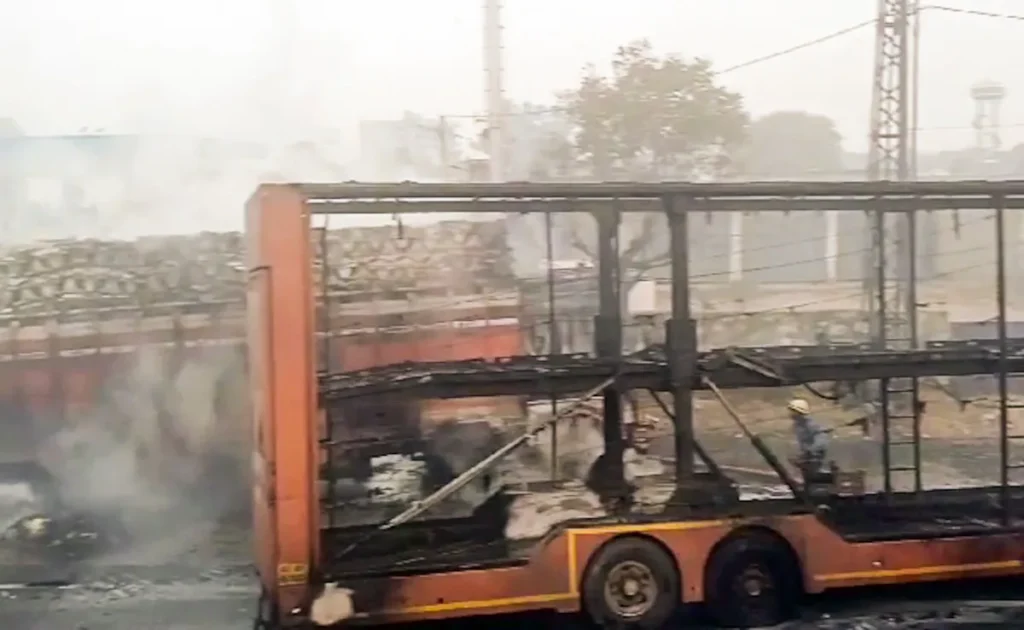
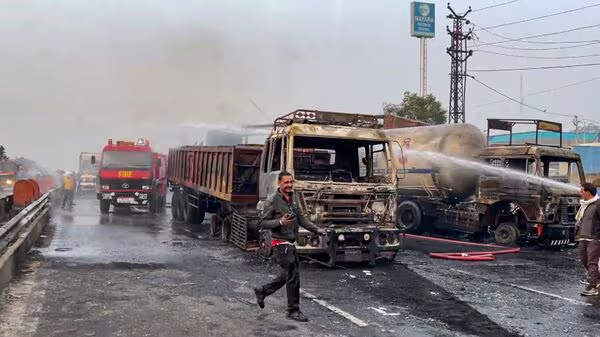
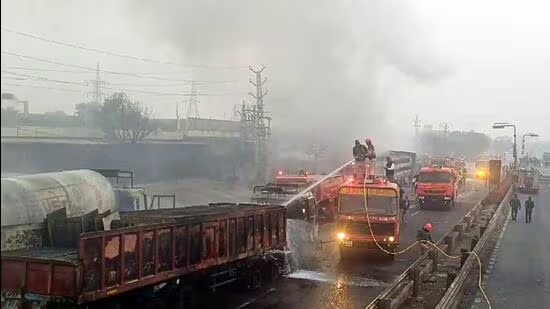
1 / 5 A collision sheared the LPG tanker’s bottom lines, releasing gas that ignited across the highway; PESO’s final annual report records 20 deaths and 24 injuries.
Incident Overview
On a foggy morning at around 5:30 AM, an LPG tanker made a U-turn on the Jaipur-Ajmer highway. During the maneuver, it collided with a truck carrying bedsheets, causing the tanker’s safety valves and nozzles to break. The leaked gas led to a massive explosion, resulting in a devastating fire that engulfed over 40 vehicles, leaving 14 people dead and 23 others injured.
Key Details of the Incident
- Location: Jaipur-Ajmer highway near Bhankrota, Rajasthan.
- Time: Early morning, winter conditions contributing to low visibility.
- Casualties:
- 14 fatalities, including Rajasthan Police constable Anita Meena.
- 23 injured, with 30 additional burn victims hospitalized.
- Damage: Over 40 vehicles, including a sleeper bus, destroyed in the fire.
Sequence of Events
- The LPG tanker, while taking an unauthorized U-turn on the highway, collided with an oncoming truck.
- Impact caused the tanker’s valves and nozzles to break, leading to gas leakage.
- Gas ignited, triggering an explosion and massive fire.
- Victims in nearby vehicles, including a sleeper bus, were unable to escape the inferno.
- The fire department took over seven hours to control the blaze, highlighting the intensity of the incident.
Eyewitness Accounts
- Eyewitnesses described scenes of panic as people ran to escape the flames.
- Flames were visible from a kilometer away, emphasizing the scale of the fire.
Contributing Factors
- Highway Infrastructure Issues:
- Ongoing construction left the highway incomplete and poorly managed.
- Lack of high-mast lighting, radium markings, and proper signage exacerbated risks.
- Driver Actions:
- The tanker driver, Jaiveer, fled the scene after informing the vehicle owner, fearing an explosion.
- Safety Measures:
- The tanker’s safety mechanisms failed to prevent gas leakage during impact.
Response and Investigation
- Emergency Services:
- Fire brigades and ambulances faced challenges reaching the site due to traffic congestion and ongoing construction.
- Investigation:
- Authorities questioned the tanker driver and requested the vehicle’s fitness certificates.
- Concerns raised over the design and maintenance of modern LPG tankers.
Impact on Victims
- Families were devastated, with some, like constable Anita Meena’s husband, identifying bodies from personal belongings.
- The incident left behind widows, orphans, and traumatized survivors.
Key Issues Identified
- Road Safety Deficiencies:
- Poor traffic management and narrow highway cuts.
- Infrastructure Gaps:
- Lack of cloverleaf interchanges and emergency response facilities.
- Safety Protocol Lapses:
- Absence of robust mechanisms to prevent gas leakage.
Lessons Learned and Recommendations
- Highway Infrastructure:
- Complete pending construction and ensure proper road signage, radium markings, and lighting.
- Ban U-turns for heavy vehicles on highways.
- Regulatory Measures:
- Enforce stricter safety standards for vehicles carrying hazardous materials.
- Regular inspections to ensure compliance with fitness certificates and safety norms.
- Emergency Response Training:
- Train drivers of hazardous material vehicles in emergency handling and fire prevention.
- Public Awareness:
- Conduct road safety campaigns to improve awareness and traffic sense.
Conclusion
The Jaipur-Ajmer highway fire incident underscores the urgent need for comprehensive reforms in road safety, vehicle compliance, and emergency response mechanisms. Addressing these gaps is critical to preventing future tragedies of this magnitude.





- LPG tanker takes a U-turn near the DPS cut
- A container truck strikes the tanker
- Bottom inlet and outlet lines shear
- Escaping LPG forms a large fire spreading across NH48
- Fire, police, medical and investigation teams respond
Why consequences escalated
- Unprotected bottom fittings were vulnerable during lateral collision
- A high-flow LPG release created a rapidly expanding flammable cloud
- Road geometry and tanker manoeuvring were central exposure factors
- Traffic exclusion and immediate uphill/upwind withdrawal are essential
- Dangerous-goods routing and junction design require joint review
Failures and risk multipliers
- Failing to identify and control the dominant fuel or energy hazard
- Allowing detection, suppression or escape systems to remain absent or unserviceable
- Failing to isolate the public and neighbouring occupancies from escalation
- Delaying emergency notification or providing incomplete hazard information
- Treating approvals as a substitute for checking actual site conditions
People closest to the evidence
““Safety lesson””
Incident control begins before ignition: identify the hazard, limit the inventory, detect early, protect escape and give responders accurate information.
Actions that reduce risk
- Verify hazardous-material and battery inventories
- Inspect alarms, suppression, exits and emergency lighting
- Keep emergency and fire-service access unobstructed
- Confirm isolation and shutdown procedures
- Run a scenario-specific drill with every shift
- Prepare public warning and accountability procedures
Leave a comment