
What happened here
 1 / 4
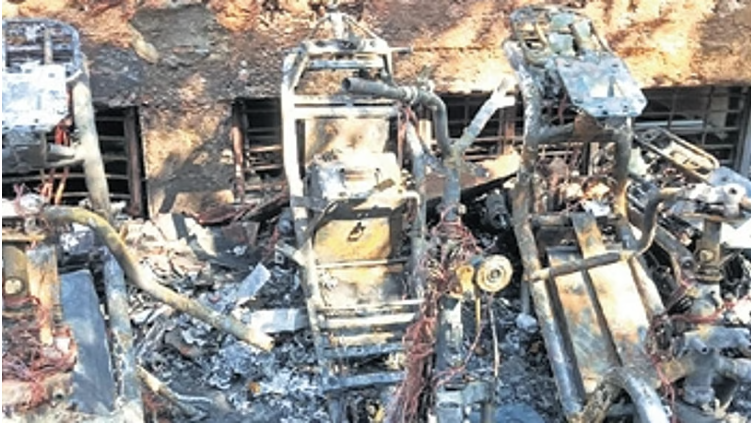
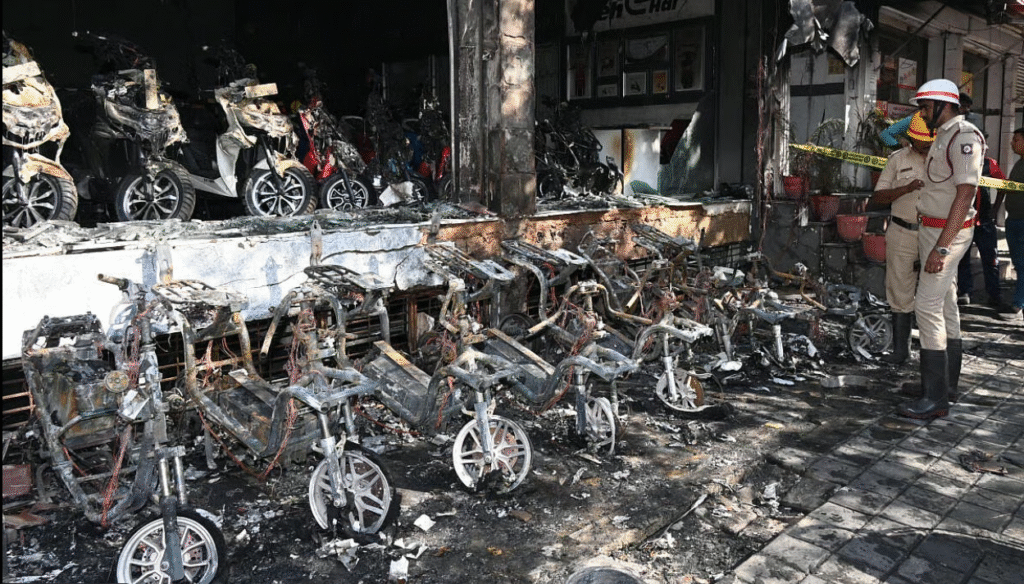
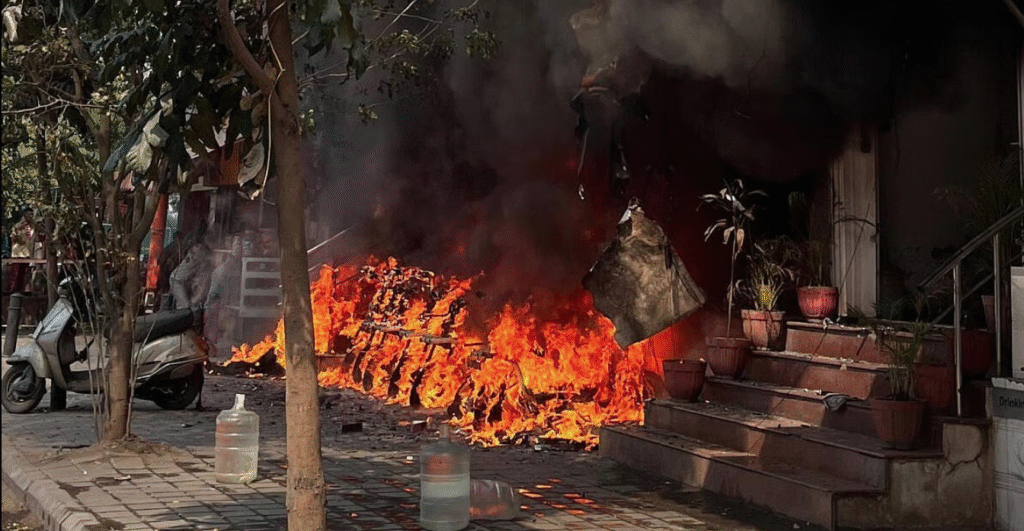
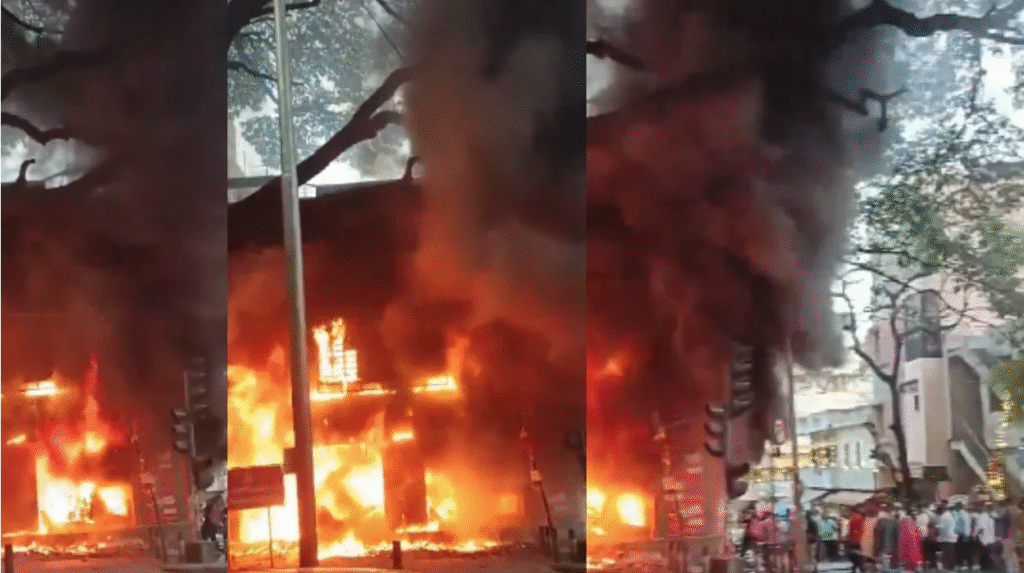
1 / 4 A fire at an electric-scooter showroom killed one employee and injured three; fire officials reported missing smoke detection and sprinkler protection.
📅 Date & Location of Incident
Date: 27 January 2025
Location: Basement EV showroom, Rajajinagar, Bengaluru, Karnataka, India
🕯 What Happened?
- Around 11:30 PM, a fire broke out in the basement of an EV showroom where scooters were being charged overnight.
- The fire quickly spread to scooters lined up, gutting 19 electric scooters in minutes.
- A 20-year-old woman accountant, working late, inhaled toxic smoke and tragically died the next day in hospital.
- Nearby residents panicked as smoke billowed from the basement, but fire tenders managed to douse the flames after hours.
🔍 Core Mistakes / What Went Wrong?
- Basement violation: Charging and parking of EVs in an enclosed basement with poor ventilation.
- No proper fire suppression systems (automatic sprinklers, smoke detectors missing).
- Single exit trap: Victim could not escape due to smoke-filled stairway.
- Improper charging practices: Multiple scooters charging simultaneously without fire-rated wiring or safety isolation.
- Delayed awareness: Neighbours noticed only after smoke spread.
⚖ Truth You Must Know
🔴 The fire originated during EV charging in basement, but this fact was downplayed initially in media.
🔴 No fire NOC or compliance check had been done for the showroom.
🔴 Death was not due to burns, but toxic smoke inhalation — a leading cause of fire deaths in India.
🧯 How This Could Have Been Prevented
- No EV charging in basements (mandate proper charging stations with ventilation).
- Automatic sprinklers & smoke detection systems.
- Separate battery storage zones with fire-rated walls.
- Trained staff for emergency response.
- Mandatory fire NOC and regular inspections for all EV showrooms.
🛡 How to Survive This Situation
✅ If trapped in smoke → Stay low, cover nose with cloth, crawl to exit.
✅ Never use basement exits once smoke rises → move upward or towards ventilated areas.
✅ Learn to identify emergency exits before entering basements/malls.
✅ If in EV facility → stand away from charging batteries, note extinguishers & exits.
✅ Always dial 101/112 immediately at first sight of fire.
📊 Stat/Data Box
- NCRB 2022: Over 35 Indians die daily due to fire accidents, mostly from smoke inhalation.
- 97% of India’s buildings lack fire safety compliance.
- EV-related fires have risen by 45% in 3 years (DGCA/State Fire data).
📽 Visuals




🙏 Voices That Matter
“She was just 20… she wanted to go home early, but stayed back to finish her accounts work. A life lost for no fault of hers.” — Family member of the victim
📢 Systemic Lesson
India’s EV revolution cannot ignore fire safety.
- Strict ban on basement charging.
- Mandate fire-rated EV charging infrastructure.
- Regular fire audits for all EV dealers & service centres.
💡 What You Can Do Today
✅ Avoid parking/charging EVs in basements.
✅ Ask your building/showroom if it has a valid fire NOC.
✅ Learn smoke survival basics (crawl, cover, find exit).
✅ Share this case study with EV owners & societies.
✅ Volunteer with VFF India for awareness drives.
🔚 Closing Line
“This is why we started HowToSurvive.in — so no young life is lost to ignorance, system failure, or silence.”
- Staff occupy the EV showroom
- Preliminary accounts point to an electrical/battery event
- Scooters and batteries become involved
- Employees attempt to escape; one worker is trapped
- Owner and manager are arrested during investigation
Why consequences escalated
- Multiple batteries in one showroom create a concentrated energy inventory
- Early smoke detection and automatic suppression were reportedly absent
- Battery involvement can cause rapid heat, toxic smoke and re-ignition
- Every occupied floor requires an unobstructed independent escape path
- Charging, damaged-battery quarantine and overnight storage need written controls
Failures and risk multipliers
- Failing to identify and control the dominant fuel or energy hazard
- Allowing detection, suppression or escape systems to remain absent or unserviceable
- Failing to isolate the public and neighbouring occupancies from escalation
- Delaying emergency notification or providing incomplete hazard information
- Treating approvals as a substitute for checking actual site conditions
People closest to the evidence
““Safety lesson””
Incident control begins before ignition: identify the hazard, limit the inventory, detect early, protect escape and give responders accurate information.
Actions that reduce risk
- Verify hazardous-material and battery inventories
- Inspect alarms, suppression, exits and emergency lighting
- Keep emergency and fire-service access unobstructed
- Confirm isolation and shutdown procedures
- Run a scenario-specific drill with every shift
- Prepare public warning and accountability procedures
Leave a comment