
Quick answers
What are the five key food-safety habits?
Keep clean, separate raw and cooked food, cook thoroughly, keep food at safe temperatures and use safe water and raw materials.
Can I taste questionable food to decide whether it is safe?
No. If safety is genuinely uncertain, discard it.
Who may need medical advice sooner?
Young children, older adults, pregnant people, immunocompromised people and anyone with severe symptoms may need prompt professional advice.
Use five simple controls every day
WHO’s Five Keys to Safer Food are a practical household checklist: keep clean; separate raw and cooked food; cook thoroughly; keep food at safe temperatures; and use safe water and raw materials. FSSAI’s home guide gives compatible advice for Indian kitchens.
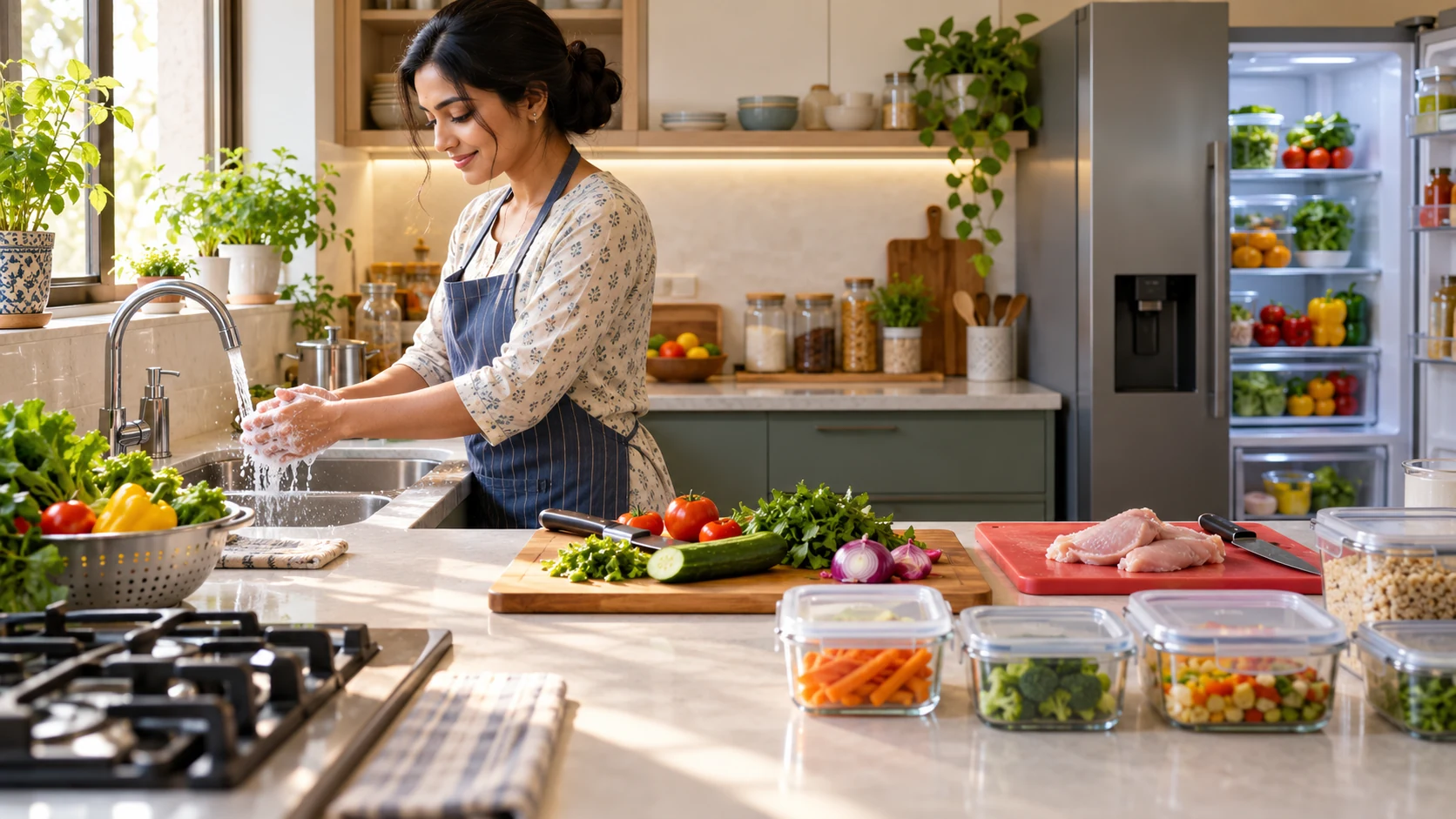
Clean hands, surfaces and utensils
Wash hands before preparing food and after handling raw ingredients. Clean worktops, boards, knives and containers between tasks. A surface that looks clean can still transfer contamination, especially when raw ingredients and ready-to-eat foods share the same preparation area.
Keep raw and cooked foods apart
Use separate boards, knives, plates or a clear wash-and-sanitise sequence for raw foods and ready-to-eat food. Store raw ingredients so drips cannot contaminate cooked meals, produce or other food that will be eaten without further cooking.
Cook, cool and store thoughtfully
Cook food thoroughly and eat cooked meals promptly where practical. Follow the label and product-specific storage instructions. Refrigerate or safely store leftovers without unnecessary delay; when in doubt about a food’s safety, discard it rather than tasting it to test it.
Use safe water and make an illness plan
Use safe water and suitable raw materials. People who are very young, older, pregnant, immunocompromised or already unwell can be more vulnerable to serious foodborne illness. Seek qualified medical advice for severe symptoms, dehydration, blood in stool, persistent vomiting, high fever or a person who cannot keep fluids down.
What needs attention
- Cross-contamination can occur through hands, boards, knives, plates and drips.
- Safe storage and cooking guidance is product-specific; follow labels and reliable local advice.
- Do not use smell or taste alone to decide that questionable food is safe.
Controls that reduce risk
- Wash hands and clean surfaces before food preparation.
- Separate raw and cooked food with dedicated or washed equipment.
- Cook thoroughly and follow storage instructions.
- Use safe water and discard food when safety is uncertain.
Common unsafe practices
- Using the same unwashed board or knife for raw and ready-to-eat foods.
- Leaving cooked food out without considering safe storage.
- Tasting questionable food to test whether it is safe.
- Ignoring product labels, water safety or individual vulnerability.
Leave a comment